
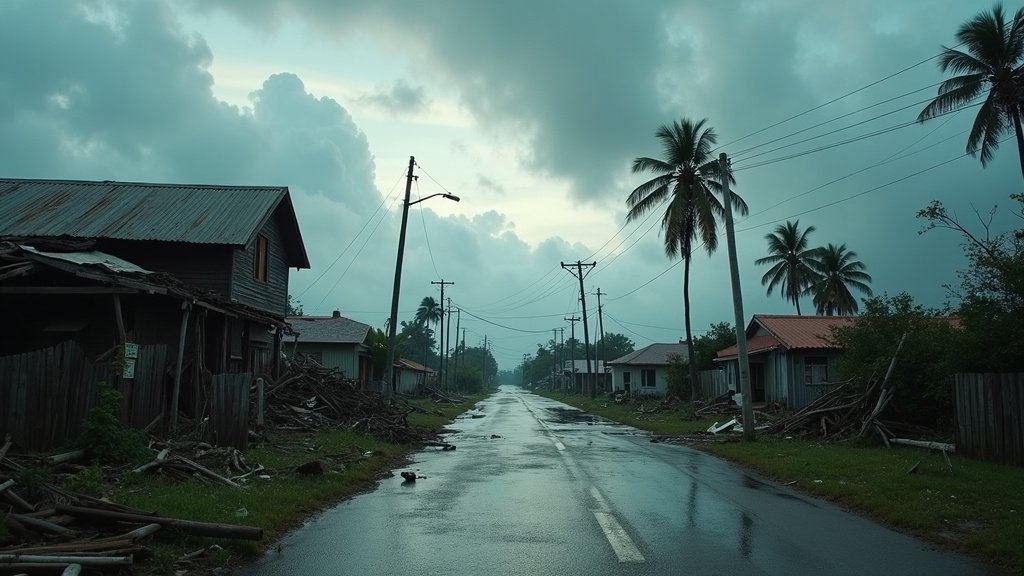
KINGSTON, Jamaica – Hurricane Melissa, a monstrous Category 5 storm packing sustained winds of 185 mph, has made landfall in Jamaica, unleashing catastrophic winds, devastating flooding, and landslides that have crippled infrastructure and claimed nearly 100 lives across the Caribbean. The storm, now confirmed as the most powerful hurricane on record to strike Jamaica, has left a trail of widespread destruction, with communities reeling from what officials are calling an unprecedented disaster.
The Storm’s Fury Unleashed
Arriving on Jamaica’s southwestern coast near New Hope on October 28, 2025, Hurricane Melissa delivered a brutal blow, marking the strongest direct hit to the island since record-keeping began 174 years ago. Its wind speeds at landfall tied it with other historic storms like the 1935 Labor Day hurricane and 2019’s Hurricane Dorian, making it one of the most intense Atlantic hurricanes ever recorded. A record-breaking wind gust of 252 mph was measured, underscoring the storm’s immense power.
In the aftermath, Jamaica is grappling with vast devastation. The southwestern parish of St. Elizabeth, particularly the coastal community of Black River, has been described as “ground zero,” with up to 90% of roofs destroyed and entire neighborhoods left in ruins. Fallen trees, toppled utility poles, and widespread power outages – affecting over 66% of the island – have hampered immediate rescue and assessment efforts. Communication networks were severely disrupted, especially in western Jamaica. Three major hospitals sustained damage, with one forced to evacuate 75 patients due to power loss. The economic toll is staggering, with estimated damages in Jamaica reaching $10 billion USD, making it the costliest storm in the island’s history.
A Wider Caribbean Catastrophe
Jamaica was not the only nation to bear the brunt of Melissa’s fury. The storm also inflicted severe damage on Haiti, where catastrophic flooding and landslides exacerbated an already fragile humanitarian crisis. Authorities confirmed at least 43 deaths in Haiti, with many more missing, primarily in the southern regions and towns like Petit-Goâve, where a river overflowed its banks.
Cuba was struck as a major Category 3 hurricane, experiencing collapsed homes, blocked roads, and significant damage to buildings. While mass evacuations of over 735,000 people likely prevented higher fatalities, widespread destruction was reported, particularly in the eastern and western provinces. The Dominican Republic also reported fatalities and experienced torrential rain and flooding. Other affected areas include the Bahamas and Turks and Caicos Islands.
Climate Change Supercharges Storms
Scientists are pointing to a critical factor behind Melissa’s extraordinary intensity and rapid intensification: abnormally warm Caribbean waters. These warmer sea surface temperatures, heated by human-caused climate change, provided ample fuel for the storm to explode from a tropical storm to a Category 5 hurricane in a mere 24 hours. Research indicates that the warm conditions Melissa encountered were 500 to 800 times more likely due to human activities.
“The ‘500 to 700 times more likely’ number is big,” said Dr. Daniel Gilford, a climate scientist with Climate Central. “It really illustrates how unlikely the extremely warm temperatures we are observing around Melissa would be without human-caused climate change”. This phenomenon of rapid intensification, where storms strengthen dramatically in a short period, is becoming more frequent and poses a grave threat, leaving communities with less time to prepare and evacuate.
Adding to the danger, Melissa’s slow movement—initially crawling at about 3 mph—prolonged its destructive impact, allowing it to dump torrential rainfall. Up to 40 inches of rain were forecast and recorded in some areas, leading to catastrophic flash flooding and numerous landslides, particularly in Jamaica’s mountainous eastern region.
Response and Recovery Efforts
In the immediate aftermath, governments and humanitarian organizations are mobilizing to provide relief. The U.S. Department of State authorized an immediate response, deploying a Disaster Assistance Response Team to assess needs and offer search and recovery support, coordinating with UN agencies, NGOs, and host governments to deliver essential supplies. Financial donations to established relief agencies are being emphasized as the most effective way to support ongoing recovery operations.
The Jamaican government has launched a dedicated platform to mobilize support and coordinate recovery efforts, while institutions like the Development Bank of Latin America and the Caribbean (CAF) have provided emergency aid and facilitated bilateral assistance from other nations. Despite these efforts, the scale of the damage presents immense challenges, with tens of thousands of families displaced and essential services struggling to be restored. The stories emerging from affected communities highlight the resilience of the human spirit amidst overwhelming devastation, but the path to recovery will be long and arduous.
As the Caribbean region begins the arduous task of rebuilding, the lessons from Hurricane Melissa underscore the increasing threat posed by climate-fueled extreme weather events and the urgent need for global action to mitigate their impacts.