
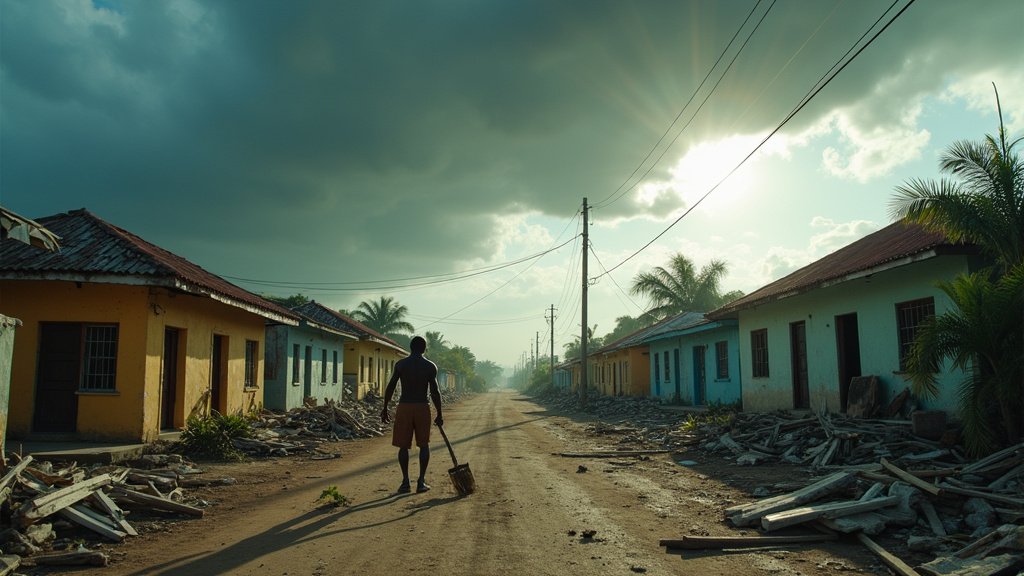
Hurricane Melissa Batters Caribbean Nations, Leaving Trail of Unprecedented Devastation
Kingston, Jamaica – Hurricane Melissa, a catastrophic Category 5 storm, has inflicted widespread destruction across Jamaica, Haiti, and Cuba, unleashing record-breaking winds, torrential rainfall, and devastating storm surges. The hurricane made landfall in Jamaica on October 28, 2025, as one of the most powerful storms on record to strike the Atlantic basin, leaving a devastating impact that has prompted extensive recovery efforts and international aid across the Caribbean.
The Storm’s Unrelenting Fury
Hurricane Melissa rapidly intensified over exceptionally warm ocean waters, fueled by climate change, reaching sustained wind speeds of 185 mph (295 km/h) just before making landfall near New Hope, Jamaica. Its central pressure of 892 millibars (hPa) tied records for the lowest pressure at landfall in the Atlantic basin, a testament to its immense power. The storm’s erratic path and intense winds, coupled with torrential rainfall and significant storm surge, led to catastrophic damage across the Greater Antilles and beyond.
Jamaica Reels from Record-Breaking Impact
Jamaica bore the brunt of Hurricane Melissa’s fury, experiencing the costliest natural disaster in its recorded history. The storm’s landfall on October 28th resulted in an estimated US$8.8 billion in physical damage, equivalent to 41% of the country’s 2024 GDP. This figure, released by the World Bank and the Inter-American Development Bank (IDB), highlights the scale of destruction, with residential buildings accounting for 41% of the damage, followed by infrastructure at 33%, non-residential buildings at 21%, and agriculture at 5%. Tens of thousands of homes were damaged or destroyed, particularly in western parishes like St. Elizabeth and Westmoreland, with up to 90% of buildings impacted in some areas.
Prime Minister Andrew Holness declared Jamaica a “disaster area” as communications were severely disrupted, and many homes were left uninhabitable. The destruction has significantly impacted essential services, with over 4.8 million tonnes of debris reported, blocking roads and hindering access to critical areas. Despite the devastation, Jamaica’s tourism sector is aiming for a full recovery by December 15, 2025, with efforts underway to repair infrastructure and restore services. International airports in Kingston and Montego Bay have reopened to receive relief supplies, though full commercial operations are gradually resuming.
Haiti Faces Humanitarian Crisis Amidst Devastation
Haiti has suffered a significant human toll, with at least 88 fatalities reported, including 10 children, and widespread destruction across multiple departments. The storm caused heavy rainfall, strong winds, and coastal flooding, triggering landslides and river overflows. More than 11,900 houses were flooded or damaged, displacing around 16,000 people who sought shelter in temporary sites. The town of Petit-Goâve was particularly hard-hit, with reports of collapsed homes and a significant number of casualties. Humanitarian organizations are on the ground, providing essential aid such as cash assistance, clean water, hygiene kits, and protection services to affected communities.
Cuba Grapples with Widespread Damage and Displacement
Cuba also experienced considerable damage, with Hurricane Melissa making landfall as a Category 3 storm in Santiago de Cuba province. The storm caused catastrophic flooding, landslides, and severe disruption to critical services, including electricity, water, transport, and communications. Approximately 3.5 million people remained without electricity, and around 450,000 people were without safe water. Over 735,000 people were evacuated, and preliminary estimates indicate that 2.2 million people were severely affected, with nearly 150,000 homes impacted, many in Santiago de Cuba. Over 600 health facilities and 2,117 educational centers were damaged, affecting more than 670,000 students. The country is also facing a complex multicrisis, with concurrent outbreaks of arboviral diseases.
Regional Response and Financial Initiatives
In response to the widespread devastation, the United States has mobilized significant disaster assistance, deploying response teams and critical supplies. Initial aid packages totaling over $37 million have been directed towards Jamaica, Haiti, Cuba, and the Bahamas, addressing critical needs for shelter, water, sanitation, hygiene, food assistance, and emergency healthcare.
Recognizing the region’s vulnerability to extreme weather events, international financial institutions including the Inter-American Development Bank (IDB), CAF – Development Bank of Latin America and the Caribbean, and the Caribbean Development Bank (CDB) have launched a landmark regional Debt-for-Resilience Joint Initiative. This initiative aims to boost disaster preparedness and ease debt pressures by scaling up debt-for-resilience swaps, fostering coordination among development banks, governments, and private sector partners, and enhancing transparency to attract investment. It seeks to enable countries to invest in resilience and regional public goods without adding to their debt burden.
Looking Ahead: Recovery and Resilience
The path to full recovery for the affected nations will be long and arduous. The immediate focus remains on providing life-saving assistance, clearing debris, and restoring essential services. The disaster serves as a stark reminder of the intensifying impacts of climate change on vulnerable regions, fueling more frequent and severe weather events. As the Caribbean nations navigate the recovery phase, the international community, along with regional financial institutions and governments, are working collaboratively to rebuild stronger and more resilient infrastructure for the future. The news from today highlights the ongoing challenges and the united efforts to overcome them.