
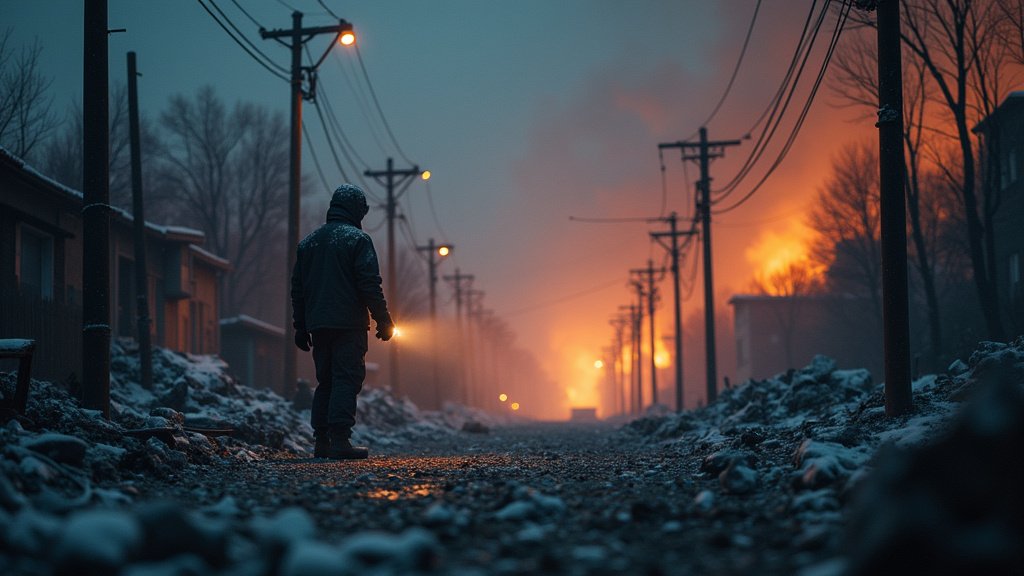
As winter’s chill deepens, Russia has intensified its systematic assault on Ukraine’s critical energy infrastructure, launching some of the most extensive and damaging strikes of the war. This renewed offensive, particularly in October and November 2025, has plunged millions into darkness, caused significant civilian casualties, and raised grave concerns about a “catastrophic winter” for the nation. The relentless targeting of power plants, substations, and gas facilities threatens to cripple Ukraine’s ability to provide essential services amidst the ongoing conflict.
Escalation of Aerial Barrages
October 2025 marked one of the most intensive months of Russian aerial bombardment of the entire conflict, with Moscow deploying approximately 5,300 Shahed drones, 74 cruise missiles, and 148 ballistic missiles. This sustained high-pressure campaign saw all three weapon systems operating simultaneously at above-average levels, a significant increase compared to previous years. Subsequent attacks in November, including a massive overnight barrage on November 19, 2025, involved hundreds of drones and missiles, further overwhelming Ukraine’s air defenses and energy systems. Ukrainian President Volodymyr Zelenskyy has reported that these attacks are increasingly sophisticated and devastating, with Russia deploying a combination of weaponry aimed at crippling the country’s ability to withstand the harsh winter.
Systematic Targeting of Infrastructure
Russia’s strikes are not opportunistic but a deliberate, strategic campaign designed to break Ukraine’s will and sow chaos. The targets include key nodes in the electricity grid, high-voltage substations, hydroelectric and thermal power plants, and gas production facilities and transmission networks. Attacks have repeatedly struck cities such as Chernihiv, Sumy, and Nizhyn, indicating a focus on isolating urban centers and destabilizing local electricity networks. The damage inflicted has been extensive, with over 50% of Ukraine’s electricity generation capacity destroyed or severely damaged by October 2025. Officials estimate that approximately 55% of the country’s domestic gas production has been taken offline due to strikes in early October alone.
Devastating Human and Humanitarian Toll
The consequences for Ukraine’s civilian population have been dire. These attacks have resulted in significant casualties, with reports of dozens killed and hundreds injured in recent strikes. On October 29-30, 2025, preliminary reports indicated at least 2 civilians killed and 23 injured in Zaporizhzhia, and a 7-year-old girl was among those killed in Kyiv and Vinnytsia regions. A November 19, 2025, attack alone resulted in at least 27 civilian deaths and 141 injuries across multiple regions. Beyond direct casualties, widespread emergency power outages and rolling blackouts have become a grim reality for millions, disrupting heating, water, and essential services.
The looming prospect of a “catastrophic winter” is a significant concern for international observers. The UN Human Rights Monitoring Mission in Ukraine (HRMMU) has warned that prolonged disruptions to essential services could create extreme hardships, particularly for vulnerable groups like the elderly, persons with disabilities, and families with young children, potentially escalating into a “major crisis within a crisis”. The cumulative damage also raises risks for nuclear safety, as degrading external power supplies and striking grid nodes vital to nuclear facilities pose a persistent threat.
Historical Context and International Response
Russia’s systematic campaign against Ukraine’s energy infrastructure dates back to the full-scale invasion in 2022. However, the scale and intensity of attacks have escalated dramatically, particularly since spring 2024 and into late 2025. This has been met with increasing international condemnation and a surge in aid efforts.
The European Union has pledged to increase gas supplies and provide significant financial support to Ukraine, with over €200 million in new grant financing announced in November 2025 to bolster energy resilience. The EU has condemned the attacks as war crimes and pledged to reinforce Ukraine’s energy sector and restore energy security across Europe. International organizations like Amnesty International and the UN have highlighted violations of international humanitarian law due to the deliberate targeting of civilian infrastructure.
Ukraine’s Resilience and Future Outlook
Despite the overwhelming pressure, Ukrainian energy workers are demonstrating remarkable resilience, often working under hazardous conditions to repair damaged infrastructure. President Zelenskyy has repeatedly called for decisive action from allies, including the delivery of advanced air defense systems and stricter sanctions against Russia, emphasizing that sustained pressure is the only path to peace. Ukraine has also stepped up its own drone and missile strikes on Russian energy and industrial facilities, aiming to disrupt Russia’s war economy.
As the world watches this unfolding crisis, the coming months will test Ukraine’s infrastructure and its people’s endurance. The ongoing news from the frontlines underscores the critical need for continued international support to mitigate the humanitarian impact and help Ukraine defend its energy future against relentless aggression. The global community faces the challenge of ensuring Ukraine has the resources not only to survive the winter but to rebuild its energy sector for long-term security.
This coordinated effort to destabilize Ukraine ahead of winter is part of a broader Russian strategy, mirroring tactics employed in previous years, aiming to break the spirit of the population and force capitulation. The news today highlights the urgent need for global solidarity and robust measures to counter these destructive tactics.