
WASHINGTON D.C. – The U.S. military has conducted another lethal strike against a suspected drug-trafficking vessel in the Caribbean Sea, resulting in the deaths of three individuals, Defense Secretary Pete Hegseth announced today. This latest operation is part of a significant and expanding military campaign, initiated in September 2025 under President Donald Trump’s directive, aimed at combating maritime drug smuggling and targeting what the administration terms “narco-terrorists.”
Escalating Campaign in the Caribbean
The recent strike, which took place in international waters, underscores the intensified pace and scope of the U.S. military’s interdiction efforts. According to Hegseth, the targeted vessel was identified through intelligence as being involved in illicit narcotics smuggling and was transiting along a known drug-trafficking route. “These narco-terrorists are bringing drugs to our shores to poison Americans at home,” Hegseth stated in a social media post, vowing to “treat them EXACTLY how we treated Al-Qaeda.”
This incident marks at least the 15th such strike carried out by U.S. forces in the Caribbean or the eastern Pacific since early September 2025. These operations have collectively resulted in the deaths of at least 64 people, with some reports indicating a higher toll of over 80 fatalities as of mid-November. The campaign, officially dubbed Operation Southern Spear and led by U.S. Southern Command, has seen a marked increase in frequency, with multiple strikes occurring weekly.
‘Armed Conflict’ Declaration and Legal Justification
President Trump has been a central figure in directing this aggressive posture, formally notifying Congress on October 1, 2025, that the United States was engaged in a “non-international armed conflict” with “unlawful combatants” designated as drug cartels. This declaration leverages legal authority similar to that employed by the Bush administration during the Global War on Terror to justify military actions against groups deemed threats to national security. The administration has designated several drug cartels as foreign terrorist organizations, enabling the use of military force as a matter of national security.
Targets and Allegations
While the U.S. military has identified targeted vessels as belonging to “narco-terrorists” and specific organizations like Venezuela’s Tren de Aragua and Colombia’s National Liberation Army (ELN), it has not publicly provided evidence to substantiate these claims. In at least one instance, the ELN denied any involvement with the alleged drug boat.
Widespread Scrutiny and International Concerns
The escalating campaign has drawn significant scrutiny from various quarters. Experts, human rights groups, and the governments of Venezuela and Colombia have raised concerns about the legality of the strikes under both U.S. and international law, accusing the U.S. of extrajudicial killings. The United Kingdom, a close intelligence ally, has suspended intelligence sharing with the U.S. concerning suspected drug trafficking vessels in the Caribbean, citing doubts about the legality of Washington’s practices.
Within the U.S., lawmakers have repeatedly pressed the White House for more information regarding the legal justifications for the strikes and details about the individuals and groups targeted, with the Senate twice failing to pass resolutions limiting the President’s authority to continue such actions. Public opinion also appears divided, with a recent poll suggesting limited support for military strikes without judicial oversight.
Regional Military Buildup
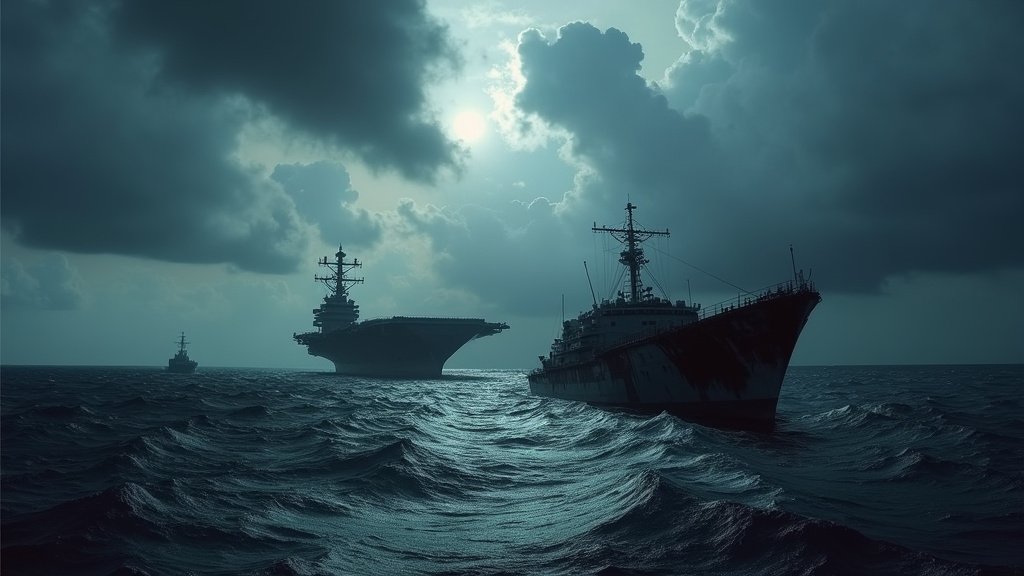
Accompanying these strikes has been a significant U.S. military buildup in the region. Naval assets, including the deployment of the USS Gerald R. Ford aircraft carrier strike group, have bolstered the U.S. presence in the Caribbean and Eastern Pacific, pushing total military personnel in the region to unprecedented levels in decades.
The current news regarding the strike where three individuals were killed is the latest development in a complex and controversial U.S. policy aimed at combating drug trafficking. As the operations continue, questions persist regarding their effectiveness, legality, and broader geopolitical implications for the regional stability.