
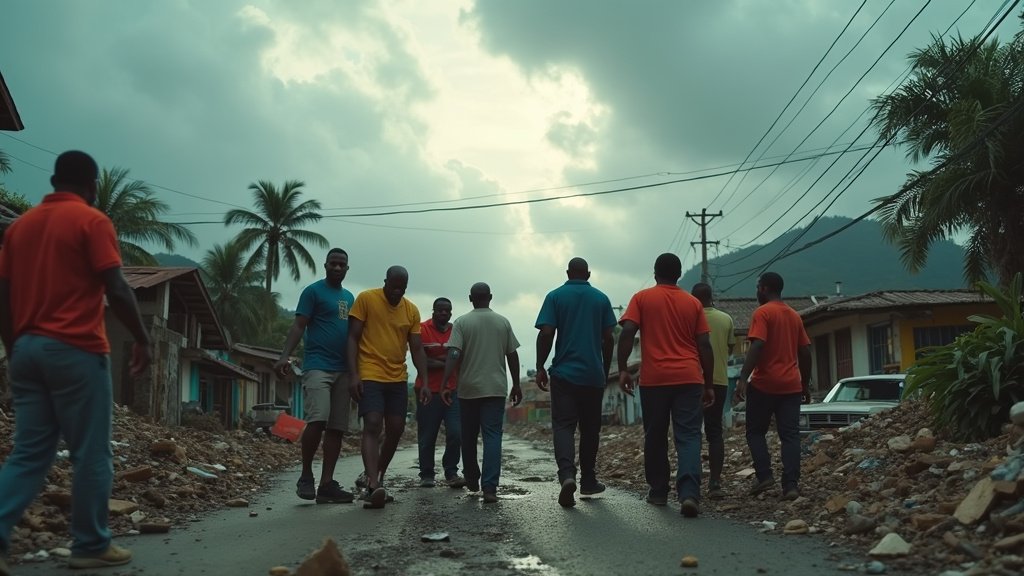
Kingston, Jamaica – The island nation of Jamaica is grappling with the unprecedented aftermath of Hurricane Melissa, a Category 5 storm that made landfall on October 28, 2025, unleashing widespread devastation and leaving an indelible mark on the Caribbean. The catastrophic storm, packing sustained winds of 185 mph, is the most powerful to strike Jamaica in recorded history. Its fury has resulted in immense physical damage estimated at a staggering $8.8 billion USD, equivalent to approximately 41% of Jamaica’s 2024 GDP. The disaster has galvanized an immediate and robust response from Caribbean Community (CARICOM) leaders and international partners, pledging solidarity and critical aid to support the island’s monumental recovery efforts.
Unprecedented Destruction and Human Toll
Hurricane Melissa made landfall near New Hope, Westmoreland, as a monstrous Category 5 storm, unleashing winds of up to 185 mph and a life-threatening storm surge of up to 13 feet. The relentless force of the hurricane has led to catastrophic damage across western and central Jamaica. Official reports indicate that 156,000 dwellings sustained damage, with 24,000 considered total losses. The Office of Disaster Preparedness and Emergency Management (ODPEM) confirmed 45 deaths, with nine cases under investigation and 15 individuals reported missing. However, other reports suggest a higher death toll, with 96 fatalities attributed to the storm across the region, including 46 in Jamaica. The devastation has displaced tens of thousands of households, with estimates suggesting up to 32,500 people may have been internally displaced.
The impact extends far beyond homes, crippling essential infrastructure. Roads, bridges, utilities, and public works bore the brunt of the storm, accounting for approximately 33% of the total damage. Power outages affected hundreds of thousands, with 31% of the population remaining without electricity days after the storm. Water services were also significantly disrupted, with 24% of the National Water Commission’s system offline. The agricultural sector, a vital pillar of the Jamaican economy, also suffered immense losses, with damaged croplands, disrupted supply chains, and livestock losses estimated to cost US $389 million. The sheer volume of debris is staggering, with the United Nations Development Programme (UNDP) estimating over 4.8 million tonnes of rubble, vegetation, and waste blocking critical access routes.
Regional Solidarity and International Aid Mobilized
In the face of this overwhelming crisis, CARICOM leaders have demonstrated profound solidarity, visiting Jamaica to assess the damage firsthand and pledge substantial support. Guyana and Barbados have taken the lead in offering critical relief commitments. Barbados is dispatching a fully equipped field hospital and additional garbage trucks, while Guyana has deployed Defence Force engineers to assist with essential roof repairs and provided a wider package of manpower, food, water, and equipment. Other CARICOM nations, including Antigua and Barbuda and Grenada, have also expressed their commitment to aiding Jamaica’s recovery.
Prime Minister Andrew Holness described the destruction as “significant and unprecedented,” highlighting the immense challenge of recovery given the scale of losses. “Every aid given and every commitment made must quickly advance the recovery and make Jamaica stronger,” he stated. The collaborative effort involves regional institutions such as the Caribbean Disaster Emergency Management Agency (CDEMA), the Caribbean Development Bank (CDB), and the Caribbean Public Health Agency (CARPHA), which are coordinating the regional response and needs assessments.
International organizations are also actively involved. The United States has mobilized a Disaster Assistance Response Team, including urban search-and-rescue units, and is collaborating with UN agencies and NGOs to deliver essential supplies. UNICEF has allocated US$1 million for immediate emergency response, focusing on children’s needs, including nutrition, water, medicines, and hygiene kits. They estimate over 284,000 children are in urgent need of humanitarian assistance. The World Food Programme (WFP) is providing food support, delivering thousands of food kits, and assisting with logistics and communications. The UK has deployed an Emergency Medical Team to provide life-saving care and support local healthcare capacity in affected regions.
Climate Change: An Amplifying Factor
Experts underscore that Hurricane Melissa’s extreme intensity is a stark reminder of the escalating threat posed by climate change. Research suggests that anthropogenic climate change played a role in amplifying the storm’s wind speed and rainfall, and significantly increasing economic damage. Warmer ocean temperatures, a direct consequence of global warming, provide the fuel for increasingly powerful and destructive tropical cyclones. This devastating event highlights the vulnerability of Caribbean nations to climate change impacts and underscores the urgent need for global action to mitigate its effects.
The Road to Recovery and Resilience
The path to recovery for Jamaica will be long and arduous, requiring a sustained, coordinated, and comprehensive approach. The Jamaican government has launched initiatives such as the official disaster relief and recovery portal, encouraging donations, volunteerism, and reporting of incidents. Plans are underway to procure modular homes for medium-term shelter and to focus on “building forward better” to enhance resilience against future events. The restoration of essential services, debris removal, and the rebuilding of homes and infrastructure are top priorities.
The sheer scale of devastation has underscored the critical importance of regional solidarity and international cooperation. The collective response from CARICOM and global partners reflects a shared commitment to helping Jamaica not only recover but emerge stronger and more resilient from the catastrophic impact of Hurricane Melissa. The stories of resilience and community spirit in the face of such adversity offer a glimmer of hope as the nation embarks on its challenging reconstruction journey.