
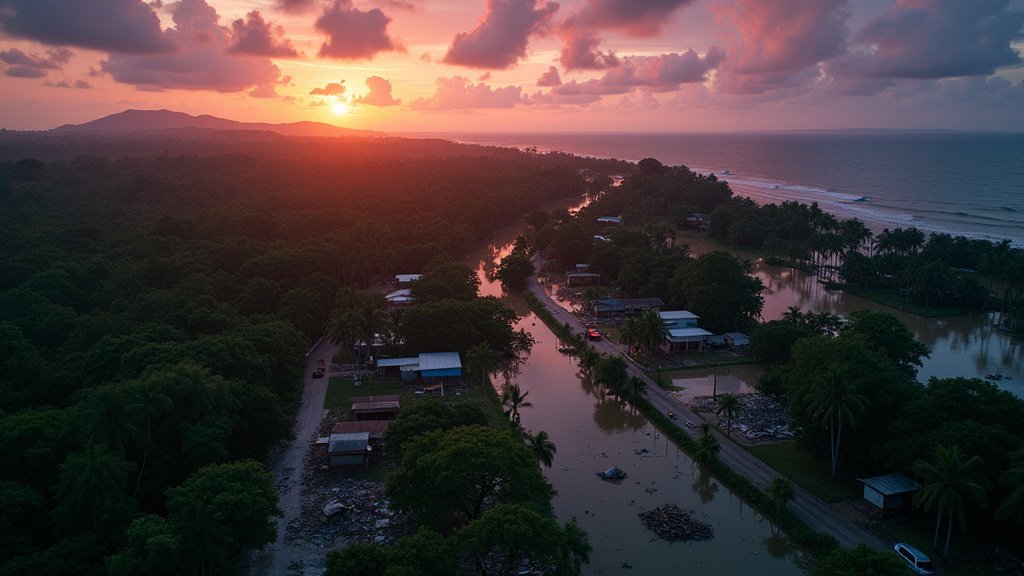
The Caribbean is grappling with the devastating aftermath of Hurricane Melissa, a colossal Category 5 storm that made landfall on October 28, 2025, leaving a trail of destruction across Jamaica, Cuba, Haiti, and other island nations. This catastrophic event, now recognized as one of the most intense Atlantic hurricanes on record, has inflicted immense human suffering, crippled infrastructure, and triggered massive economic losses, prompting a global mobilization of recovery efforts that continue today.
The Storm’s Unprecedented Fury
Hurricane Melissa rapidly intensified into a Category 5 monster before making its initial landfall near New Hope, Jamaica, with sustained winds reaching an astonishing 185 mph. This intensity made it the strongest hurricane to ever make direct landfall in Jamaica and tied it for the most intense Atlantic hurricane to hit land on record. The storm’s ferocity was further underscored by a recorded wind gust of 252 mph (406 km/h), a global record for dropsonde data. After battering Jamaica, Melissa weakened slightly but remained a major hurricane, making a second landfall in eastern Cuba near Chivirico as a Category 3 storm before continuing its destructive path across the region. The hurricane’s passage over the Caribbean was characterized by torrential rainfall, devastating storm surges, and widespread flooding, exacerbating the vulnerability of already fragile communities.
Jamaica: A Nation Under Siege
Jamaica bore the brunt of Hurricane Melissa’s initial assault, suffering damage estimated at a staggering $8.8 billion to $9 billion USD. This figure represents approximately 41% of the country’s 2024 Gross Domestic Product (GDP), making it the costliest hurricane in Jamaica’s recorded history. Preliminary assessments indicate that residential buildings accounted for 41% of the damage, followed by infrastructure at 33%, non-residential buildings at 21%, and agriculture at 5%. The agricultural sector alone faces estimated losses of $29.5 billion, impacting over 70,000 farmers and destroying 41,390 hectares of farmland, along with more than 1.25 million animals lost. Widespread destruction of over 122,000 dwellings, coupled with failures in power and communication networks, left vast areas isolated and plunged about 75% of the island into darkness at one point. The storm claimed at least 45 lives in Jamaica, with 15 others missing, and affected nearly 1.6 million people, displacing tens of thousands of households. Prime Minister Andrew Holness declared Jamaica a “disaster area” and initiated comprehensive national response and recovery efforts.
Haiti’s Deepening Crisis
In Haiti, Hurricane Melissa exacerbated an already dire humanitarian situation, causing widespread destruction, landslides, and severe flooding. The storm’s impact resulted in at least 43 to 88 fatalities, including children, with dozens injured and many others missing. Approximately 16,000 people sought shelter in temporary sites, while thousands of homes were flooded or destroyed. The devastation to infrastructure, including schools and homes, has deepened existing hardships, particularly in the southern coastal regions which were hardest hit. The disruption to education is profound, affecting nearly 477,000 children across the region, including Haiti, due to damaged or closed schools.
Cuba’s Preparedness and Impact
Cuba, anticipating Melissa’s destructive power, undertook extensive preparations, evacuating over 735,000 people ahead of the storm’s arrival [Initial Context, 5, 10, 23]. While these measures significantly mitigated loss of life, with no fatalities reported in Cuba due to the hurricane, the storm still caused widespread flooding, power outages, and considerable damage to homes and infrastructure in its eastern provinces. Hundreds of communities were left isolated by blocked roads and extreme flooding caused by historic rainfall. In response to the widespread impact, the UN System in Cuba launched a $74.2 million Plan of Action to assist one million affected individuals, underscoring the scale of the humanitarian needs.
Regional Ramifications and International Response
Across the wider Caribbean, Hurricane Melissa impacted more than 5 million people in total. The storm’s passage led to significant loss of life and displacement across multiple nations, including the Dominican Republic, the Bahamas, and the Turks and Caicos Islands. In the immediate aftermath, an unprecedented regional and international aid effort was mobilized. The United States, United Kingdom, Canada, and various UN agencies, including the World Food Programme (WFP), UNICEF, and the World Bank, have channeled millions of dollars in funding and supplies, including food, water, medical assistance, shelter, and technical support. The UN’s Central Emergency Response Fund (CERF) allocated millions to facilitate rapid humanitarian operations in Jamaica, Cuba, and Haiti, with ongoing appeals to bridge funding gaps for comprehensive recovery.
The Path to Recovery
Weeks after Hurricane Melissa’s landfall, the focus has firmly shifted to long-term recovery and rebuilding. The sheer scale of destruction poses immense challenges, particularly in restoring critical infrastructure, ensuring food security, and addressing the profound psychological toll on affected populations. International support is deemed “crucial” by UN officials as these nations, many of which are Small Island Developing States, navigate the complex and costly process of reconstruction and strive to build greater resilience against future climate-related disasters. The news today from the ground indicates a concerted effort, yet the road ahead remains arduous for the millions impacted across the Caribbean.