
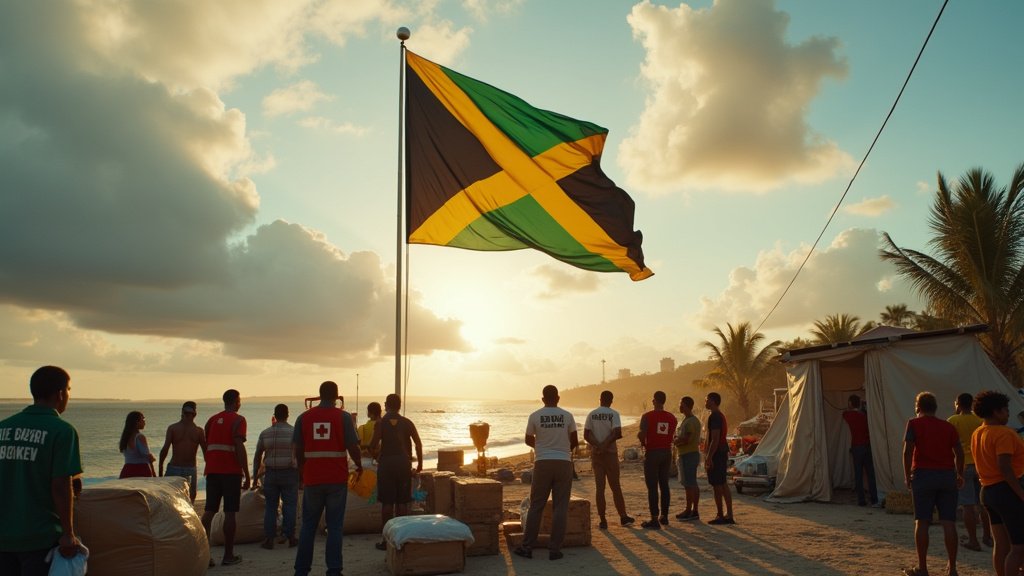
Jamaica is mobilizing an unprecedented recovery effort following the catastrophic devastation wrought by Hurricane Melissa, securing substantial aid from regional and international partners. The Category 5 storm, which made landfall on October 28, inflicted widespread damage, prompting immediate and large-scale mobilization across the island nation.
The Devastation of Hurricane Melissa
Hurricane Melissa, the strongest hurricane to ever make landfall in Jamaica, has left a trail of destruction, with preliminary estimates suggesting physical damage totaling between US$6 billion and US$8.8 billion. This staggering figure represents approximately 28% to 41% of Jamaica’s Gross Domestic Product (GDP). The western parishes, particularly St. Elizabeth, Westmoreland, and St. James, bore the brunt of the storm’s fury, experiencing catastrophic damage to residential buildings, non-residential structures, critical infrastructure, and the vital agriculture sector. Reports indicate that a significant portion of housing stock sustained damage, with many structures losing their roofs, and essential services like electricity and telecommunications were severely disrupted, leaving hundreds of thousands without power and communication.
Government’s Coordinated Response
In response to the crisis, the Jamaican government has enacted swift organizational changes to enhance recovery efforts. The Office of Disaster Preparedness and Emergency Management (ODPEM) has been reassigned to the Office of the Prime Minister (OPM) to bolster logistical coordination and streamline support with the Jamaica Defence Force (JDF). Commander Alvin Gayle has been appointed as the new Director General of ODPEM, bringing significant logistical experience from the JDF. To accelerate rebuilding, the government has also established the National Reconstruction and Resilience Authority (NARA), a statutory body with special powers to oversee and expedite reconstruction efforts. The JDF is actively deploying Starlink internet devices to isolated communities, aiding in the restoration of communication and supporting humanitarian operations.
Securing Regional and International Aid
Jamaica’s recovery is being bolstered by a significant influx of aid from various international and regional entities. The World Bank and the Inter-American Development Bank (IDB) have provided crucial damage assessments and committed substantial financial resources, with the World Bank estimating total physical damage at US$8.8 billion. The Caribbean Catastrophe Risk Insurance Facility (CCRIF SPC) has already disbursed millions through its parametric insurance policies, providing immediate liquidity for relief operations. The United States has deployed a Disaster Assistance Response Team and other support mechanisms, while the UK has sent an Emergency Medical Team to provide direct healthcare in affected regions. Other organizations, including Team Rubicon, United Way, the Red Cross, and Direct Relief, are on the ground providing medical aid, shelter materials, food, and water. El Salvador has also contributed relief supplies and volunteers. The nation’s catastrophe bond is expected to provide a $150 million payout, a fraction of the overall rebuilding costs but a vital immediate financial injection.
The Power of Entertainment and Community
Beyond official channels, the vibrant spirit of Jamaica’s entertainment sector and its diaspora is playing a crucial role in the relief and recovery news. Dancehall artiste Masicka, through his MADE Foundation, has launched significant relief efforts, distributing essential supplies like food, building materials, steel, and cement, particularly to St. Elizabeth parish. Romeich Entertainment CEO Romeich Major and his team have been actively involved in clearing debris and distributing care packages, earning commendation from Prime Minister Andrew Holness. Numerous other entertainers and entertainment brands, including Sandz, Xodus, Bounty Killer, Spice, and international artists like Tyrese and The Weeknd, have contributed to recovery efforts, showcasing the powerful influence of culture in times of crisis. Beenie Man has also mobilized volunteers to deliver vital supplies to those most affected.
Economic Implications and the Road to Resilience
The hurricane’s impact poses significant economic challenges, with projections indicating a potential GDP contraction and severe strain on key sectors like tourism and agriculture. The government is prioritizing a “build back better” approach, focusing on creating safer homes and more resilient infrastructure. The tourism sector, a critical pillar of the Jamaican economy, has a target to restore full operations by December 15, 2025, with a dedicated Recovery Task Force overseeing this ambitious goal. Innovative financing models and robust public-private partnerships are being explored to fund the extensive reconstruction efforts, which will likely require borrowing beyond immediate disaster relief funds.
Conclusion
In the wake of Hurricane Melissa’s immense destruction, Jamaica is demonstrating remarkable resilience and a unified spirit. The comprehensive recovery plan, supported by substantial regional and international aid, coupled with the invaluable contributions from its diaspora and entertainment community, underscores the nation’s determination to rebuild stronger and more resilient than before. The path ahead is challenging, but the collective mobilization signals a steadfast commitment to restoring lives, livelihoods, and the island’s economic vitality.