
Hurricane Melissa’s Devastating Path: Red Cross Movement Rallies Caribbean Communities in Unprecedented Response
Introduction
In the wake of the catastrophic Hurricane Melissa, the Red Cross Movement is engaged in a massive, around-the-clock humanitarian operation across the Caribbean. The powerful Category 5 storm, the strongest ever recorded to make landfall in Jamaica and one of the most intense Atlantic hurricanes in history, has left a trail of widespread destruction, displacing hundreds of thousands and severely damaging critical infrastructure. From the shores of Jamaica to the eastern reaches of Cuba and beyond, Red Cross societies and the International Federation of Red Cross and Red Crescent Societies (IFRC) are working tirelessly to provide essential aid and support to affected communities.
Unprecedented Devastation Across the Caribbean
Hurricane Melissa made its first devastating landfall in Jamaica on October 28, 2025, as a Category 5 storm, unleashing winds exceeding 185 mph and torrential rains. This event marked it as the strongest hurricane to ever hit the island, surpassing Hurricane Gilbert in 1988. The storm’s fury led to catastrophic damage, with initial estimates placing the losses in Jamaica at nearly $9 billion USD, making it the costliest storm in the nation’s history and equivalent to 41% of its 2024 GDP. Widespread destruction included collapsed roads, flooded bridges, destroyed buildings, and the obliteration of fishing areas and crops. Thousands of Jamaicans were left without power, telecommunications were unstable, and the destruction of farmland threatened a potential food crisis. New hazards, such as sinkholes and previously unaffected homes being submerged, emerged in the aftermath.
Following its impact on Jamaica, Melissa crossed into eastern Cuba as a Category 3 hurricane, bringing heavy rainfall and triggering significant landslides and flooding. In Cuba, an estimated 2.2 million people were severely affected, with widespread infrastructure damage, including collapsed houses and flooded roads. Critical services such as electricity, water, transport, and communications were severely disrupted, leaving approximately 450,000 people without safe water. Over 700 health facilities across the affected nations, including 642 in Cuba and 54 in Jamaica, sustained damage, severely hampering access to essential health services. The storm’s path also impacted Haiti, the Dominican Republic, the Bahamas, and Bermuda, affecting more than 5 million people across the region.
Red Cross Movement: A Force for Immediate Relief
In the face of such widespread devastation, the Red Cross Movement, comprising National Red Cross Societies and the IFRC, mobilized rapidly. Even before Melissa made landfall, Red Cross teams in Cuba, Haiti, Jamaica, and the Dominican Republic were on high alert, implementing preparedness measures and warning communities. This proactive approach included preventive evacuations, pre-positioning of essential supplies, preparing shelters, and disseminating vital safety information.
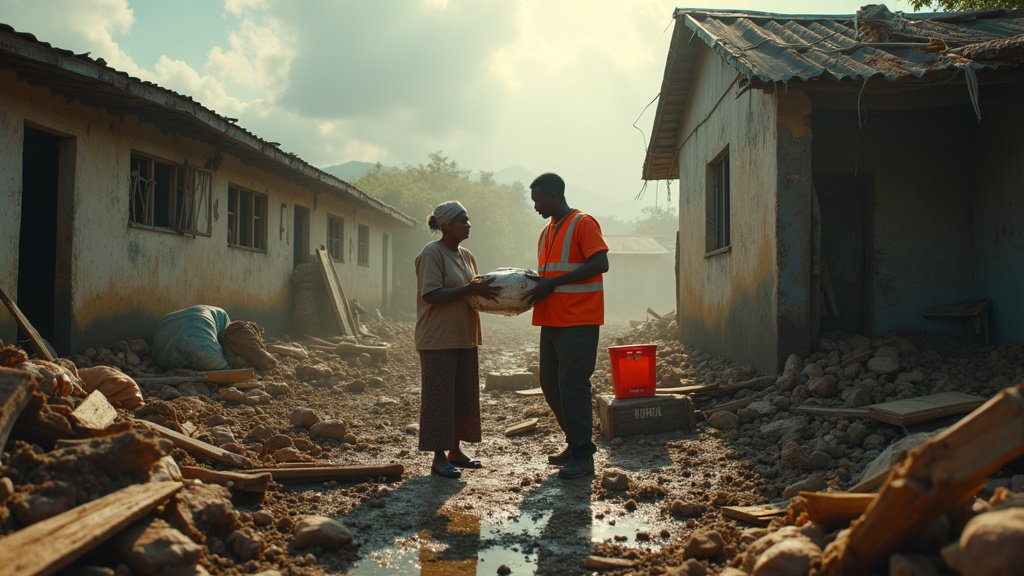
In Jamaica, the Jamaica Red Cross mobilized 400 volunteers to conduct damage assessments, distribute relief supplies, and manage emergency shelters. The IFRC dispatched significant humanitarian aid, with the first 64 tons of relief supplies arriving in Jamaica, including shelter kits, solar lamps, and tarpaulins. These kits contained tools for repairing homes, providing immediate shelter and dignity to those who had lost everything. The aid also included cleaning kits, kitchen sets, water storage containers, blankets, and other essential household items.
In Cuba, specialized brigades from the Cuban Red Cross were instrumental in evacuation efforts and conducted search and rescue operations amidst the widespread destruction. The IFRC also sent 20 tons of humanitarian aid to Cuba, comprising kitchen, hygiene, and bedding kits, blankets, mosquito nets, solar lamps, shelter toolkits, and plastic sheeting. The Red Cross network’s global reach and prepositioning strategy, utilizing logistics hubs like the one in Panama City, enabled swift delivery of aid within days of the disaster.
Challenges and Ongoing Efforts
The humanitarian response, while robust, faces significant challenges. Damaged infrastructure, including blocked roads and landslides, severely constrains access to cut-off communities. Limited connectivity further complicates coordination and communication efforts. Many Red Cross volunteers are themselves impacted by the storm, having lost their own homes, yet they continue to serve their communities with dedication.
Beyond immediate relief, the Red Cross Movement is also providing critical psychosocial support to families in crisis. They are also fielding Restoring Family Links (RFL) inquiries to help reconnect families separated by the disaster. The long-term recovery process will be arduous, with significant needs in shelter, health, water, and sanitation. The IFRC has launched an emergency appeal for millions of Swiss francs to assist affected populations over the next two years, underscoring the scale of the ongoing humanitarian effort. The resilience of the Caribbean communities, coupled with the unwavering commitment of the Red Cross Movement, offers a beacon of hope amidst the devastation.
Conclusion
Hurricane Melissa has inflicted immense suffering and destruction across the Caribbean, testing the resolve of its people and the capacity of its infrastructure. However, the tireless work of the Red Cross Movement, from preparedness to immediate relief and ongoing support, exemplifies the power of solidarity in the face of catastrophe. By delivering essential supplies, facilitating search and rescue, and providing vital psychosocial aid, the Red Cross is standing with affected communities, helping them navigate the immediate crisis and begin the long journey toward recovery and rebuilding. The stories of resilience emerging from the disaster zones, amplified by the Red Cross’s unwavering presence, highlight the critical need for continued support for these vulnerable communities.