
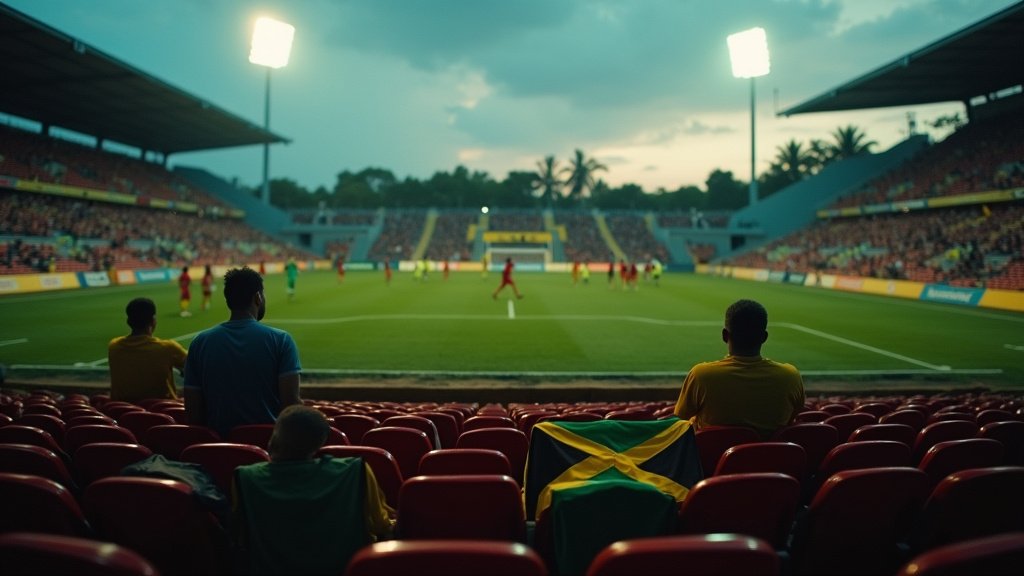
The 2025 Concacaf Gold Cup group stage saw a significant early exit for three prominent Caribbean nations: Jamaica, Curaçao, and Trinidad & Tobago. This collective failure to advance from their respective groups sparked immediate concerns about the region’s readiness for the 2026 FIFA World Cup qualifiers. However, the narrative surrounding Caribbean football took a dramatic and contrasting turn as the 2026 World Cup qualification campaign unfolded, revealing resilience, historic breakthroughs, and eventual disappointment.
Gold Cup 2025 Group Stage Knockout
Jamaica, despite an opening victory against Guadeloupe (2-1), faltered significantly, suffering heavy defeats to Panama (4-1) and Guatemala (0-1), ultimately finishing third in Group C with three points and failing to progress. Their performance was marked by inconsistent play and defensive frailties, leading to criticisms of tactical decision-making.
Curaçao also failed to advance, ending their Gold Cup campaign in third place in Group B with two points. While they displayed commendable defensive discipline and secured draws against Canada (1-1) and El Salvador (0-0), their inability to find the back of the net consistently, scoring just twice in three games, proved their undoing.
Trinidad & Tobago’s journey in the Gold Cup was similarly brief. The Soca Warriors could only manage two draws, against Haiti (1-1) and Saudi Arabia (1-1), and suffered a resounding 5-0 loss to the United States. Their inability to secure a crucial win sealed their fate, placing them third in Group D and ending their tournament hopes. This early exit added to growing unease about the state of Caribbean football on the regional sports news landscape.
Contrasting Paths to World Cup 2026
While the Gold Cup performances raised red flags for Jamaica and Trinidad & Tobago, the subsequent 2026 FIFA World Cup qualification process revealed a dramatically different story for Curaçao and ultimately for Jamaica as well.
In a historic turn of events, Curaçao achieved direct qualification for the 2026 FIFA World Cup. On November 19, 2025, they secured the necessary result – a 0-0 draw against Jamaica – to top their qualifying group. This achievement made Curaçao the smallest nation by population ever to qualify for the World Cup finals, a testament to their strategic development and resilience, a far cry from their Gold Cup group stage struggles. Under the guidance of coach Dick Advocaat, the “Blue Wave” completed a remarkable journey.
Jamaica, despite their Gold Cup disappointment and a subsequent 0-0 draw with Curaçao in their final qualifier, managed to secure a place in the FIFA Play-Off Tournament. This second-place finish in their qualifying group offered them a chance to compete for a World Cup spot, although their failure to secure direct qualification led to head coach Steve McClaren’s resignation.
Trinidad & Tobago, a nation with a rich footballing history, did not manage to qualify directly or secure a playoff spot in the 2026 World Cup cycle. Bermuda also found themselves eliminated from World Cup contention early in the qualification process.
Implications for Caribbean Football
The 2025 Gold Cup’s group stage exits, while concerning for Jamaica and Trinidad & Tobago at the time, did not fully predict the future trajectory of Caribbean football. Curaçao’s unprecedented World Cup qualification stands as a monumental achievement, showcasing that resilience and strategic planning can overcome perceived limitations. Jamaica’s playoff berth, while not direct qualification, still represents an opportunity earned through perseverance after a challenging campaign. The contrasting outcomes highlight the dynamic and often unpredictable nature of international sports and offer valuable lessons as the region looks towards future competitions and the continued development of the beautiful game across the Caribbean.