
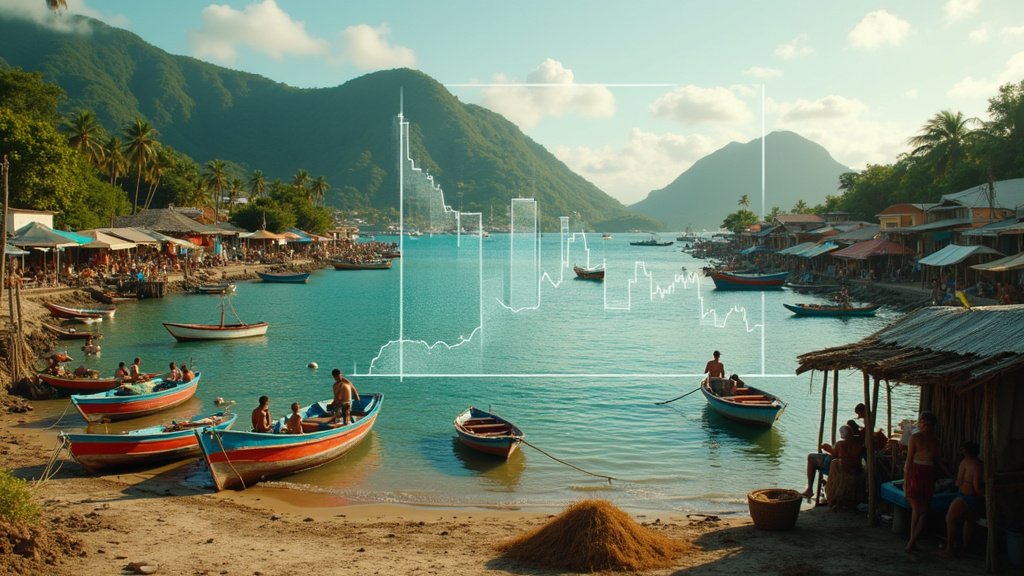
Caribbean Economies on Thin Ice: CDB VP Warns of Acute Vulnerability from Deepening Tourism Reliance
The Caribbean region, long celebrated for its idyllic landscapes and vibrant culture, faces a growing economic peril stemming from its profound dependence on the tourism sector. In a stark warning issued recently, Mr. Ian Durant, Vice President of Corporate Services (Ag.) at the Caribbean Development Bank (CDB), highlighted that this over-reliance leaves the region acutely vulnerable to global economic shocks, threatening sustainable development and stability. The CDB’s message underscores an urgent need for economic diversification across the business landscape.
The CDB’s Alarm Bell on Economic Vulnerability
Speaking at the 2nd Wider Caribbean Regional Risk Conference in Barbados, Mr. Durant painted a clear picture of the risks inherent in the Caribbean’s economic structure. He articulated that limited export diversity, coupled with the inherent elasticity of tourism demand, creates “severe exposure” to external turbulence. “Our countries are small, open economies with no reserve currencies,” Durant stated, emphasizing that the fluctuations in foreign exchange earnings, largely driven by tourism, directly dictate the region’s economic fortunes. The impact of this narrow economic base was starkly felt during global downturns and the unprecedented halt to travel caused by the COVID-19 pandemic, exposing the fragility of economies built predominantly on the fortunes of a single industry.
Tourism: A Double-Edged Sword for Caribbean Business
For decades, tourism has been the engine of economic growth and the primary foreign exchange earner for many Caribbean nations. It accounts for a significant portion of Gross Domestic Product (GDP), often exceeding 30% and in some cases more than half of foreign exchange earnings, as is the case in five CDB Borrowing Member Countries. This sector directly and indirectly supports millions of jobs, making its stability crucial for livelihoods across the region. However, tourism is also a highly elastic product; when global economies falter, demand for travel plummets sharply, triggering cascading negative effects across interconnected sectors like construction, agriculture, and retail. This inherent volatility means that when global economic conditions deteriorate, Caribbean economies experience deeper troughs.
Confronting the Shocks: Lessons from Past Crises
The region’s vulnerability has been repeatedly demonstrated. The 2008 global financial crisis led to a prolonged slump in many Caribbean economies, impacting GDP, increasing unemployment, and widening fiscal deficits. More recently, the COVID-19 pandemic brought the tourism industry to a standstill, causing immense economic hardship and underscoring the urgent need for alternative revenue streams. Beyond economic downturns, the Caribbean is also highly susceptible to natural disasters and climate change impacts, such as hurricanes, which can devastate infrastructure, disrupt services, and further cripple the tourism sector. These recurring shocks highlight that an economy heavily reliant on a single, externally sensitive sector is perpetually on precarious ground.
Diversification: The Imperative for Resilience
The path forward, as advocated by Mr. Durant and other development experts, lies in robust economic diversification. This involves strategically developing and promoting a broader range of export sectors beyond tourism. Potential growth areas identified include agribusiness, the blue economy, business process outsourcing, renewable energy, light manufacturing, and logistics. Improving regional competitiveness—encompassing competitive pricing, required quality standards, and reliable delivery—is crucial for unlocking new export markets. Initiatives such as the CARICOM “25 by 25 plus 5” goal, aimed at reducing food imports, exemplify how focusing on domestic production can bolster resilience and reduce external dependencies.
Addressing Broader Economic Challenges
Alongside the critical need for export diversification, the CDB has also pointed to broader economic challenges that exacerbate vulnerability. Elevated debt levels remain a significant concern, with eight of the CDB’s Borrowing Member Countries still exceeding the 60% debt-to-GDP benchmark. Rising global interest rates and slower nominal GDP growth could reverse recent gains, making debt sustainability a paramount development priority. Ensuring macroeconomic stability, building fiscal buffers, and enhancing access to credit for small and medium-sized enterprises are all integral components of strengthening the region’s overall economic resilience.
The Path Ahead: Strategic Action for a Sustainable Future
Mr. Durant’s warnings serve as a crucial reminder that while tourism is vital, its singular dominance poses an unacceptable risk to the long-term prosperity and stability of Caribbean nations. The news from the CDB signals a call to action for governments, businesses, and regional organizations to collectively pursue intentional policy actions and strategic investments. By fostering competitiveness, embracing innovation, and actively diversifying their economic bases, Caribbean economies can begin to transform their inherent vulnerabilities into opportunities for sustainable growth and a more resilient future. The business news from the region emphasizes this urgent need for strategic adaptation.