
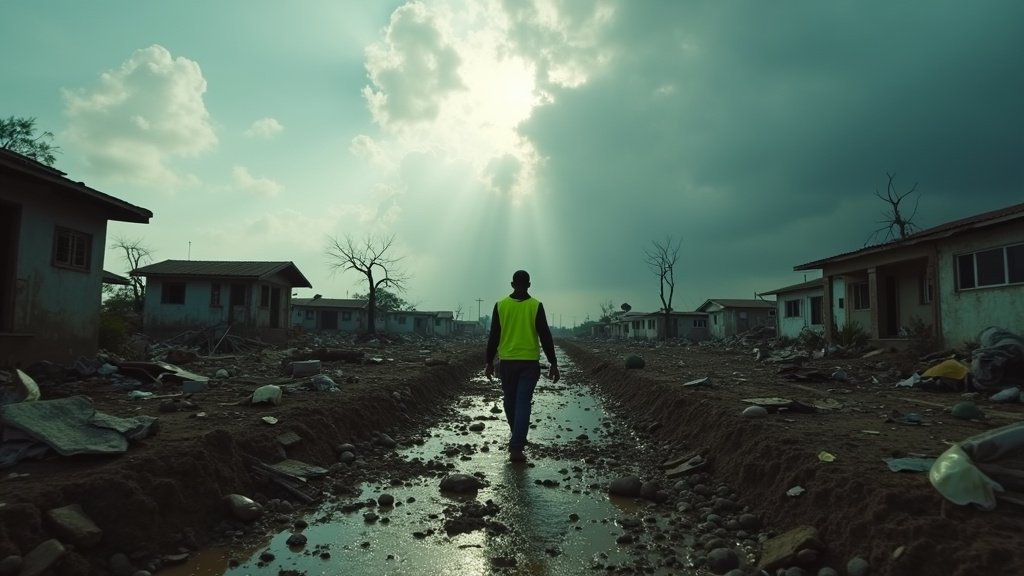
Hurricane Melissa, a monstrous Category 5 storm, has carved a path of unprecedented destruction across the Caribbean, leaving behind a landscape of widespread devastation, a rising death toll, and economic losses estimated in the billions. The powerful hurricane, which formed in late October 2025, made direct landfall in Jamaica as a ferocious Category 5 storm, unleashing catastrophic winds and torrential rainfall that have crippled communities and strained resources throughout the region.
A Storm of Unprecedented Intensity
Forming on October 21, 2025, Hurricane Melissa rapidly intensified into one of the most powerful Atlantic storms on record. It reached Category 5 strength, boasting sustained winds of up to 185 mph (295 km/h) and an exceptionally low central pressure of 892 millibars. This terrifying force culminated in a historic landfall near New Hope, Westmoreland, Jamaica, on October 28, marking the strongest hurricane to ever directly strike the island. The storm’s fury was not limited to Jamaica; it subsequently struck Cuba as a major Category 3 hurricane and brought severe wind and rain to Haiti and the Dominican Republic, before weakening over the Bahamas and Bermuda.
Devastation Across Nations
The immediate aftermath of Hurricane Melissa has revealed the depth of its catastrophic impact across multiple Caribbean nations. In Jamaica, scenes of total destruction emerged, with entire communities reportedly obliterated and tens of thousands of homes damaged or destroyed. The island suffered widespread power outages, with at least 75 percent of the nation losing electricity at one point. Significant damage to infrastructure, including roads, bridges, and telecommunications, has hampered initial relief efforts. As of mid-November, official reports confirmed at least 45 deaths in Jamaica, with numerous individuals still missing and over 30,000 households displaced.
Haiti, already grappling with existing vulnerabilities, bore the brunt of Melissa’s deadly wrath. Heavy rainfall triggered devastating landslides and river overflows, leading to significant flooding that affected over 11,900 houses. At least 43 lives were lost in Haiti, including 10 children, and around 16,000 people sought shelter in temporary sites. The Dominican Republic also experienced severe flooding and landslides, with authorities reporting at least two fatalities and hundreds displaced. In Cuba, the storm caused considerable damage, forcing the evacuation of over 700,000 people, though no fatalities were reported there.
Economic Fallout and Business Disruptions
The economic toll of Hurricane Melissa is staggering and is expected to have long-lasting repercussions for the region’s business sector. Preliminary estimates place the physical damage in Jamaica at approximately US$8.8 billion, equivalent to 41 percent of the country’s 2024 GDP, making it the costliest hurricane in its recorded history. Some models suggest total economic losses could exceed US$20 billion, dwarfing previous storms like Gilbert. The crucial tourism sector in Jamaica has come to a standstill, with international airports shut down and thousands of tourists stranded.
Across the Caribbean, the agricultural sector, vital to many economies, has suffered immense losses, with crops and farmland devastated. Business interruptions are widespread, compounding the challenges faced by nations already experiencing moderate growth projections. The Economic Commission for Latin America and the Caribbean (ECLAC) had previously forecast regional GDP growth of 2.4% for 2025, but the full impact of Melissa will likely necessitate a downward revision and a prolonged recovery period.
Ongoing Recovery and Persistent Challenges
Recovery efforts are now underway across the affected islands, spearheaded by national governments, international aid agencies, and non-governmental organizations. The United Nations, World Bank, IDB, and numerous other bodies are coordinating the delivery of essential supplies, including food, water, medical aid, and temporary shelter. Specialized teams are working to clear millions of tonnes of debris, restore critical infrastructure like power and communication lines, and provide medical care, especially in areas where health facilities were severely damaged. However, the scale of destruction, coupled with pre-existing economic hardships and climate-related vulnerabilities, presents immense challenges. Access to isolated communities remains precarious due to damaged roads, and the disruption to essential services is extensive.
The path to full recovery for the Caribbean will be long and arduous, requiring sustained international support and significant investment. Hurricane Melissa has underscored the region’s vulnerability to extreme weather events and the urgent need for enhanced disaster preparedness and resilient infrastructure development.