
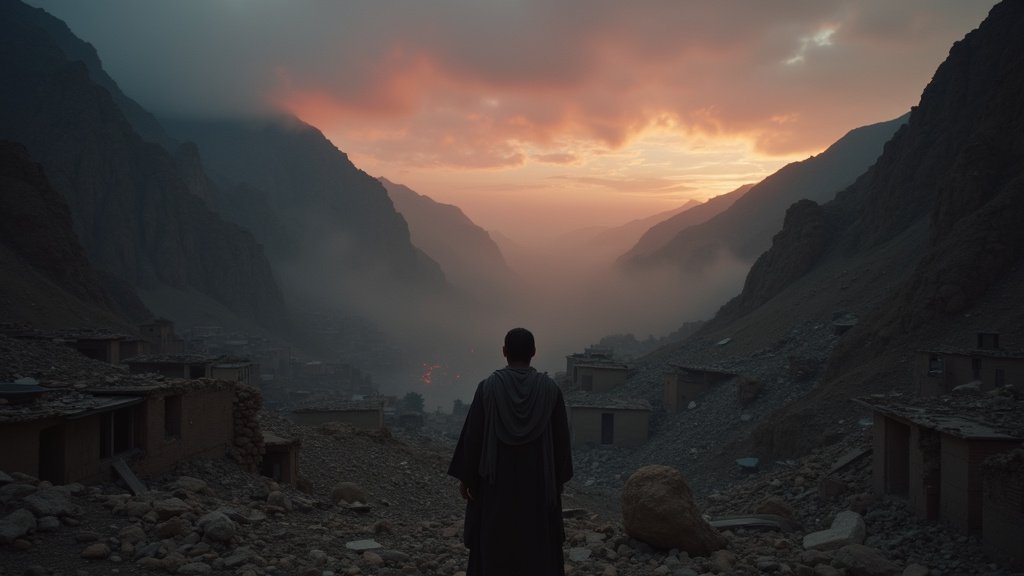
KABUL, Afghanistan – A powerful magnitude 6.0 earthquake struck eastern Afghanistan late on Sunday, August 31, 2025, flattening villages, killing at least 1,400 people, and injuring over 3,000 others. The shallow quake, with its epicenter near Jalalabad in Nangarhar province, unleashed its fury in the rugged mountainous terrain close to the Pakistan border, creating a devastating scene of destruction and loss that is still unfolding. The tremors were felt as far as Kabul and in neighboring Pakistan and India, highlighting the scale of this natural disaster.
A Night of Terror and Destruction
The earthquake, occurring just before midnight, struck with brutal force, causing widespread collapse of homes, many of which are built from vulnerable mud-brick. Remote villages in the eastern provinces of Kunar and Nangarhar bore the brunt of the devastation, with entire communities reportedly wiped out. Taliban authorities confirmed that the death toll had climbed to over 1,400 by Tuesday, September 2, and warned that the number was expected to rise significantly as rescue teams reached more isolated areas. Initial reports indicated over 800 fatalities, with figures escalating as the full extent of the disaster became apparent.
Injuries are widespread, with over 3,000 people wounded, many suffering from severe crush injuries, complex fractures, and traumatic wounds requiring immediate surgical intervention. Hospitals in affected provinces, including Nangarhar Regional and Kunar Provincial hospitals, have been overwhelmed with casualties. The U.S. Geological Survey (USGS) noted that the earthquake’s shallow depth of around 8 kilometers (5 miles) contributed to its destructive power. Multiple aftershocks, some reaching magnitude 5.5, have continued to rattle the region, further terrifying survivors and complicating rescue efforts.
Crippling Challenges Hamper Rescue Efforts
Massive rescue and recovery operations were launched immediately, but the challenging geography of eastern Afghanistan has posed immense obstacles. Landslides triggered by the earthquake, combined with roads already damaged by recent heavy rainfall, have blocked access to many of the worst-hit villages. Some areas are so remote that aid workers and rescue teams have had to trek for hours on foot to reach survivors. Communication lines have also been severely impacted, making it difficult to coordinate efforts and assess the scale of the disaster.
The Taliban government, through its defense ministry, deployed military helicopters for evacuation and rescue sorties, but the limited number of aircraft and the vastness of the affected region mean that many survivors remain trapped under the rubble. The destruction of homes has left thousands displaced, with many forced to sleep in the open as temperatures begin to drop, a grave concern as winter approaches.
Global Appeal and Cautious Aid
In the wake of the devastation, Taliban authorities have issued urgent appeals for international assistance, calling on global actors to provide humanitarian and medical aid. Several countries and international organizations have responded, though concerns remain about the overall level of support and the impact of existing aid cuts on Afghanistan.
The United Nations, through its Office for the Coordination of Humanitarian Affairs (OCHA), alongside agencies like the World Health Organization (WHO) and UNICEF, has been on the ground, delivering essential medical supplies, trauma kits, and providing health services. Australia pledged $1 million, the United Kingdom committed £1 million, and South Korea offered $1 million, with aid often channeled through UN partners to ensure it reaches those in need and not the Taliban regime, which is not widely recognized internationally.
However, the response has been hampered by the country’s ongoing humanitarian crisis, exacerbated by years of conflict and significant reductions in foreign aid since the Taliban’s return to power in 2021. Many traditional donor countries have yet to come forward with substantial financial assistance, and some aid organizations warn that existing resources are rapidly depleting.
A Nation Prone to Disaster
Afghanistan’s location along the Hindu Kush mountain range, where the Indian and Eurasian tectonic plates meet, makes it one of the world’s most earthquake-prone regions. This latest disaster follows other deadly quakes in recent years, including the devastating event in Herat province in October 2023, which killed over 2,000 people, and a quake in Paktika province in June 2022 that claimed more than 1,000 lives.
The country is already grappling with widespread poverty, drought, and displacement, with almost half its population requiring humanitarian assistance even before this earthquake struck. The compounding crises highlight the extreme vulnerability of Afghanistan’s population and the immense challenges ahead for recovery and rebuilding. The full humanitarian response plan for the eastern region requires over $111 million for the next four months, with a significant funding gap remaining.
As the world watches, the immediate focus remains on search and rescue, providing life-saving medical care, and ensuring shelter and basic necessities for tens of thousands displaced by this catastrophic event. The resilience of the Afghan people will be tested once again as they face the daunting task of recovery amid ongoing humanitarian challenges and a precarious geopolitical landscape.