
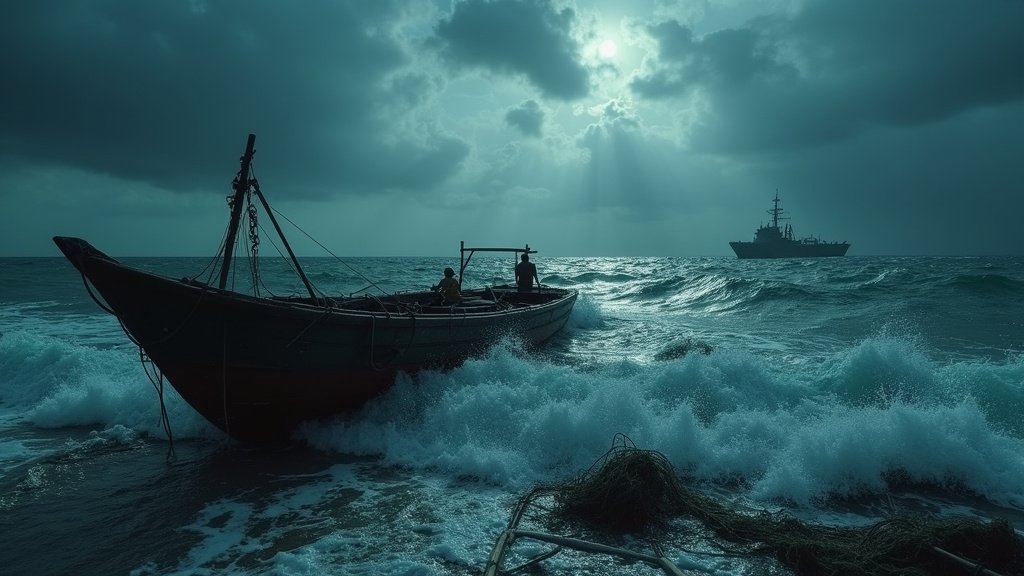
Families are suing the U.S. government today. This lawsuit concerns a deadly boat strike. It happened in the Caribbean Sea. Two Trinidadian men died in the incident. Chad Joseph, 26, and Rishi Samaroo, 41, were killed. This news comes out as a major regional development.
The Fatal Strike
The incident occurred on October 14, 2025. A U.S. missile struck a small boat. The vessel was traveling from Venezuela to Trinidad. Six people were on board. All six died in the attack. This is according to a federal complaint. The families have not heard from the men since October 12. This date was before their expected return home. Chad Joseph was a father of three. He was married. Rishi Samaroo had also served time for a past crime. He was trying to rebuild his life. He worked on farms and fished in Venezuela. Both men were returning to their homes in Las Cuevas, Trinidad. Their families say they were simply fishermen and farmworkers. They dispute U.S. claims about the boat’s purpose. The Trinidadian government also states it has no information linking the men to illegal acts. The lawsuit calls these deaths “premeditated and intentional killings.” It asserts they “lack any plausible legal justification.” Lawyers describe the event as “simply murders on the high seas.”
Legal Action Filed
A wrongful death lawsuit was filed on January 27, 2026. It was lodged in the U.S. District Court for the District of Massachusetts. Lenore Burnley, Chad Joseph’s mother, is a plaintiff. Sallycar Korasingh, Rishi Samaroo’s sister, also filed suit. They represent the surviving family members. Their legal team includes the American Civil Liberties Union (ACLU). It also includes the Center for Constitutional Rights (CCR). Seton Hall Law School and the ACLU of Massachusetts are also involved. The suit invokes the Death on the High Seas Act. It also uses the Alien Tort Statute. These laws allow families to sue for deaths at sea. They also permit foreign citizens to seek redress for human rights violations in U.S. courts. The lawsuit names the U.S. government as the defendant. It seeks unspecified damages. Families want accountability. They also seek to halt future strikes. This lawsuit marks the first legal challenge of its kind. It specifically targets the Trump administration’s boat strike policy.
Broader Military Campaign
The October 14 strike was part of a larger U.S. military operation. This campaign began in September 2025. It is known as Operation Southern Spear. The Trump administration launched it. It targets small boats in the Caribbean and eastern Pacific. The administration claims these boats smuggle drugs. It labels targets as “narco-terrorists.” President Trump posted a video of the October strike. He claimed intelligence confirmed drug trafficking. He stated “six male narcoterrorists” were killed. This operation has involved at least 36 strikes. It has reportedly killed over 125 people. The lawsuit argues the U.S. is not engaged in an armed conflict in the region. Therefore, the laws of war do not justify lethal force. Experts and human rights groups question the legality of these strikes. They view them as potentially unlawful extrajudicial killings. The strikes have occurred without explicit congressional authorization. This raises significant legal and human rights concerns.
Regional Tensions and Future Implications
This legal action highlights escalating tensions in the region. The strikes have coincided with increased U.S. pressure on Venezuela. Some critics suggest the campaign aims for regime change. Others point to broader U.S. geopolitical interests. The lawsuit’s outcome could set precedents. It may influence future U.S. military operations abroad. It could also impact international maritime law. The families seek justice for their lost loved ones. They hope to ensure accountability for these actions. This news is a significant regional development today. The legal battle is ongoing. It will likely involve complex legal arguments. These will center on national security, international law, and the definition of armed conflict. The case will test the administration’s justification for its use of deadly force at sea. This represents a critical moment for human rights and accountability in current news.