
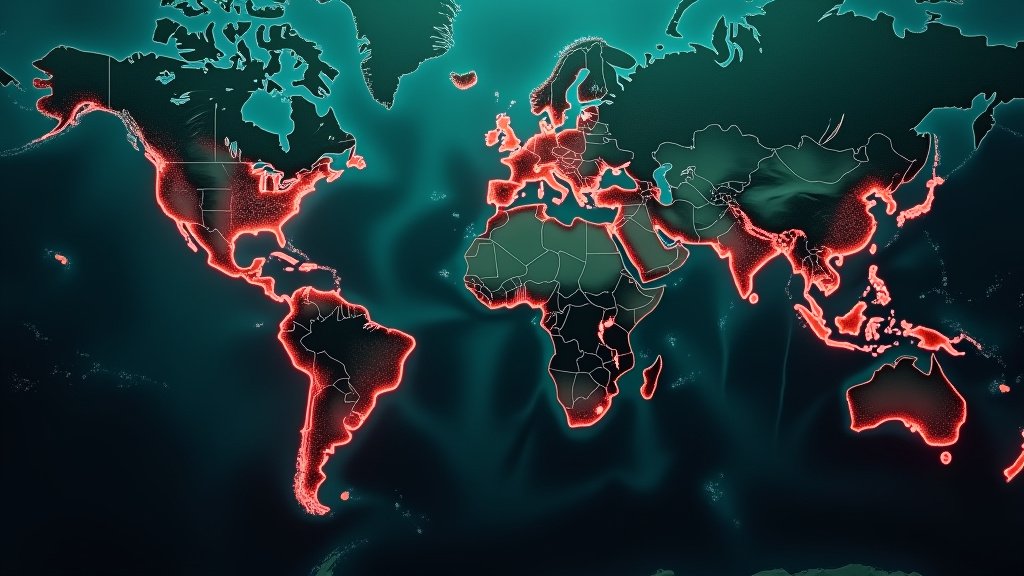
A Landmark Study in Cross-Continental Cooperation
The “Criminal Networks and Routes from the Caribbean to Europe: A Deep-Dive into Cocaine Trafficking and Other Illicit Activities” study represents a historic collaboration among numerous international institutions. For the first time, a coordinated effort has mapped the specific routes, modus operandi, and the multifaceted criminal activities of networks operating within the Caribbean and transporting illicit goods to Europe. This landmark research provides an unprecedented look at the region’s escalating role as a primary pivot point in the global supply chain for illicit goods, with a particular emphasis on the surging flow of narcotics toward European markets.
The “Southern Corridor” Under Scrutiny
The study specifically identifies the “Southern Corridor,” encompassing Guyana, Suriname, and French Guiana, as a strategic theater for global illicit supply chains. It highlights a dangerous convergence where the same networks trafficking cocaine to European ports are increasingly involved in a spectrum of other illicit activities. These include environmental crimes, illegal firearms smuggling, and sophisticated money laundering operations, underscoring the poly-criminal nature of these organizations.
Shifting from Reactive Defense to Proactive Disruption
Lt. Col. Michael Jones, Executive Director of CARICOM IMPACS, emphasized at the study’s launch in early March 2026, that the findings reveal an increasingly complex and dangerously fluid landscape of illicit trade. He stated, “For too long, our understanding of the illicit corridors connecting the Caribbean to Europe has been framed by fragments of data. Today, we change that narrative. We are moving from a posture of reactive defense to one of proactive, intelligence-led disruption”. This new approach aims to identify bottlenecks in criminal operations and unmask vessels of interest long before they reach their destinations.
The Complexities of Maritime and Digital Domains
The report delves into significant vulnerabilities within both the maritime and digital domains. It meticulously traces a pipeline that begins at isolated Caribbean marinas and culminates in Europe’s ports. The study also points to the challenges security forces face in navigating fragmented legal systems and the lack of adequate assets to effectively patrol vast maritime territories. The convergence of these factors creates a fertile ground for transnational organized crime to thrive.
International Collaboration and Future Implications
The study’s collaborators include the European Union-funded EL PACCTO 2.0 program, InSight Crime, CARICOM IMPACS, the EU’s EMPACT program, and FRONTEX, the European border agency. This broad coalition signifies a crucial step towards harmonizing prosecutorial strategies and enhancing judicial cooperation across the Caribbean, South America, and Europe to ensure no jurisdictional gaps become safe havens for organized crime. European Union officials noted that the report will guide future cooperation between Caribbean and European agencies to strengthen border security, improve intelligence sharing, and disrupt criminal networks operating across the Atlantic. The partners involved view the study as an evolving tool to help law enforcement agencies respond more effectively to the dynamic tactics of organized crime in the region.
FAQ: People Also Ask
What is the “Southern Corridor” in the context of transnational organized crime?
The “Southern Corridor” refers to a strategic region in the Caribbean, specifically encompassing Guyana, Suriname, and French Guiana, identified as a key transit point and hub for global illicit supply chains, particularly for cocaine trafficking from Latin America to Europe.
What types of crimes are associated with the drug trafficking networks in the Caribbean?
Beyond drug trafficking, these networks are increasingly involved in a range of other illicit activities, including environmental crimes (such as illegal gold mining), illegal firearms smuggling, and sophisticated money laundering operations, highlighting their poly-criminal nature.
What is the significance of this new study on transnational organized crime in the Caribbean?
This study is significant because it represents the first coordinated effort by multiple international institutions to comprehensively map the routes, methods, and networks of criminal groups operating in the Caribbean and supplying illicit goods to Europe. It provides an unprecedented look at the region’s role in global illicit trade and aims to shift security efforts from a reactive to a proactive, intelligence-led approach.