
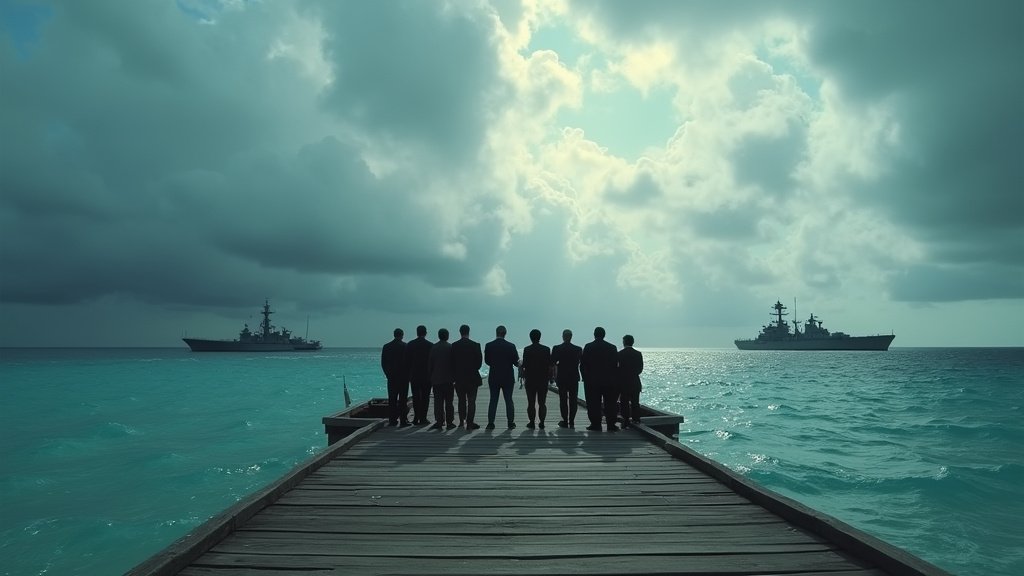
Caribbean Nations Divided Amidst US Military Action in Venezuela
Headline: Caribbean Tensions Flare: US Action in Venezuela Divides Nations, Fuels Regional Instability
Caribbean nations face a complex geopolitical challenge. This news today highlights deep divisions. The United States has launched a significant military operation in Venezuela. This action resulted in the capture of President Nicolás Maduro. The US plans to temporarily control Venezuela. Its goal is to oversee a political transition. This move has sparked varied reactions across the Caribbean. It raises serious concerns about regional stability.
Background to the Conflict
The situation stems from years of escalating US-Venezuela tensions. Washington has long sought to pressure Maduro’s government. This pressure has included extensive sanctions. These sanctions severely impacted Venezuela’s economy. The US has also increased its military presence in the Caribbean. Operation Southern Spear targeted alleged drug trafficking. However, some experts saw it as a means for regime change. Recent US actions included lethal boat strikes. These strikes targeted vessels linked to Venezuelan drug networks. Tensions have also involved naval blockades of oil tankers. The US has pursued charges of narcoterrorism and drug trafficking against Maduro.
US Military Operation and Maduro’s Capture
On January 3, 2026, US forces executed a large-scale military operation. The operation involved substantial air support and special forces. They captured President Nicolás Maduro and his wife. They were flown to a US warship in the Caribbean. US President Donald Trump announced the capture. He stated the US would “run the country” during a transition. Maduro and his wife face drug trafficking and narco-terrorism charges in New York. Pentagon chief Pete Hegseth confirmed nearly 200 US military personnel participated. The operation was framed as enforcing justice and targeting criminal networks.
Caribbean Reactions: A Region Divided
The US action has fractured the Caribbean’s response. Many nations expressed deep concern. The Caribbean Community (CARICOM) called for calm. CARICOM warned of risks to regional stability and economic resilience. They emphasized the importance of international law and dialogue. The region is committed to being a “Zone of Peace”.
Trinidad and Tobago’s Stance
Trinidad and Tobago is notably distancing itself from the US action. Prime Minister Kamla Persad-Bissessar stated the nation was not a participant. The country maintains peaceful relations with Venezuela. Trinidad and Tobago stressed the need for stability in the southern Caribbean. The nation holds a long-standing partnership with the US. However, it remains committed to a constructive relationship with Venezuela.
Other Regional Responses
The BVI government has not issued an official statement. The United Kingdom, responsible for external affairs, adopted a cautious tone. UK Prime Minister Keir Starmer highlighted the need for legality and multilateral engagement. Second District Representative Melvin “Mitch” Turnbull voiced concerns. He warned the military takeover could deepen regional instability. He urged respect for international law and dialogue. Some Caribbean leaders criticized CARICOM’s response as muted. Others, like Guyana, supported efforts upholding democratic norms. Panama’s President stated support for the democratic process. However, Mexico’s government warned military actions risk regional stability.
Implications for the Caribbean
This event has broad implications for the Caribbean. Regional stability is a major concern. The capture of a sitting head of state is seen as a dangerous precedent. It violates international law and the UN Charter for many. Potential economic consequences are significant. The Caribbean relies heavily on energy imports. Disrupted oil supply chains historically cause higher fuel prices. Increased transportation costs strain fragile economies. Maritime security is also a new concern. Shipping operations face increased risks and insurance premiums. Airspace closures affect travel and tourism. Tourism-dependent economies are particularly vulnerable.
Global Reaction and Future Outlook
The UN Secretary-General expressed alarm. He warned the actions constitute a dangerous precedent. The UN emphasized respect for international law. Many Latin American governments condemned the US action. They voiced concerns about foreign government control of resources. Russia and China also denounced the US operation. They called for Maduro’s immediate release. The future governance of Venezuela remains uncertain. The US plans to run the country temporarily. This raises profound questions about future troop deployment. The region faces a critical turning point. Citizens and governments must navigate complex foreign policy alignments. The news today underscores the fragile balance of power. Stability and prosperity for the Caribbean depend on careful diplomacy. The news emphasizes the interconnectedness of regional security.