
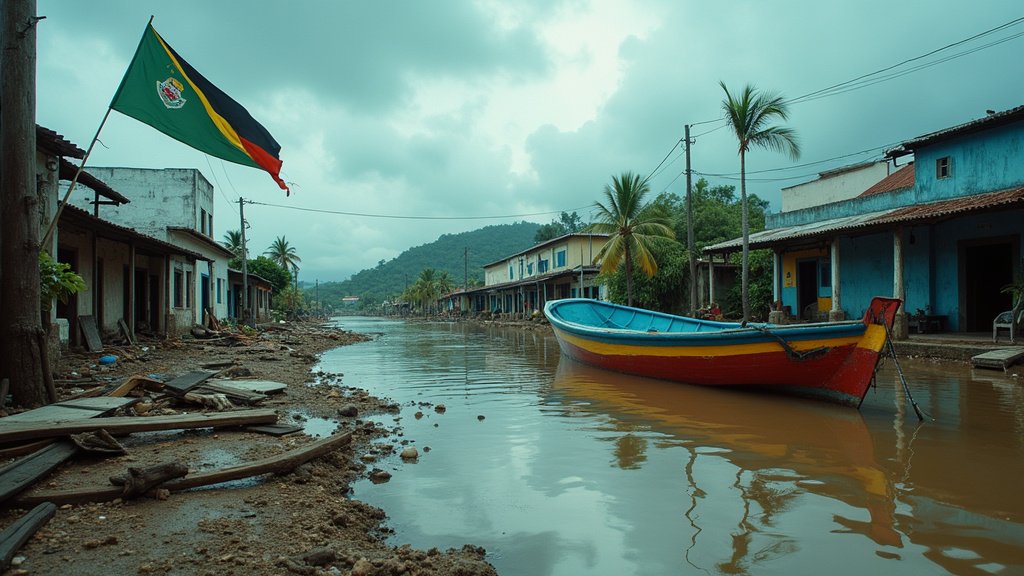
The Latin America and Caribbean region is confronting a tumultuous period marked by the destructive impacts of Hurricane Imelda, a deepening humanitarian crisis in Haiti, and persistent insecurity in Colombia, according to the latest weekly situation update as of October 3, 2025.
Hurricane Imelda Leaves Trail of Destruction and Disruption
Hurricane Imelda, the ninth named storm and fourth hurricane of the highly active 2025 Atlantic hurricane season, has brought significant devastation to eastern Cuba. The storm triggered widespread flooding and landslides, forcing the evacuation of over 18,000 people and resulting in at least two fatalities. Prior to strengthening into a hurricane, Imelda had already caused substantial rainfall across the Greater Antilles, including Puerto Rico and the Dominican Republic, where floodwaters claimed four lives. In Cuba, communities in the Guantánamo and Santiago de Cuba provinces were particularly hard-hit, with some areas receiving over 200 mm of rain, leading to cut-off communities and damaged infrastructure. The storm’s impact, though most severe in Cuba, also contributed to the overall dynamic of a relentless Atlantic hurricane season that has seen numerous storms, with forecasts predicting above-normal activity.
Haiti’s Food Insecurity Crisis Reaches Critical Levels
In Haiti, the humanitarian landscape remains dire, with an alarming 5.7 million people facing acute food insecurity, a situation exacerbated by ongoing gang violence and economic collapse. The World Food Programme (WFP) has issued an urgent appeal for $139 million to assist vulnerable families over the next 12 months, warning that funding shortfalls are forcing drastic cuts to essential aid, including the suspension of hot meals and a 50% reduction in food rations. The crisis is particularly severe in the capital, Port-au-Prince, and in the Ouest, Nord-Ouest, and Grand’Anse departments, where crop losses, reduced income, high food prices, and mass displacement contribute to widespread hunger and malnutrition. Over 1.4 million people are internally displaced, many living in precarious conditions with limited access to basic services, pushing them to the brink of starvation. Projections indicate that food insecurity could intensify further from March to June 2026, especially with the ongoing lean season.
Colombia’s Persistent Violence Disrupts Lives and Livelihoods
Colombia continues to grapple with escalating violence between various armed groups, significantly impacting civilian populations. In the La Guajira region, approximately 1,500 people are reportedly confined due to the conflict, severely disrupting their livelihoods and access to essential services like healthcare and markets. This situation in La Guajira reflects a broader regional security crisis across Colombia, where clashes between national security forces and armed groups, as well as inter-group fighting, have led to numerous civilian casualties, displacement, and severe restrictions on freedom of movement. The use of explosive devices and drones by armed groups has increased, contributing to a dire humanitarian situation that some experts predict could make 2025 the worst year in a decade for humanitarian impact in the country. The competition for control over illicit economies fuels this ongoing conflict, undermining peace efforts and destabilizing communities.
Broader Regional Challenges and Economic Outlook
Beyond these critical events, the regional news landscape highlights other pressing issues. Intense rainfall and flooding in Mexico between October 6 and 9 resulted in at least 72 deaths and displaced approximately 7,500 people, affecting over 120 municipalities. Similarly, Honduras faced widespread flooding and landslides, causing 15 fatalities and impacting nearly 29,000 people, leading to a state of emergency in several departments. In terms of economic outlook, the Economic Commission for Latin America and the Caribbean (ECLAC) has revised its regional growth forecast upward, estimating GDP growth of 2.4% for 2025, signaling cautious optimism despite global uncertainties. However, on the travel front, several Caribbean nations, including Jamaica and Cuba, experienced significant drops in US visitor arrivals in October 2025, potentially linked to the US government shutdown. Amidst these challenges, there was also a historic development in the Caribbean on October 1, 2025, marking the beginning of free movement for people between Barbados, St. Vincent and the Grenadines, Dominica, and Grenada, a significant step for regional integration.
Regional Wrap-up
The week of October 3, 2025, underscores the multi-faceted challenges facing Latin America and the Caribbean. From the immediate aftermath of natural disasters like Hurricane Imelda and severe weather events, to the persistent humanitarian crises driven by conflict and insecurity in Haiti and Colombia, the region is under considerable strain. The active hurricane season serves as a stark reminder of ongoing vulnerabilities, while economic forecasts offer a glimmer of hope amidst the complex socio-political and environmental landscapes. Addressing these interconnected issues will require sustained regional cooperation and international support.