
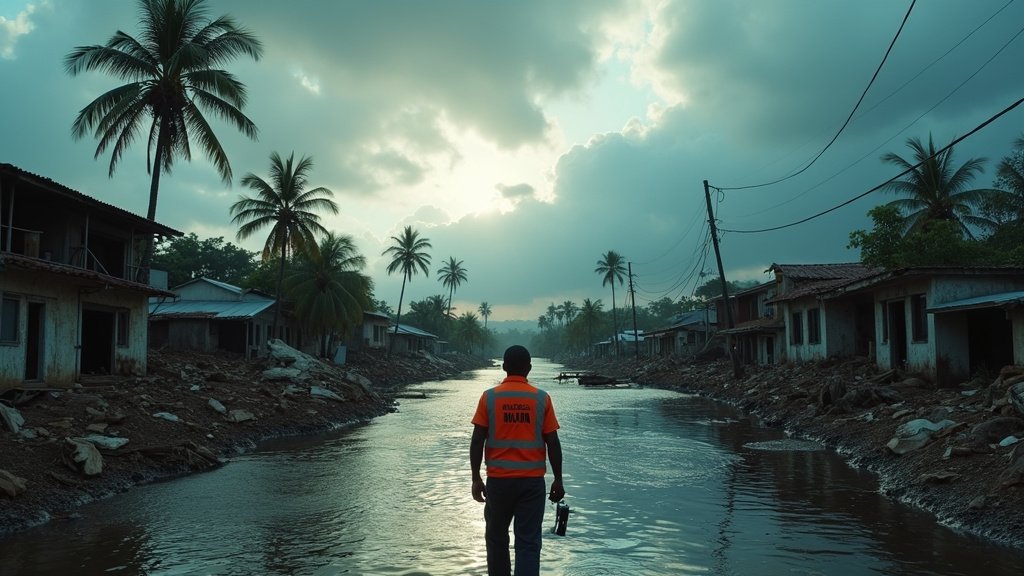
Hurricane Melissa, a ferocious Category 5 storm, has carved a path of unprecedented destruction across Jamaica, Cuba, and Haiti, leaving a trail of devastation and a mounting death toll. The hurricane, which made landfall in Jamaica on October 28, 2025, as the strongest storm on record for the island, has triggered a grave humanitarian crisis, prompting the United Nations to express profound concern and call for massive international support.
Jamaica Reels from Record-Breaking Storm
Jamaica bore the brunt of Hurricane Melissa’s fury, experiencing the most powerful storm in its recorded history. The Category 5 hurricane, with sustained winds of 185 mph, struck the island on October 28, 2025, causing catastrophic damage. Preliminary estimates from the World Bank and the Inter-American Development Bank place the physical damage at a staggering US$8.8 billion, equivalent to 41% of Jamaica’s 2024 GDP, making it the costliest natural disaster in the nation’s history. Over 122,000 dwellings were demolished or severely damaged, leaving thousands homeless and numerous communities cut off by collapsed roads and widespread flooding. Power outages affected approximately 45% of the island’s population, with many areas still lacking electricity weeks later. At least 46 deaths have been attributed to the storm in Jamaica.
Cuba Faces Widespread Devastation and Evacuations
Following its landfall in Jamaica, Hurricane Melissa, though weakened to a Category 3, continued its destructive path, battering eastern Cuba on October 29, 2025. The storm brought sustained winds of 120 mph and inundated parts of the island with heavy rainfall, causing extensive damage to homes and infrastructure. Authorities mandated the evacuation of over 700,000 people ahead of the storm’s arrival. In the aftermath, more than 60,000 homes sustained total or partial damage, and over two million people may require assistance. In Santiago de Cuba, over half the province remained without electricity more than two weeks after the storm, compounded by problems with water supply and telecommunications. The storm’s impact has also exacerbated existing vulnerabilities, with a significant increase in arboviral diseases reported across the country.
Haiti Reports Significant Fatalities and Deepened Hardships
Haiti also suffered gravely from Hurricane Melissa, reporting at least 88 fatalities, including 10 children, according to initial reports. The storm’s outer rainbands unleashed torrential rains, leading to severe flash floods and deadly landslides, particularly impacting the southern coastal town of Petit-Goâve. In Petit-Goâve alone, over 160 homes were destroyed and more than 160 others damaged, displacing thousands. The devastating impact has deepened existing hardships in Haiti, a nation already grappling with instability, violence, and hunger.
International Response and UN Concern
UN Secretary-General António Guterres expressed grave concern over the widespread devastation and loss of life, standing in solidarity with the affected nations. He called for the mobilization of massive resources to aid in recovery efforts, emphasizing the crucial role of international support. The UN has allocated US$4 million from the Central Emergency Response Fund (CERF) to support immediate humanitarian operations in Jamaica, with similar support being mobilized for Cuba and Haiti. Agencies like UNICEF are working to address the needs of over 700,000 affected children across the Caribbean, providing nutrition, safe water, and mental health support. International aid efforts are underway, with countries and organizations like the UK, IOM, and Airbnb.org deploying medical teams, providing emergency housing, and distributing essential supplies.
Context: An Active and Intense Hurricane Season
The 2025 Atlantic hurricane season was predicted to be highly active, with forecasts indicating an increased likelihood of major hurricanes. Factors such as La Niña conditions and above-average sea surface temperatures in the Atlantic and Caribbean contributed to this outlook. Hurricane Melissa, which formed from a tropical wave originating in West Africa, rapidly intensified into a Category 5 storm, becoming the strongest tropical cyclone worldwide in 2025 and setting new records for wind speed measurements. Its intensity and catastrophic impacts underscore the growing threat of extreme weather events in the Caribbean region, highlighting the urgent need for continued preparedness and robust disaster risk management strategies.