
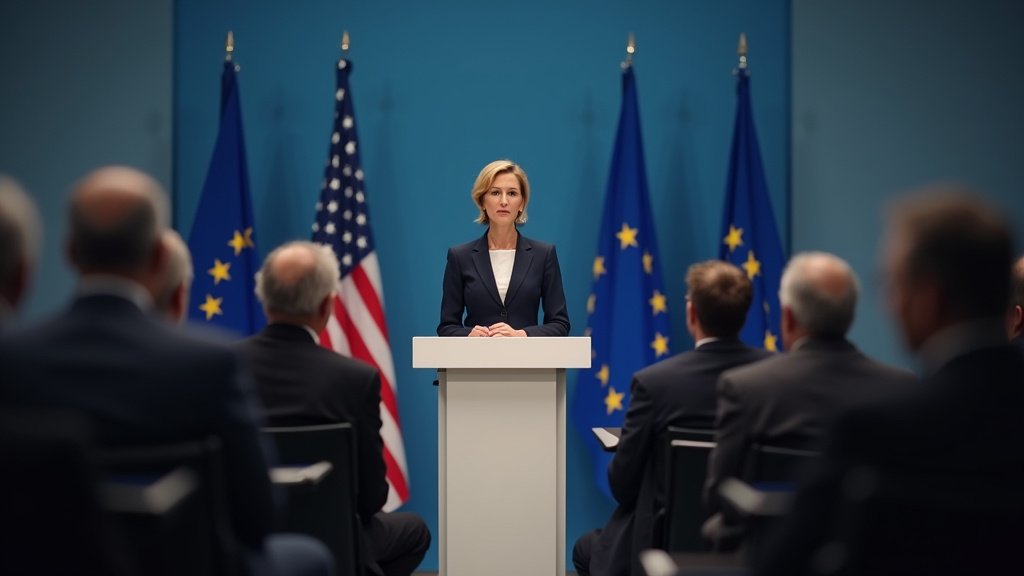
Europe is pushing back. Officials rejected claims of ‘civilizational erasure.’ These accusations came from the United States. The Munich Security Conference hosted this debate. EU foreign policy chief Kaja Kallas led the response. She called the notion ‘European-bashing.’ Kallas addressed the conference on Sunday. This followed a speech by U.S. Secretary of State Marco Rubio. Rubio offered a firm message. He spoke of reshaping the trans-Atlantic alliance. He also highlighted U.S. policy priorities. The U.S. administration is sticking to its positions. These include migration, trade, and climate. European officials, however, hold different values. They champion free speech. They support climate action. They advocate for free trade.
U.S. Criticisms Spark European Pushback
The U.S. national security strategy released in December raised concerns. It suggested Europe faced ‘civilizational erasure.’ This stagnation was linked to specific issues. These included immigration policies. Declining birth rates were also mentioned. The strategy cited ‘censorship of free speech.’ It also noted ‘suppression of political opposition.’ A ‘loss of national identities’ was another point. Kallas countered this directly. She stated, ‘woke, decadent Europe is not facing civilizational erasure.’ She highlighted Europe’s appeal. Many people still wish to join the EU. She noted interest from Canada. Kallas emphasized Europe’s positive contributions. Europe advances humanity. It defends human rights. This brings prosperity, she argued. Therefore, she found the accusations hard to believe.
Rubio’s Message and European Values
Marco Rubio spoke at the conference. He aimed to reassure European allies. He stated the trans-Atlantic era’s end was not the goal. He acknowledged shared roots. “Our home may be in the Western hemisphere, but we will always be a child of Europe,” Rubio said. However, he maintained a firm stance on U.S. priorities. These included migration, trade, and climate. European officials, in turn, reaffirmed their commitment to their own values. These core values include free speech and free trade. They also champion action on climate change. This news reflects ongoing global discussions.
Defending Free Societies
British Prime Minister Keir Starmer also addressed the topic. He stressed the need to defend Europe’s societies. Starmer called for defending “vibrant, free and diverse societies.” He emphasized peaceful coexistence. People of different backgrounds can live together. He stated this is not outdated. Instead, it makes societies strong. Kallas acknowledged areas of agreement with Rubio. She also noted clear differences. “We don’t see eye to eye on all the issues,” she said. However, she believed they could work together. This sentiment reflects the complex nature of modern news.
Shifting Trans-Atlantic Landscape
These events highlight a changing trans-Atlantic relationship. The Trump administration’s rhetoric has often strained ties. Issues like trade tariffs and Greenland have caused friction. German Chancellor Friedrich Merz called for repairing trust. He noted the US cannot “go it alone.” French President Emmanuel Macron stated Europe had been “vilified.” He defended Europe’s approach to immigration. He pushed back against characterizations. European leaders seek greater autonomy. They aim for a stronger, more independent Europe. This news is crucial for understanding world affairs.
The Core of the Disagreement
The core of the disagreement lies in fundamental values and policies. The U.S. strategy views mass migration as disruptive. It sees it as a threat to social cohesion. It links it to “civilizational erasure.” Europe, on the other hand, emphasizes openness. It defends human rights and free speech. Kallas pointed out that people want to join Europe. This suggests its model is still attractive. The debate shows diverging perspectives. It shapes the current global dialogue. This is vital world news.
Starmer’s Call for European Strength
Keir Starmer emphasized Britain’s renewed connection with Europe. He stated, “There is no British security without Europe, and no European security without Britain.” He called for a stronger European defense alliance. Greater autonomy for the continent is also key. This requires stronger ties with the EU. Starmer rejected isolationism. He stated, “in dangerous times, we would not take control by turning inward – we would surrender it.” He sees Britain as a partner for a stronger Europe. This news underscores evolving international partnerships.
Conclusion
The pushback from European officials signifies a resolve to define their own path. They are asserting their values. They are defending their societies. The transatlantic alliance faces adjustments. Differences on policy and values persist. Yet, dialogue continues. European leaders are committed to their vision. They seek a future based on their own principles. This ongoing global news highlights a dynamic international landscape.