
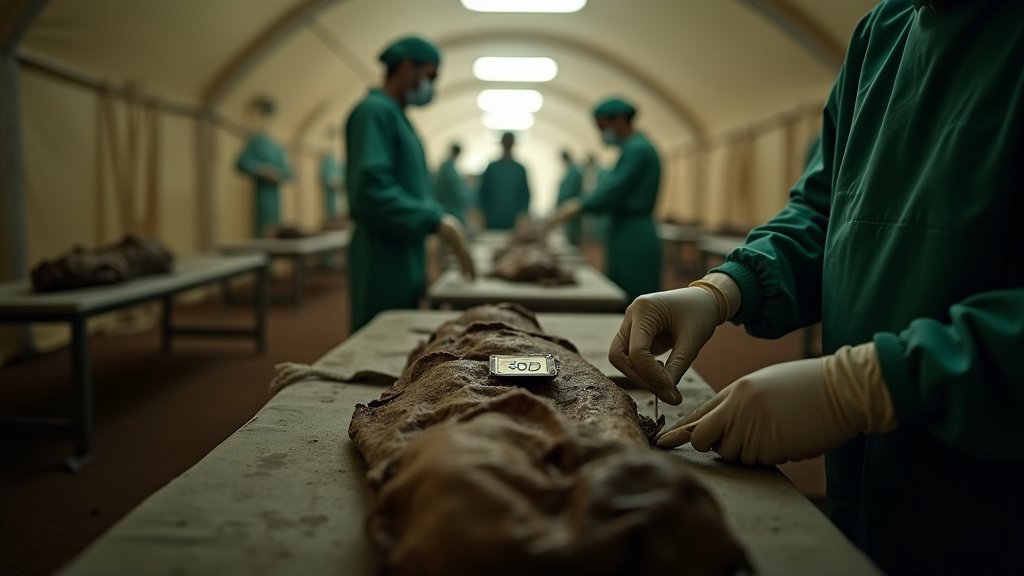
The fragile ceasefire brokered to halt hostilities in Gaza is increasingly overshadowed by deeply contentious exchanges of deceased individuals between Israel and Hamas, casting a long shadow over hopes for lasting peace. While a phased peace plan aims to de-escalate the conflict, recent developments surrounding the return of Israeli hostage remains and Palestinian bodies have exposed profound mistrust and significant humanitarian challenges, impacting the stability of the current truce.
The Grim Exchange: A Central Component Under Strain
The US-brokered ceasefire agreement, which began on October 10, 2025, stipulated the phased return of hostages and their remains as a critical component of the initial phase. This process involves Hamas returning the bodies of Israeli hostages held in Gaza, facilitated by the International Committee of the Red Cross (ICRC), in exchange for Israel returning the bodies of Palestinian detainees. Reports indicate a consistent exchange ratio of approximately fifteen Palestinian bodies for each Israeli hostage remains handed over.
Recent exchanges have seen Israel confirm the receipt of remains belonging to figures such as Meny Godard, one of the last remaining hostages, with the process continuing throughout November 2025. While the initial exchange saw Hamas release 20 living hostages and commit to returning the remains of 28 deceased captives, the process for the latter has been slower and marked by significant disputes. The IDF stated on November 5, 2025, that Hamas is “required to uphold the agreement and take the necessary steps to return all the deceased hostages.”
Accusations and Discrepancies Fueling Mistrust
The exchange mechanism has been severely strained by accusations and discrepancies. Israel has accused Hamas of deliberately slowing down the handovers and, in at least one highly publicized instance around mid-October 2025, of returning the body of a Palestinian resident of Gaza instead of a hostage, a repeat of a previous error. The Israeli military even released drone footage reportedly showing Hamas terrorists staging the recovery of remains. Hamas, in turn, has stated it handed over remains “to counter the enemy’s claims” and argues that the widespread devastation in Gaza makes the search for bodies a difficult task requiring specialized equipment.
These disputes have had tangible consequences. Israel has linked the pace of body deliveries to retaliatory measures, including limiting the entry of humanitarian aid into Gaza, reducing truck entries, and restricting fuel supplies. The reopening of the critical Rafah crossing has also faced delays directly linked to the pace of these returns, further exacerbating the humanitarian crisis.
The Humanitarian Crisis: Identification Challenges and Signs of Mistreatment
Adding to the grim nature of these exchanges are the profound challenges faced by health authorities in Gaza in identifying the returned Palestinian bodies. Doctors at Nasser Hospital in Khan Younis report receiving bodies with numbered tags but no accompanying documentation, information, or DNA kits. The lack of specialized equipment, coupled with the condition of many bodies—described as decomposed, mutilated, showing signs of torture, or arriving with wrists tied—makes identification a “primitive and heartbreaking” task.
Some reports have indicated that bodies returned to Gaza bore marks of mistreatment or torture, claims Israel has generally denied, stating its forces operate in accordance with international law. The sheer volume of returned Palestinian bodies, totaling over 330 by mid-November 2025 according to Gaza’s health ministry, with only a fraction formally identified, has forced authorities to resort to mass burials in designated “Cemeteries for the Unknown,” denying families closure and basic dignity for their deceased loved ones.
Impact on the Ceasefire and Global Scrutiny
The ongoing disputes over the exchange of the deceased are not merely a humanitarian concern; they directly impact the stability of the ceasefire and the progression of the broader peace plan. The completion of phase one, including the full return of all Israeli hostage remains, is seen as a prerequisite for moving towards subsequent phases involving Hamas’s disarmament and the reconstruction of Gaza.
The international community, including the United Nations, is closely monitoring these developments. While the UN Security Council has backed a US plan for Gaza’s future, its implementation remains uncertain amid these ongoing tensions. The fragility of the ceasefire was starkly highlighted by Israeli strikes resulting in civilian casualties, even as the exchange process continued, underscoring the delicate balance and the deep mistrust that persists.
An Uncertain Path to Lasting Peace
As the world watches this grim exchange unfold, the contentious returns of the dead serve as a stark reminder of the deep-seated animosity and the immense challenges that lie ahead. The future of the Gaza ceasefire and the fragile peace plan hinges not only on political negotiations but also on navigating these profoundly human and sensitive issues with integrity and a commitment to fundamental dignity. For now, the overshadowing dispute over the deceased continues to complicate efforts to move beyond conflict towards a more stable and peaceful future for the region. This evolving news underscores the complex human cost of the conflict today.