
Global Recap: October 16, 2025
Washington D.C. & Brussels – The world news cycle on October 16, 2025, was dominated by a confluence of significant geopolitical developments, technological disruptions, and ongoing international tensions. From claims of major shifts in global energy trade to widespread digital failures and critical steps in European defense strategy, the day’s events underscored the complex and interconnected nature of modern global affairs.
Geopolitical Plays: India’s Oil Trade and European Defense Reinforcement
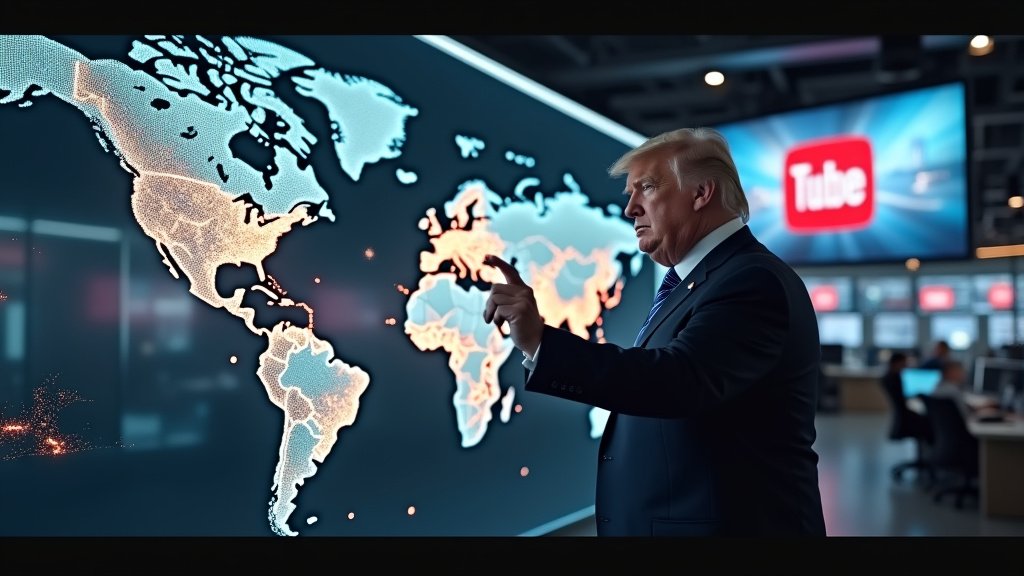
In a striking assertion that could reshape international energy markets, former U.S. President Donald Trump declared that Indian Prime Minister Narendra Modi had assured him of a significant pivot away from oil imports from Russia. Speaking from the White House, Trump stated, “He assured me today that they will not be buying oil from Russia.” This claim, if fully realized, represents a substantial victory in efforts to economically isolate Moscow amidst the ongoing conflict in Ukraine. Trump indicated that while the transition would be a process, it would be completed “soon,” potentially by year’s end, reducing India’s reliance on Russian crude by a considerable margin. This development emerged against a backdrop of existing U.S. tariffs on Indian goods, some of which were linked to India’s past energy purchases from Russia. However, reports later in the month suggested that India’s overall imports of Russian crude oil had seen an increase in October, with private refiners stepping up procurement while state-owned entities reduced their reliance. Trump also alluded to continuing efforts to persuade China to adopt similar measures.
Meanwhile, across the Atlantic, the European Union took a significant stride towards enhanced security autonomy. On the same day, the European Commission, in conjunction with the High Representative, unveiled a comprehensive “Defence Roadmap 2030.” This strategic plan aims to bolster the collective defense capabilities of EU Member States, preparing them to confront a spectrum of crises, including high-intensity conflicts, by the end of the decade. The roadmap builds upon earlier initiatives like the “Readiness 2030” plan and the “ReArm Europe Plan,” focusing on critical areas such as air and missile defense, drone technology, military mobility, and cyber warfare through the formation of “Capability Coalitions.” Four flagship initiatives were proposed: the European Drone Defence Initiative, the Eastern Flank Watch, the European Air Shield, and the European Space Shield, designed to bolster Europe’s ability to deter and defend across multiple domains. EU leaders had previously endorsed this push for enhanced defense readiness, setting ambitious targets for joint procurement and the launch of new defense projects.
Digital Silence: YouTube Outage Disrupts Millions Globally
The digital world experienced a sudden and widespread disruption on October 15-16, 2025, when YouTube, the world’s largest video-sharing platform, suffered a major global outage. For approximately an hour, millions of users across the United States, United Kingdom, Canada, Australia, and beyond found themselves unable to stream videos, upload content, or even access the homepage. In the U.S. alone, hundreds of thousands of users reported issues, with services like YouTube Music and YouTube TV also affected. The outage triggered a cascade of user complaints, memes, and widespread confusion, highlighting the platform’s central role in daily life for entertainment, education, and commerce. While YouTube’s parent company, Google, confirmed that services had been restored, it offered no definitive explanation for the cause, fueling speculation ranging from configuration errors to deep network failures within its infrastructure. This incident served as a stark reminder of the fragility of global digital infrastructure and the profound dependence of billions on a few major platforms.
Gaza Ceasefire Tested by Hostage Remains and Aid Restrictions
The fragile ceasefire agreement in Gaza continued to face significant strain on October 16, 2025, primarily stemming from contentious exchanges regarding the remains of deceased Israeli hostages and Palestinian detainees. Reports emerged of irregularities in the handover of bodies, with the IDF confirming that one body returned by Hamas did not match the profile of an Israeli hostage but was identified as a Gazan. This friction, coupled with perceived slowness in the return of all deceased Israeli captives, led to retaliatory measures. Israel reportedly did not reopen the Rafah crossing as scheduled and imposed restrictions on the entry of humanitarian aid. The United Nations indicated that aid, though increasing, remained insufficient, and noted challenges with Israeli authorities regarding visas for international NGOs.
These developments occurred within the framework of a broader ceasefire agreement, brokered earlier in October and involving the exchange of living hostages for Palestinian prisoners, as well as a commitment to exchange the bodies of the deceased. Former President Trump played a significant role in facilitating this initial deal. While Hamas asserted it had fulfilled its commitments regarding accessible bodies, it cited the need for specialized equipment to recover those buried under rubble from Israeli airstrikes. Israel, in turn, was also holding the remains of hundreds of Palestinians and faced scrutiny for not meeting its agreed-upon exchange ratios. As of mid-November, while most living hostages and a significant number of bodies had been exchanged, tensions persisted, underscoring the complex path toward lasting peace in the region.
Conclusion
October 16, 2025, presented a day of pivotal global news, marked by high-stakes geopolitical claims, profound technological vulnerabilities, and the persistent challenges of international conflict resolution. The interplay between major powers on energy policy, the EU’s assertive stance on defense, the fragility exposed in digital communication, and the delicate balance in the Middle East set the stage for continued global developments in the weeks and months ahead. The world watched as these diverse events unfolded, each carrying the potential for significant long-term consequences.