
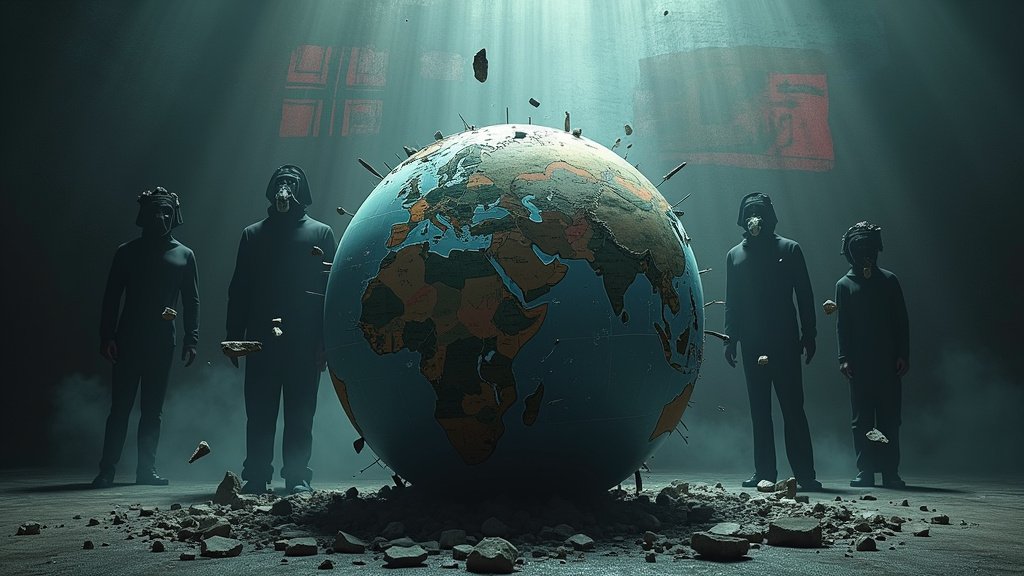
New York, NY – The global human rights system faces unprecedented peril today. Human Rights Watch (HRW) released its World Report 2026. It warns of a significant “democratic recession” worldwide. Autocratic leaders are gaining power. The report highlights immense pressure on the rules-based international order. This threatens fundamental human rights protections.
HRW attributes this crisis to several factors. Relentless pressure from former US President Donald Trump’s administration is a key concern. China and Russia also persistently undermine global norms. These actions are crushing the architecture that human rights defenders rely on. This system advances global standards. It also protects freedoms for all.
Global Democratic Decline Intensifies
Democracy’s decline is a stark reality. Scholars call this a “democratic recession.” Some data shows democracy is now at 1985 levels. Currently, 72 percent of the global population lives under autocracy. This downward spiral began before Trump’s recent term. However, his administration significantly worsened the trend. Both Russia and China are less free today than 20 years ago. The United States also shows signs of decline.
Authoritarian leaders often exploit public distrust. They win elections. Then they dismantle democratic institutions. These institutions are vital for representation. They also provide checks on executive power. The undermining of democracy directly harms human rights. This is evident in many nations. Examples include India, Türkiye, the Philippines, El Salvador, and Hungary.
US Actions Undermine Global Human Rights
Human Rights Watch detailed specific US actions. The Trump administration adopted policies. These aligned with white nationalist ideology. It used racist rhetoric. It claimed “civilizational erasure” in Europe. It also cast populations as unwelcome in the US. Immigrants and asylum seekers faced severe conditions. In 2025, 32 people died in US Immigration and Customs Enforcement (ICE) custody. Four more died by mid-January 2026. These deaths highlight systemic issues.
ICE agents allegedly used excessive force. They terrorized communities. They conducted wrongful arrests. Two people were killed in Minneapolis. HRW documented these events. Masked agents often targeted people of color. The administration bypassed legal protections. It denied due process to asylum seekers. It mistreated undocumented migrants. It engaged in unlawful discrimination. The administration also used an old law. This sent migrants to El Salvador. There, they reportedly faced torture and abuse.
The US has also weakened international bodies. These institutions prevent grave crimes. The Responsibility to Protect (R2P) doctrine emerged from this. US actions have seriously hampered R2P efforts. The administration also pursued controversial foreign aid policies. It linked health funding to anti-abortion policies. This undermined human rights globally. It also weakened essential services for many.
Authoritarian Powers Expand Influence
China and Russia actively erode global rules. They promote a regressive international agenda. They often work with other nations. These include North Korea, Iran, Venezuela, and Myanmar. These countries share little ideology. However, they unite against human rights. The US government’s actions sometimes aid these efforts.
China actively tries to reshape global norms. It manipulates UN human rights bodies. It advocates for “rights-free development.” This approach affects initiatives like the Belt and Road. China also extends domestic censorship abroad. This impacts academia and diaspora communities. It threatens free expression worldwide.
Russia’s actions also cause widespread suffering. In Ukraine, indiscriminate bombings occurred. Civilians became primary targets. Ukrainian prisoners faced systematic torture. Children were abducted and deported. Russia used drones to target civilians.
Erosion of the Rule of Law Globally
The current global situation attacks the rule of law. Trump often stated he did not “need international law.” He claimed to rely only on “own morality.” This disregard has significant consequences. It encourages repression worldwide. It impacts countries in Africa and Latin America.
In Latin America, some governments complied with US requests. Others used Trump’s rhetoric as justification. They committed abuses against their own citizens. El Salvador deported Venezuelans. These individuals faced enforced disappearances and torture. Panama and Costa Rica arbitrarily detained migrants. Brazil saw deadly police raids. Mexico increased surveillance measures. Colombia saw armed groups expand their control. Honduras, Peru, El Salvador, and Ecuador suspended rights protections.
Governments also enacted new laws. These laws enabled arbitrary shutdowns. This targeted human rights groups and media. Argentina created a hostile environment for the press. Guatemala’s attorney general arrested critics. El Salvador detained prominent rights defenders.
Challenges Within Democratic Nations
Even established democracies face internal struggles. Many governments view human rights as an obstacle. They prioritize security and economic gains. The European Union, Canada, and Australia hesitate. They fear alienating the US and China. This caution can stifle action.
In Europe, racism and discrimination remain concerns. Migrants and asylum seekers face significant risks. Some EU countries restricted asylum access. The EU trended towards faster application rejections. It considered sending asylum seekers to third countries. Detention use and duration increased. Safeguards against unfair procedures weakened.
Many Western European nations saw a political shift. Parties with illiberal tendencies gained support. Voters accepted restrictions on certain rights. This affected immigrants, minorities, and LGBTQ+ individuals. History shows autocrats do not stop at targeting “others.”
A Call for a Strategic Global Alliance
Human Rights Watch proposes a new strategy. Governments that value human rights must unite. They should form a strategic alliance. Social movements and civil society organizations should join. International institutions also play a crucial role. Together, they can form a formidable force.
Individual nations might be overwhelmed alone. This alliance can effectively counter autocratic pressures. Potential members include key democracies. Examples are Australia, Brazil, Canada, Japan, South Africa, and the UK. The EU and its member states are also vital. Smaller nations like Costa Rica and Ghana can contribute. These countries have supported human rights initiatives. They have a history of global engagement.
This alliance must build on shared principles. These include democracy, international law, and human rights. Such a coalition can offer security. It can counter global authoritarian trends. It is essential for preserving the rules-based international order. This order is the bedrock of global freedom.
Conclusion
The world stands at a critical juncture today. The global human rights system is in danger. Democratic recessions and the rise of authoritarianism threaten basic freedoms. Human Rights Watch urges immediate action. A united front of rights-respecting nations and organizations is imperative. This alliance can defend fundamental rights. It must push back against escalating repression. Today’s news underscores this urgent need. The fight for human rights demands global solidarity and commitment.