
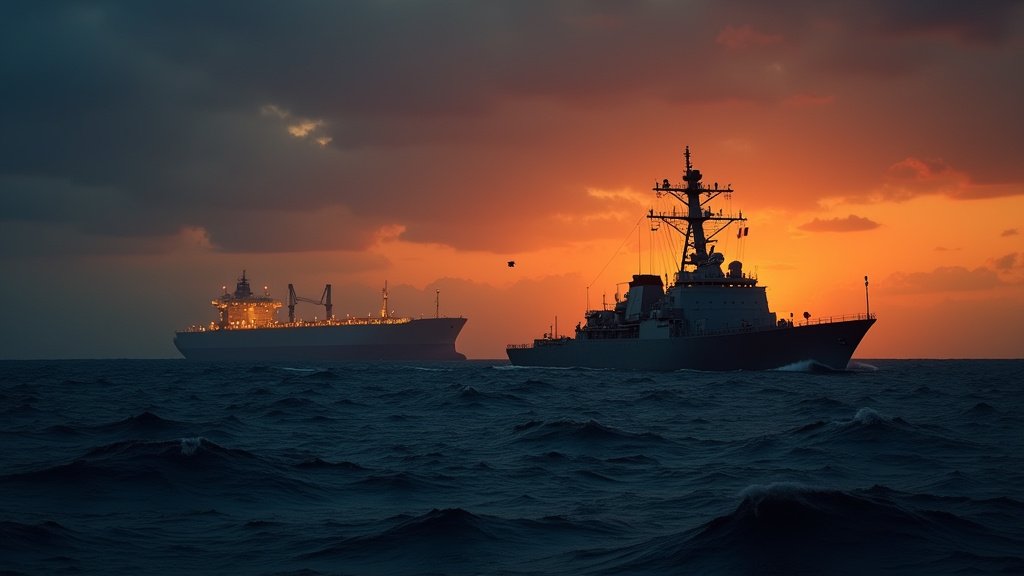
Key Takeaways
- International Coalition: The United Kingdom, Japan, and several European nations have formally expressed their readiness to protect commercial shipping through the Strait of Hormuz.
- Economic Security: The move aims to stabilize global oil prices and ensure the flow of energy from the Persian Gulf, which is vital for international markets.
- Strategic Deployment: Increased naval presence and intelligence sharing are expected to be the primary methods of deterrence.
- Diplomatic Pressure: The collective statement serves as a clear warning to regional actors against interfering with freedom of navigation.
Summary Lead
In a coordinated display of maritime resolve, a group of influential global powers—including the United Kingdom, Japan, and several European Union member states—has announced its ‘readiness’ to safeguard international shipping lanes in the Strait of Hormuz. This announcement comes after weeks of escalating tensions in the Middle East and concerns over the security of the world’s most critical energy chokepoint. The coalition aims to ensure that maritime security and the free flow of commerce remain uninterrupted, signaling a unified front against potential threats to global trade stability.
The Deep Dive
The Strait of Hormuz, a narrow waterway separating Iran from the Arabian Peninsula, is the artery of the global energy market. Through this passage flows approximately 20% of the world’s daily oil consumption. Consequently, any disruption here sends shockwaves through the global economy. The recent declaration by the UK, Japan, and European partners marks a significant escalation in international commitment to maintaining the status quo in these contested waters.
The Strategic Importance of the Strait
Geopolitically, the Strait of Hormuz is perhaps the most sensitive maritime chokepoint on the planet. For decades, it has been a flashpoint for regional tensions. The decision by Japan—a nation historically cautious about overseas military engagements—to join the UK and Europe in this declaration highlights the severity of the current security climate. For Japan, which relies heavily on Middle Eastern crude oil, the security of the Strait is not just a matter of foreign policy, but a critical component of national survival.
European and British Naval Strategy
The United Kingdom, through its long-standing ‘Operation Kipion,’ has maintained a permanent presence in the Gulf for decades. However, the new expression of readiness suggests a more proactive stance. European nations, many of whom participate in the EMASoH (European Maritime Awareness in the Strait of Hormuz) mission, are looking to bolster their surveillance and escort capabilities. The synergy between the UK’s Royal Navy and European fleets is expected to create a more robust deterrent against non-state actors and state-sponsored maritime interference.
Japan’s Evolving Maritime Role
Japan’s involvement is particularly noteworthy. Under its current security framework, the Japan Maritime Self-Defense Force (JMSDF) has operated independently in the region for intelligence-gathering purposes. By aligning its rhetoric with the UK and Europe, Tokyo is signaling a more integrated approach to maritime security. This move is seen by many analysts as a step toward ‘collective self-defense’ in the maritime domain, reflecting Japan’s broader strategy to play a more active role in global security affairs.
Countering Regional Instability
While the joint statement did not explicitly name any single aggressor, the context is clear. Tensions between the West and regional powers have made the Strait a theater for ‘shadow wars.’ By declaring a state of readiness, the coalition seeks to shift the risk-reward calculation for any entity considering the seizure of tankers or the harassment of commercial vessels. The use of advanced sonar, aerial drones, and satellite surveillance will be central to this enhanced monitoring phase.
FAQ: People Also Ask
Q: Why is the Strait of Hormuz so important to the world economy?
A: The Strait is the primary transit route for oil and liquefied natural gas (LNG) from the Middle East to markets in Asia, Europe, and North America. Roughly one-fifth of the world’s oil passes through the 21-mile-wide passage daily, making its security essential for global price stability.
Q: What specific naval assets are being deployed?
A: While specific ship names are often classified, the UK typically utilizes Type 23 frigates and Type 45 destroyers. Japan utilizes its high-tech destroyers, while European nations like France and the Netherlands contribute frigates and maritime patrol aircraft. These vessels are equipped with advanced radar and defensive systems to counter drone and missile threats.
Q: Does this mean a conflict is imminent in the region?
A: Not necessarily. The primary goal of expressing ‘readiness’ is deterrence. By showing a unified and capable naval presence, the international coalition hopes to prevent conflict by making it clear that any interference with shipping will meet a swift and coordinated response.