
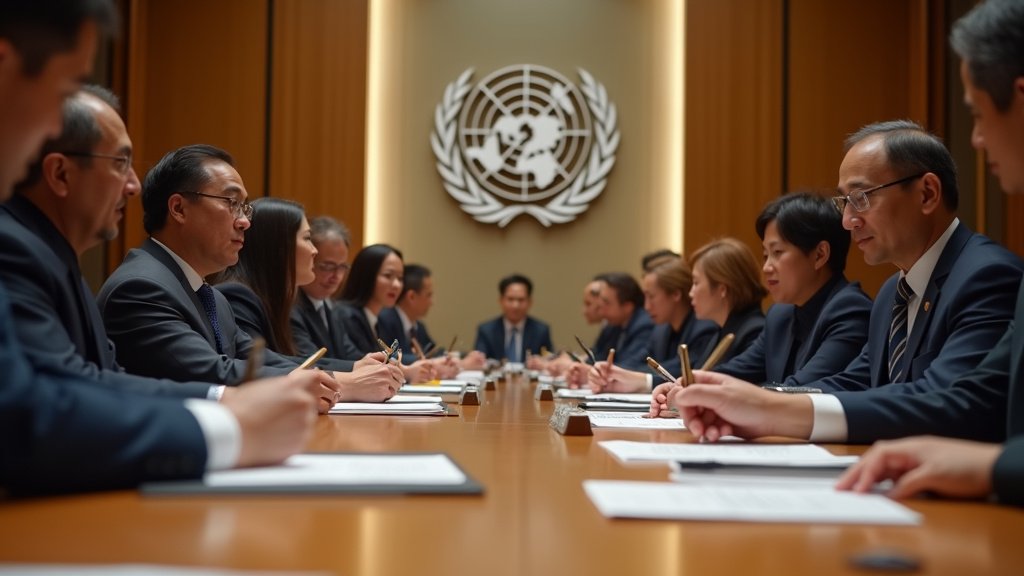
The world stage was marked by a confluence of significant geopolitical and domestic developments on October 25, 2025. From a landmark United Nations treaty aimed at combating cybercrime to a pivotal presidential election in Ireland and ongoing high-stakes trade negotiations, global news today showcased a complex interplay of international cooperation and persistent friction.
A New Era in Cybercrime Prevention
In a historic move for digital cooperation, 72 nations signed the United Nations Convention against Cybercrime in Hanoi, Vietnam, on October 25, 2025. Hailed by UN Secretary-General António Guterres as a “powerful, legally binding instrument to strengthen our collective defences against cybercrime,” the convention establishes the first universal framework for investigating and prosecuting online offenses. Adopted by the UN General Assembly in December 2024 after five years of negotiation, the treaty criminalizes a range of cyber-dependent and cyber-enabled offenses, facilitates the cross-border sharing of electronic evidence, and establishes a 24/7 cooperation network among states. Notably, it is the first international treaty to recognize the non-consensual dissemination of intimate images as an offense, a significant step for victims of online abuse. The convention will enter into force 90 days after the 40th state deposits its ratification. While 121 UN members have yet to accede, the robust initial signing signals a global commitment to addressing the escalating threat of cybercrime, which is projected to cost $10.5 trillion annually by 2025.
Ireland Elects Third Female President Amidst Voter Discontent
Ireland held its presidential election on October 24, 2025, resulting in a landslide victory for independent candidate Catherine Connolly. Connolly secured 63.36% of the valid votes, becoming the country’s third female president, succeeding Michael D. Higgins. Her campaign focused on themes of diversity, peace, and neutrality, garnering support from left-leaning parties.
However, the election was overshadowed by a record number of spoiled ballots, with 213,738 votes (nearly 13% of the total) deemed invalid. This marked a tenfold increase from the previous presidential election, sparking concerns among politicians and the electoral commission about voter dissatisfaction and the protest campaign known as ‘Spoil the Vote’. The overall voter turnout was 45.8%, an increase from the 2018 election, but the high number of intentionally spoiled votes reflected underlying discontent with the political establishment and candidate nomination process.
US-China Trade Talks Continue Amidst Tariff Tensions
Trade relations between the United States and China remained a focal point, with officials engaging in crucial trade talks in Kuala Lumpur, Malaysia, from October 26-28, 2025. The negotiations aimed to de-escalate rising trade tensions and pave the way for a potential leaders’ summit. US Secretary of the Treasury Scott Bessent indicated that a “framework” had been developed for Presidents Trump and Xi Jinping to discuss, with expectations of a deal that could defer China’s threatened export controls on rare earths and avoid further tariffs.
Following the talks in Malaysia, Presidents Trump and Xi met in South Korea on October 30, 2025, agreeing to a partial standdown on several trade issues. Key agreements included China suspending its export controls on rare earth elements for one year, easing license reviews for certain exports, and taking measures to curb fentanyl precursors. The US agreed to reduce tariffs on fentanyl-related goods and postpone certain measures against Chinese industries. China also committed to increasing purchases of U.S. agricultural products and suspending retaliatory tariffs. Both countries also agreed to a one-year suspension of reciprocal port service fees, effective November 10, 2025. While this represented a “tactical truce,” major disputes over semiconductors and rare earths persist, leaving the long-term strategic direction of the trade relationship uncertain.
Trade Tensions with Canada and Conflict Zones Persist
Meanwhile, trade relations between the U.S. and Canada continued to be strained, with President Trump reportedly threatening further tariffs in response to an Ontario ad campaign. The U.S. had imposed broad tariffs on Canadian goods earlier in 2025, leading to Canadian retaliatory measures, although many of these were lifted by September.
The global news landscape also highlighted ongoing conflicts and humanitarian concerns. In Ukraine, Russian drone and missile attacks continued, resulting in casualties and renewed calls for advanced air defense systems. On October 25, 2025, such attacks killed at least four people and wounded 20 across the country, with Kyiv and the Dnipropetrovsk region particularly affected. The UN expressed grave concerns over Israeli airstrikes in Gaza, which reportedly violated a fragile ceasefire and caused civilian harm [Initial Context].
In Italy, a tragic incident occurred on October 14, 2025, when an explosion at a farmhouse during an eviction attempt in Castel d’Azzano, near Verona, killed three Carabinieri officers and injured 13 others. Authorities believe the explosion was deliberately set by siblings who had occupied the property and were resisting eviction, leading to their arrest.
Thailand is also preparing for its general election, scheduled for March 29, 2026, which will be held concurrently with referendums on constitutional reform and border demarcation agreements with Cambodia.
These unfolding events underscore the dynamic and often volatile nature of global affairs, with nations grappling with technological advancement, domestic political shifts, and enduring international conflicts.