
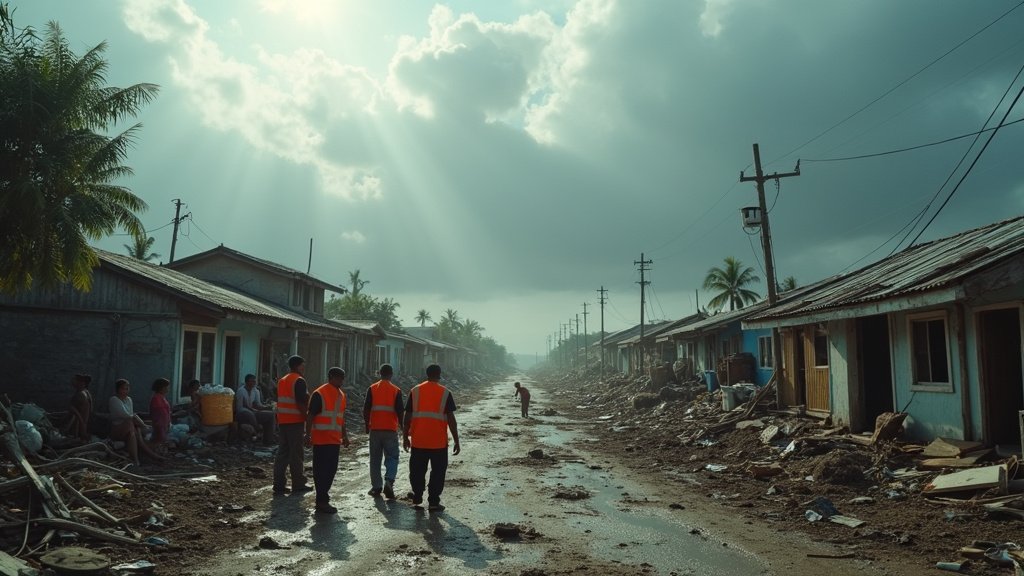
Two weeks after Hurricane Melissa carved a path of unprecedented destruction across the Caribbean, relief efforts are intensifying as the full scale of the disaster continues to unfold. The Category 5 storm, one of the most powerful Atlantic hurricanes on record, made landfall in Jamaica on October 28, 2025, unleashing catastrophic winds, torrential rains, and devastating storm surges. The aftermath has left millions impacted, with extensive damage to homes, infrastructure, and critical services in Jamaica, Cuba, Haiti, and other island nations.
Catastrophic Impact Across the Region
Hurricane Melissa’s impact has been profound and far-reaching. In Jamaica, the storm’s record-breaking Category 5 landfall caused widespread destruction, particularly in its western parishes. Initial assessments indicate that approximately 41% of the country’s GDP has been affected, with physical damages estimated at a staggering US$8.8 billion, making it the costliest hurricane in the island’s recorded history. Thousands of homes were damaged or destroyed, with some communities rendered unrecognizable by the storm’s fury. St. Elizabeth, St. James, and Westmoreland parishes bore the brunt, accounting for US$5.5 billion of the total damage.
Cuba was struck by the hurricane as a Category 3 storm, experiencing significant flooding and wind damage. Over 700,000 people were forced to evacuate their homes due to the hazardous conditions and heavy rainfall, which inundated parts of the island. In Haiti, while not experiencing a direct eyewall hit, the storm triggered catastrophic flooding, resulting in a tragic loss of life. Reports indicate at least 43 deaths in Haiti, with more than 15,000 people seeking refuge in shelters. Across the region, estimates of fatalities vary, but reports suggest over 75 lives were lost, with hundreds of thousands displaced and millions directly impacted.
Critical infrastructure also suffered immense damage. More than 700 health facilities across the Caribbean were impacted, including 642 in Cuba, 54 in Jamaica, and 10 in Haiti, severely disrupting access to essential medical care. Telecommunication systems were heavily damaged, and roads were blocked by debris and landslides, cutting off access to numerous communities and hampering initial rescue and relief operations. The agricultural sector also sustained heavy blows, with vast tracts of farmland damaged, leading to significant crop and livestock losses. The sheer volume of debris, estimated at over 4.8 million tonnes in western Jamaica alone, presents a monumental challenge for recovery efforts.
Intensifying Relief and Humanitarian Response
In the wake of the devastation, governments and a coalition of international aid agencies, including the United Nations (UN) and its various bodies, are working around the clock to deliver life-saving assistance. The UN World Food Programme (WFP) has been at the forefront, intensifying relief efforts by providing emergency food distributions, cash assistance, and logistical support. The WFP has reached tens of thousands with immediate aid and plans to assist up to 1.1 million people across the affected countries with a $74 million appeal.
The UN Office for the Coordination of Humanitarian Affairs (OCHA) has deployed teams to bolster coordination and information management, working closely with governments and humanitarian partners. Early action, supported by the UN’s Central Emergency Response Fund (CERF), played a crucial role in pre-positioning supplies and facilitating evacuations before the storm hit, demonstrating the effectiveness of anticipatory action in saving lives and livelihoods.
Various UN agencies are contributing specialized aid: UNICEF is providing water, sanitation, and hygiene (WASH) kits; the Pan-American Health Organization (PAHO) has airlifted medical supplies and generators; the Food and Agriculture Organization (FAO) and UN Development Programme (UNDP) are distributing seeds and protective materials; and the United Nations Population Fund (UNFPA) has distributed health and dignity kits.
National governments are leading response efforts, supported by regional bodies like the Caribbean Disaster Emergency Management Agency (CDEMA). The United States has authorized significant financial assistance, totaling approximately $24 million, for Jamaica, Haiti, Cuba, and the Bahamas, directed towards shelter, water, sanitation, hygiene, food, and emergency healthcare.
Non-governmental organizations like Direct Relief, World Vision, Project HOPE, and Global Empowerment Mission (GEM) are also on the ground, distributing medical supplies, hygiene kits, food, and essential relief items, and conducting damage assessments. Direct Relief, for instance, has committed emergency funding and made its inventory of medicines available, while also dispatching field medic packs and hygiene kits to Jamaica’s Ministry of Health and Wellness.
Challenges and the Road to Recovery
Despite the intensified relief operations, significant challenges persist. Access to isolated communities remains precarious due to damaged roads and ongoing debris. Shelter remains a critical concern, with many displaced individuals still in need of safe housing solutions. The widespread damage to health facilities raises concerns about long-term health impacts, including increased risks of waterborne diseases and challenges in managing non-communicable diseases.
Organizations like UNESCO are focusing on longer-term recovery, providing emergency support for educational continuity and assessing damage to cultural heritage. The World Bank and the Inter-American Development Bank are collaborating on detailed damage assessments to inform reconstruction strategies, emphasizing the need for building back stronger and more resilient infrastructure.
As the Caribbean region grapples with the immediate aftermath of Hurricane Melissa, the scale of destruction underscores the increasing frequency and intensity of extreme weather events. Continued international solidarity and sustained support will be crucial for the long and arduous journey toward recovery and rebuilding resilient communities across the affected islands. The news today highlights the urgent need for ongoing aid and global cooperation to address the humanitarian crisis and foster long-term resilience in this vital regional area.