
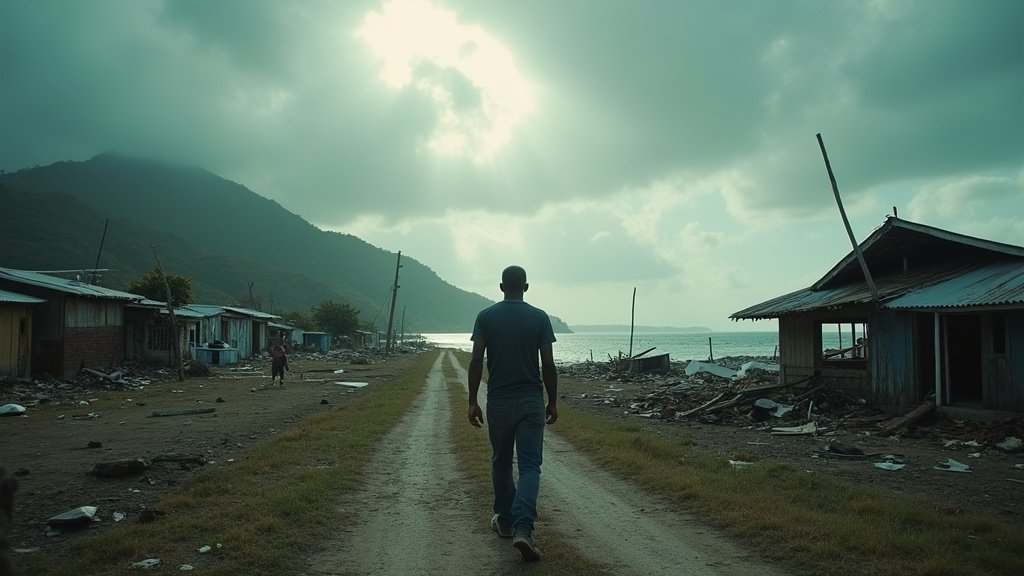
October 29, 2025 – Hurricane Melissa, a catastrophic Category 5 storm, has carved a path of unprecedented devastation across the Caribbean, leaving behind a rapidly rising death toll, widespread destruction, and a humanitarian crisis that is stretching regional and international aid capacities to their limits. The storm, one of the most powerful ever recorded in the Atlantic basin, made landfall in Jamaica with sustained winds of 185 mph (295 km/h), becoming the strongest hurricane in the island nation’s recorded history and the first Category 5 storm to make direct landfall.
The storm’s fury extended beyond Jamaica, battering Cuba, Haiti, and other neighboring islands with torrential rains, life-threatening storm surges, and devastating landslides. As assessments continue, the full human cost of Melissa is still emerging, with reports indicating dozens, if not hundreds, of fatalities across the affected region.
The Storm’s Unrelenting Fury
Hurricane Melissa rapidly intensified from a tropical storm on October 21, 2025, into a monstrous Category 5 hurricane, a testament to warming ocean waters fueling extreme weather events. Its trajectory brought it to Jamaica on October 28, where it unleashed its most destructive power. The island nation bore the brunt of the storm, experiencing extreme storm surge, destructive winds that ripped through communities, and torrential rainfall leading to widespread flooding and deadly landslides.
Initial estimates suggest that Hurricane Melissa caused nearly $9 billion in physical damage in Jamaica alone, a figure equivalent to 41% of the country’s 2024 GDP, making it the costliest storm in its history. Over 100,000 housing structures were damaged or destroyed, and approximately 72% of the island’s energy customers were left without power in the immediate aftermath. Entire communities in western parishes were left cut off by crippled infrastructure, including roads and bridges.
Devastation Across Nations
The catastrophic impacts of Hurricane Melissa were not confined to Jamaica. Cuba, Haiti, and other Caribbean nations also suffered immense damage.
In Cuba, Melissa made landfall on October 29 as a Category 3 hurricane, bringing sustained winds of up to 121 mph (195 km/h) and inundating parts of the island with rainfall reaching up to 15 inches (38 cm). Critical services such as electricity, water, transport, and communications were severely disrupted, leaving hundreds of thousands without safe water. Preliminary assessments indicated nearly 150,000 homes were affected, with over 735,000 people evacuated from coastal and low-lying areas.
Haiti, already grappling with a humanitarian crisis, faced further devastation. Torrential rainfall, storm surges, and flash floods triggered landslides, collapsing homes and inundating communities. Reports indicate that at least 40, and possibly over 80, lives were lost in Haiti, with a significant number of children among the casualties. Over 16,000 people sought shelter in temporary sites, and more than 11,900 houses were flooded or damaged. The storm deepened existing hardships, affecting millions of people.
Across the Caribbean region, the storm’s widespread impact has been staggering. More than 5 million people were affected across Jamaica, Cuba, and Haiti, with access to essential services severely constrained due to debris, landslides, and damaged roads. Over 700 health facilities sustained damage, raising concerns about waterborne and vector-borne diseases, especially in eastern Cuba.
International and Regional Response Efforts
In the face of overwhelming destruction, a significant humanitarian response has been mobilized across the regional and international levels. The United Nations Office for the Coordination of Humanitarian Affairs (OCHA) is coordinating relief efforts, working alongside UN agencies like UNICEF and the World Food Programme (WFP), as well as numerous NGOs and national governments.
The UK government has committed £2.5 million in emergency humanitarian funding, pre-positioning supplies and deploying experts [Initial Context]. The United States has mobilized disaster assistance response teams and urban search-and-rescue teams to assess needs and provide support. The World Bank and the Inter-American Development Bank (IDB) are involved in damage assessments and recovery planning, particularly in Jamaica.
UNICEF estimates that over 700,000 children across the Caribbean have been impacted by Hurricane Melissa, with significant disruptions to schooling affecting nearly 477,000 children across Cuba, Haiti, and Jamaica. The organization is providing vital support, including hygiene kits, safe water, sanitation, and mental health services, allocating an initial US$1 million for Jamaica’s emergency response. The Pan American Health Organization (PAHO) is dispatching medicines and supplies, including chlorine tablets for water treatment, to Cuba [Initial Context].
Organizations like the International Organization for Migration (IOM) are partnering with Airbnb.org to provide emergency housing for displaced families and frontline responders in Jamaica. Humanitarian Coalition agencies are also on the ground in Haiti, providing cash assistance, clean water, and hygiene kits.
Challenges and the Road to Recovery
Despite ongoing relief efforts, significant challenges remain. Damaged infrastructure continues to impede access to many affected communities, delaying the delivery of essential aid. The restoration of power and telecommunications remains a critical priority.
The economic fallout from Hurricane Melissa is projected to be immense. Beyond the direct physical damage, broader economic losses from business interruptions, lost productivity, and long-term social impacts are expected to be substantial. In Jamaica, the total economic toll could exceed $20 billion, a figure higher than the country’s entire 2024 economic output.
As the Caribbean grapples with the aftermath of Hurricane Melissa, the resilience and determination of its people are evident. However, sustained international support will be crucial for the long and arduous process of recovery and rebuilding these shattered communities. The scale of destruction serves as a stark reminder of the escalating threat posed by increasingly powerful storms in a changing climate.