
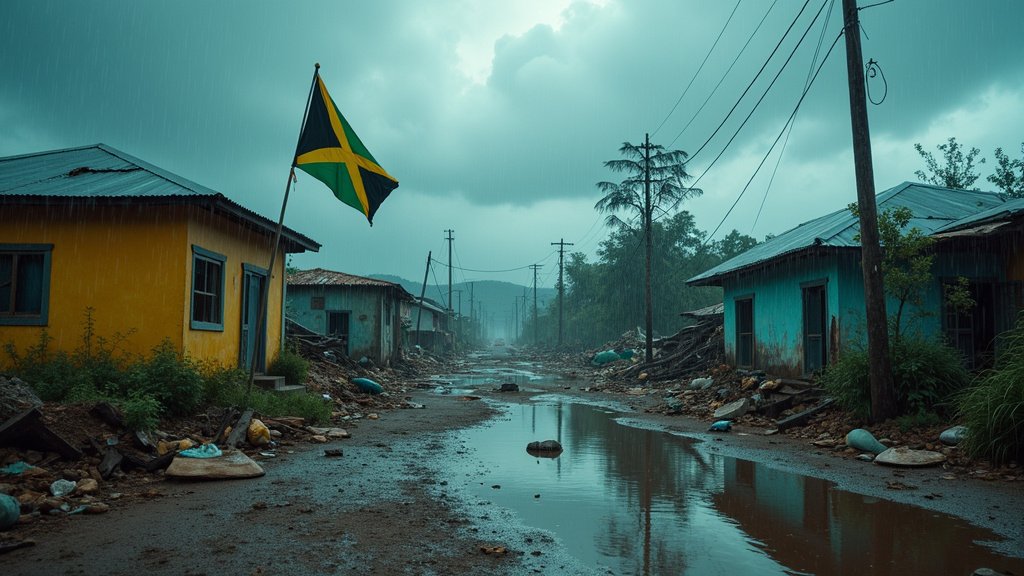
Jamaica is grappling with the aftermath of Hurricane Melissa, a catastrophic Category 5 storm that slammed into the island on October 28, 2025, leaving a trail of unprecedented destruction and rewriting weather records. The storm, boasting sustained winds of up to 185 miles per hour and gusts nearing 252 mph, has inflicted billions of dollars in damage, claimed lives, and displaced hundreds of thousands, marking it as the most powerful hurricane to ever make landfall in Jamaica.
Jamaica Reels from Catastrophic Category 5 Landfall
Hurricane Melissa made direct landfall on Jamaica’s south coast near New Hope, Westmoreland, at midday on October 28, 2025, unleashing its full fury. The storm’s slow movement over the island exacerbated the devastation, prolonging its destructive impact of torrential rainfall, life-threatening storm surges, and catastrophic winds. Authorities reported that many areas received up to 30 inches, and in some mountainous regions, as much as 40 inches of rain, triggering widespread flooding and numerous landslides. Storm surges along the southern coast were estimated to be as high as 13 feet.
Unprecedented Strength: Melissa Rewrites Hurricane Records
Hurricane Melissa’s intensity was historic, reaching Category 5 status with sustained winds of 185 mph, making it the strongest hurricane to ever strike Jamaica, surpassing Hurricane Gilbert in 1988. It also produced the highest wind gust ever measured by dropsonde data, reaching an astonishing 252 mph. Meteorologists noted Melissa’s extraordinary rapid intensification, transforming from a tropical storm to a major hurricane within a single day, a phenomenon increasingly linked to warming ocean temperatures. This explosive growth, with wind speeds doubling in less than 24 hours, is a chilling indicator of how climate change is altering storm behavior.
Widespread Destruction Leaves Island Devastated
The impact of Hurricane Melissa on Jamaica’s infrastructure and daily life has been profound. Widespread damage to homes, with 41% of total losses affecting residential buildings, has left thousands homeless. Infrastructure, including roads, bridges, and utility networks, suffered significantly, with 33% of total damage attributed to this sector. Power outages affected over 75% of the island initially, with some inland areas still experiencing disruptions weeks later. Hospitals were severely damaged or rendered non-operational, straining healthcare services. Communications remained intermittent in many areas. The agricultural sector, a vital part of the Caribbean lifestyle and economy, also sustained considerable damage, with crops and livestock lost.
Human Toll Mounts Across the Caribbean
Beyond Jamaica, Hurricane Melissa inflicted significant devastation across the broader Caribbean region. The storm claimed a total of at least 90 to 96 lives across multiple islands, with Haiti reporting a substantial number of fatalities, alongside significant damage and displacement. In Haiti, authorities reported 43 to 45 deaths, with many missing, and over 16,000 people forced to flee their homes due to catastrophic flooding and landslides. Cuba experienced a Category 3 landfall, with over 60,000 homes destroyed or damaged and more than 735,000 people evacuated. The Dominican Republic also reported deaths and damage from heavy rainfall and landslides.
Economic Ruin: Jamaica Faces Multi-Billion Dollar Blow
The economic repercussions for Jamaica are staggering. Physical damage is estimated at a staggering US$8.8 billion, representing 41% of the island’s 2024 Gross Domestic Product (GDP). This figure makes it the most expensive natural disaster in Jamaica’s recorded history. Preliminary assessments indicate that residential buildings accounted for the largest share of losses (41%), followed by infrastructure (33%) and non-residential buildings (21%). While agricultural physical losses were lower (5%), the long-term economic impact due to disrupted supply chains and damaged farmlands is expected to be severe. Jamaica received a US$150 million payout from its catastrophe bond arranged with the World Bank, and US$70.8 million from the Caribbean Catastrophe Risk Insurance Facility (CCRIF), offering crucial financial lifelines but covering only a fraction of the total damage.
Climate Change Fuels Melissa’s Ferocity
Scientists are unequivocal: human-caused climate change played a significant role in Hurricane Melissa’s destructive power. Rapid attribution studies estimate that climate change made the oceanic and atmospheric conditions leading to Melissa’s formation and rapid intensification about six times more likely. Warmer ocean waters, up to 1.5°C warmer than average, are directly linked to this increased likelihood. Climate change is estimated to have increased Melissa’s maximum wind speeds by approximately 7% and associated rainfall by 16%, potentially increasing economic damage by up to 50%. This phenomenon of rapid intensification, where storms gain significant strength quickly, is becoming more frequent and poses a grave threat to vulnerable coastal regions and small island nations in the Caribbean.
The Long Road to Recovery and Resilience
In the wake of Hurricane Melissa, Jamaica and other affected Caribbean nations face a monumental task of recovery and rebuilding. International aid and humanitarian organizations, including the UN, Red Cross, Samaritan’s Purse, and Project HOPE, are on the ground providing critical relief, medical assistance, and shelter. Efforts are underway to restore essential services like power and water, clear debris, and provide food and medical care to displaced populations. However, the scale of destruction requires innovative financing models and strong public-private partnerships to foster sustainable recovery. The lessons learned from Hurricane Melissa underscore the urgent need for enhanced disaster preparedness, climate resilience, and long-term strategies to protect communities in the face of escalating climate threats, ensuring that news headlines like this become less frequent for the Caribbean.
Melissa’s impact serves as a stark reminder of the existential threat posed by climate change, highlighting the vulnerability of island nations and the imperative for global action to mitigate future disasters and protect vulnerable populations and their way of life.