
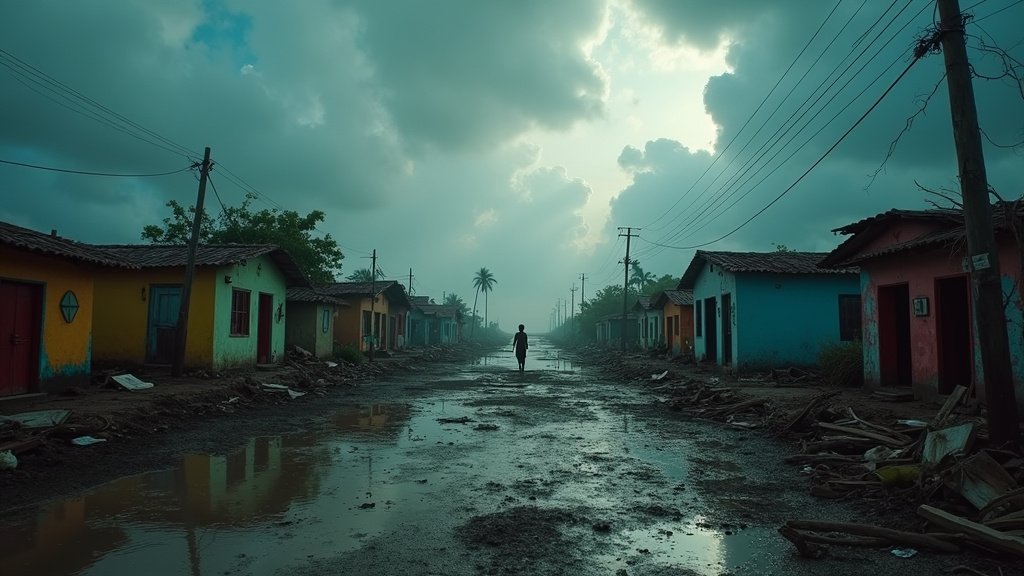
Hurricane Melissa, one of the most powerful Atlantic storms on record, has carved a path of catastrophic destruction across the Caribbean, leaving behind a grim tally of lives lost, widespread devastation, and staggering economic damage. As of mid-November 2025, the storm’s aftermath continues to dominate news cycles and humanitarian efforts throughout the region.
Genesis of a Monster Storm
Hurricane Melissa’s journey began as a tropical wave near West Africa in mid-October 2025. By October 21, it had organized into Tropical Storm Melissa in the central Caribbean Sea. Fueled by exceptionally warm ocean waters – conditions made significantly more likely by climate change – Melissa underwent rapid intensification, a phenomenon where a storm’s wind speeds increase dramatically in a short period. Within days, it transformed from a tropical storm to a monstrous Category 5 hurricane, reaching peak sustained winds of 185 mph and a minimum central pressure of 892 millibars, placing it among the most intense Atlantic hurricanes ever recorded.
Catastrophic Landfalls in the Caribbean
On October 28, 2025, Melissa made its first catastrophic landfall near New Hope, Jamaica, as a Category 5 hurricane. It was the strongest storm ever to make direct landfall on the island, causing total structural failure in many areas and leaving up to 90% of structures in some towns, like Black River, without roofs. The storm then moved on to strike eastern Cuba on October 29, making landfall near Chivirico as a Category 3 hurricane, further compounding devastation.
Beyond Jamaica and Cuba, Melissa’s destructive winds, torrential rainfall, and life-threatening storm surges impacted Haiti, the Dominican Republic, the Bahamas, and Turks and Caicos Islands. While it weakened to a Category 2 storm as it approached Bermuda, it still brought significant wind gusts and localized flooding to the island before transitioning into a post-tropical cyclone on October 31. The storm’s remnants eventually dissipated over the North Atlantic by November 4, 2025.
A Devastating Human and Economic Toll
The human cost of Hurricane Melissa has been immense, with at least 96 fatalities attributed to the storm across the Caribbean. Jamaica has reported approximately 46 deaths, while Haiti has tragically lost at least 43 lives. Thousands more have been injured, and hundreds of thousands of people across the region have been displaced from their homes, seeking refuge in shelters or makeshift accommodations.
The economic fallout is equally dire. Preliminary estimates place the total damage and economic losses in the western Caribbean between $48 billion and $52 billion. Jamaica alone has sustained an estimated $8.8 billion in physical damage, a figure equivalent to 41% of its 2024 GDP, making it the costliest storm in the island’s recorded history. Moody’s modeling suggests total losses could exceed $20 billion for Jamaica. These figures do not account for broader economic losses from business interruptions, lost productivity, and long-term social impacts. The storm has crippled key sectors, including tourism and agriculture, vital to the Caribbean lifestyle and economy.
Contributing Factors: Climate Change and Slow Movement
Scientists are pointing to the intersection of record-warm ocean temperatures and the storm’s slow, meandering path as key factors amplifying Melissa’s destructive power. Research indicates that human-caused climate change significantly increased the likelihood and intensity of such powerful storms, with estimates suggesting it amplified Melissa’s maximum wind speed by 7% and economic damage by 34%. This event serves as a stark reminder of the accelerating climate crisis and its disproportionate impact on vulnerable island nations.
Recovery Efforts Underway Amidst Lingering Challenges
In the weeks since Hurricane Melissa’s passage, governments and international aid organizations have been working tirelessly to provide relief and begin the arduous process of recovery. The United States has committed nearly $37 million in emergency assistance to affected nations, while the UK has deployed medical teams to Jamaica. The United Nations and various NGOs are on the ground, distributing essential supplies like food, water, medical aid, and shelter materials.
However, recovery efforts are severely hampered by extensive damage to critical infrastructure. Blocked roads, destroyed bridges, and widespread power and telecommunications outages continue to impede access to isolated communities and delay the restoration of basic services in places like eastern Cuba and western Jamaica. Many areas remain without electricity, and new rainfall continues to complicate ongoing work. The scale of the rebuilding required is immense, highlighting the long road ahead for the affected populations as they strive to restore their lives and communities.