
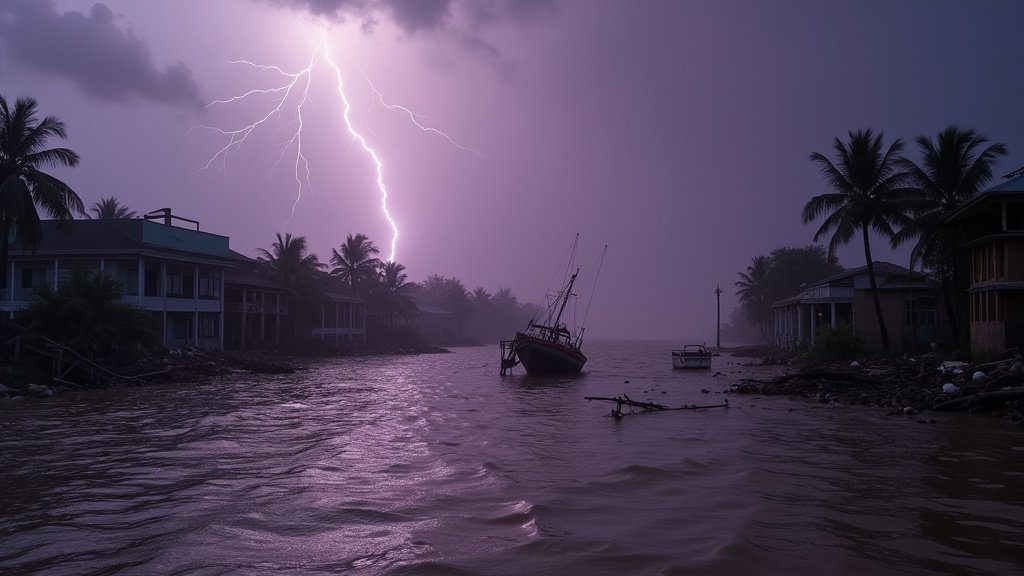
Hurricane Melissa Batters Caribbean: Catastrophic Floods, Lives Lost, and Widespread Devastation
October 21, 2025 – Tropical Storm Melissa formed in the central Caribbean Sea on Tuesday, October 21, 2025, rapidly intensifying into a powerful Category 5 hurricane and leaving a trail of catastrophic destruction across multiple Caribbean islands. The storm brought torrential rainfall, life-threatening storm surge, and extreme winds, resulting in significant loss of life, widespread displacement, and extensive damage to homes, infrastructure, and agriculture in Haiti, Jamaica, and Cuba, with severe impacts also felt in the Dominican Republic.
Storm Forms and Initial Warnings Issued
The 13th named storm of the 2025 Atlantic hurricane season, Melissa emerged as a tropical disturbance over the warm waters of the central Caribbean. By Tuesday morning, it had organized enough to be designated Tropical Storm Melissa, with maximum sustained winds around 50 mph (80 kph) and moving west at approximately 13 mph (20 kph). Forecasters immediately warned of a significant flood risk across the region.
A Hurricane Watch was issued for southern Haiti, extending from the Dominican Republic border to Port-au-Prince, while a Tropical Storm Watch was put in place for Jamaica. Initial forecasts predicted 5 to 10 inches of rain for southern Haiti and the southern Dominican Republic through Friday, with several inches also expected in Jamaica. Heavy rain was also forecast for Aruba and Puerto Rico, raising concerns about flash flooding and landslides.
Rainfall and Flood Risk Grip the Region
As Melissa began to dump heavy rain on Hispaniola, traffic disruptions were reported in Santo Domingo, the Dominican Republic’s capital. Games in the country’s professional baseball league were canceled due to the impending severe weather. In Haiti, concerns over potential heavy flooding intensified, a perennial threat given the country’s susceptibility to erosion during past storms.
The storm’s slow movement and the extremely warm sea surface temperatures in the Caribbean fueled its intensification. Forecasters warned that the rainfall posed the most significant threat, with the potential for “catastrophic” flash flooding and landslides across southern Haiti and the Dominican Republic throughout the weekend.
Devastation in Haiti and Dominican Republic
In Haiti, the slow-moving storm brought torrential rains, leading to flash floods and landslides, particularly in the southern and western parts of the country. By October 29, the death toll had risen to at least 23, with many still missing. The United Nations reported at least 24 deaths and significant damage to homes and crops, exacerbating an already severe humanitarian crisis marked by displacement, hunger, and disease outbreaks. Approximately 15,000 people were forced into temporary shelters across Haiti.
The Dominican Republic also experienced widespread effects. By October 27, authorities reported that Tropical Storm Melissa had damaged 183 homes, displaced 915 people, and left 19 communities isolated. More critically, over 1.1 million residents lost access to drinking water due to the impact on 56 aqueducts. Landslides affected key highways, and cleanup operations were underway in several provinces. Despite initial concerns and the declaration of alert levels, later assessments indicated that the Dominican Republic ultimately decided against declaring a state of emergency, characterizing the storm’s impact as relatively mild in some areas, with power outages quickly restored and minimal disruptions to mobility.
Jamaica Faces Catastrophe as Melissa Becomes a Monster Hurricane
Jamaica, initially under a tropical storm watch, bore the brunt of Hurricane Melissa’s fury. On October 28, the storm made landfall on the island as a Category 5 hurricane, the strongest ever recorded in Jamaica’s history. With sustained winds reaching up to 185 mph (297 kph), Melissa unleashed catastrophic flooding, landslides, and widespread destruction. At one point, at least 75 percent of the island lost electricity.
Reports described “total structural failure” in areas near landfall, particularly in the Westmoreland and Saint Elizabeth parishes, where storm surge, flooding, and high winds caused significant agricultural and infrastructure damage. The island was declared a disaster area, and government workers and residents began immediate clearing efforts to reach isolated communities. Casualties in Jamaica were reported to be at least 19 to 40 deaths.
Regional Response and Humanitarian Efforts
Governments across the Caribbean, supported by UN agencies and non-governmental organizations (NGOs), mobilized extensive storm preparation and response efforts. These included pre-positioning relief supplies, setting up evacuation shelters, and issuing millions of early warning messages.
In Cuba, Hurricane Melissa struck the eastern coast as a Category 3 storm on October 29, bringing winds over 200 km/h and torrential rain, leading to the evacuation of over 77,000 people. The storm compounded existing vulnerabilities in many affected areas, which had previously suffered from natural disasters and ongoing crises.
The Human and Economic Toll
Across the affected nations, hundreds of thousands have been displaced. Official reports indicate at least 80 deaths throughout the Caribbean, with Haiti alone reporting over 30 fatalities and many missing. The economic toll is substantial, with damage costs in Jamaica alone estimated to be over $7 billion, representing more than a third of the country’s GDP.
Climate Change and Future Implications
Scientists have highlighted that storms like Melissa are becoming more intense due to climate change, with warmer ocean waters providing more fuel. Researchers estimate that anthropogenic climate change amplified Melissa’s wind speed and rainfall, significantly increasing economic damage. Experts warn that the increasing intensity of such storms is pushing the limits of human adaptation, underscoring the urgent need for global action on climate change.
As the Caribbean nations begin the long process of recovery and rebuilding, Hurricane Melissa serves as a stark reminder of the region’s vulnerability to extreme weather events and the escalating challenges posed by a changing climate. The regional news surrounding this disaster underscores the ongoing need for robust disaster preparedness and international cooperation to mitigate future impacts.