
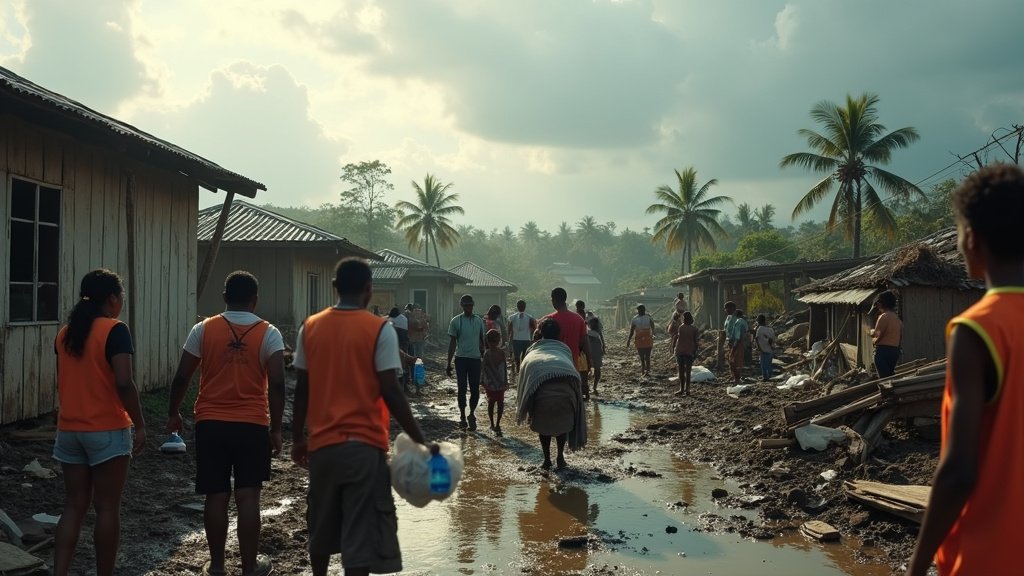
Hurricane Melissa Devastates Caribbean; Relief Efforts Underway
KINGSTON, JAMAICA – The Caribbean is grappling with the aftermath of Hurricane Melissa, a catastrophic Category 5 storm that made landfall on October 28, 2025, leaving a trail of unprecedented destruction across multiple islands. The hurricane, described as the strongest storm to ever make landfall in Jamaica, has resulted in significant loss of life, widespread displacement, and immense damage to infrastructure, prompting a massive, multi-national relief effort.
The Storm’s Unmatched Fury
Hurricane Melissa formed on October 21, 2025, rapidly intensifying into a ferocious storm. It struck Jamaica with sustained winds of 185 mph (295 kph), a wind gust of 252 mph recorded, and a central pressure of 892 mbar, making it one of the most intense Atlantic hurricanes on record and the strongest to ever hit the island nation. The storm’s immense power demolished or severely damaged over 122,000 dwellings, knocked out power and communication lines, destroyed crops, flooded rivers, and triggered deadly landslides. The sheer scale of devastation in Jamaica has been described as “never seen before”.
Widespread Devastation Across the Region
Beyond Jamaica, Melissa’s destructive path extended across the Caribbean. In Cuba, over 700,000 people were evacuated ahead of the storm, and many are still unable to return home, with over 54,000 people remaining displaced. The hurricane severely impacted more than 600 health facilities and 90,000 homes, raising concerns about waterborne and vector-borne diseases.
Haiti, already facing significant hardships, experienced deepened crises. The storm is responsible for at least 88 fatalities, including 10 children, with widespread flooding and landslides causing significant damage and forcing over 16,000 people to flee their homes. Other islands, including the Dominican Republic, Bahamas, and Turks and Caicos, also reported damage, flooding, and power outages. Globally, the storm affected over 5 million people across Jamaica, Cuba, and Haiti.
The Economic and Social Toll
The economic and social toll of Hurricane Melissa is staggering. Preliminary estimates place the damage in Jamaica at an astonishing US$8.8 billion, making it the costliest natural disaster in the island’s history and wiping out approximately 41% of its GDP for 2024. Homes bore the brunt of the damage (41%), followed by infrastructure (33%), non-residential buildings (21%), and agriculture (5%). The loss in agriculture, though representing a smaller percentage of physical damage, is expected to have long-lasting economic impacts on farmers.
The disaster has left tens of thousands homeless across the affected nations, with thousands still requiring urgent assistance. Schools have been severely impacted, with nearly 477,000 children experiencing disruptions to their education due to damaged or closed facilities, threatening their well-being and future opportunities. The health sector also suffered immensely, with hundreds of health facilities damaged, compromising access to essential medical services.
The Race for Relief and Recovery
In the wake of the devastation, an urgent and extensive relief operation is underway. Governments, the United Nations, non-governmental organizations, and local communities are mobilizing to provide essential aid and support recovery efforts. The Jamaican government has declared the entire island a disaster zone and initiated a four-phase emergency plan, with a dedicated platform, supportjamaica.gov.jm, established to coordinate donations and recovery efforts.
The World Bank has confirmed a full US$150 million payout to Jamaica under its catastrophe insurance coverage, providing a crucial financial lifeline, though it represents only a fraction of the total damages. International aid agencies, including the UN, are working tirelessly, delivering food, water, emergency shelter, medical supplies, and hygiene kits. The UN World Food Programme (WFP) is coordinating logistics and aid distribution, while UNICEF is focusing on restoring education and health services.
Community leaders and celebrities are also stepping up. Dancehall artist Masicka, through his MADE Foundation, has launched a significant relief effort, distributing essential supplies like food, building materials, steel, and cement, particularly in the hard-hit parish of St. Elizabeth. Local content creators and celebrities are also contributing to relief initiatives, underscoring the importance of community support in times of crisis.
Challenges and the Path Forward
Despite ongoing efforts, significant challenges remain. Access to isolated communities is severely constrained by debris, landslides, and damaged roads, hindering the delivery of critical supplies. Restoring essential services like electricity and clean water is a slow process in many areas. The sheer volume of debris, estimated at over 4.8 million tonnes in Jamaica, complicates recovery efforts, blocking roads and hindering access to vital infrastructure.
The news from the Caribbean paints a stark picture of vulnerability to intensifying climate events. Experts warn that storms are becoming more frequent and severe due to warming ocean waters, underscoring the need for sustainable solutions and greater commitment from high-emitting nations towards climate reparations.
The road to recovery will be long and arduous. The resilience of the Caribbean people is being tested, but their spirit of community and the outpouring of global solidarity offer a beacon of hope. Continued international support is critical to help these nations rebuild their lifestyle, restore infrastructure, and ensure a more resilient future in the face of escalating climate threats.