
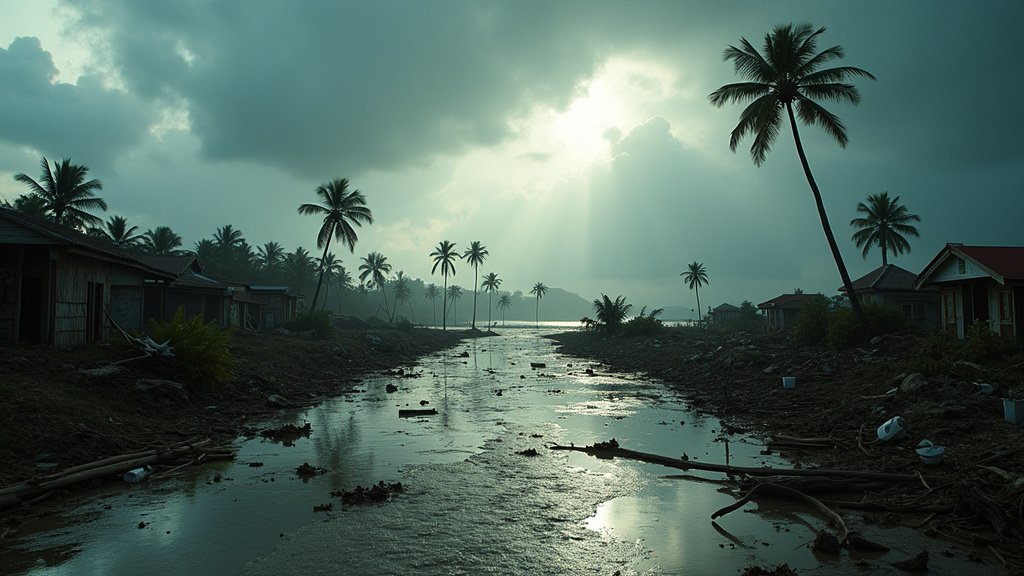
Hurricane Melissa Unleashes Unprecedented Fury: Category 5 Storm Devastates Jamaica, Shatters Records, and Triggers Regional Catastrophe
The Caribbean region is grappling with the aftermath of Hurricane Melissa, a catastrophic Category 5 storm that made landfall in Jamaica on October 28, 2025. This monumental weather event, which rapidly intensified into one of the most powerful Atlantic hurricanes on record, has left a trail of unparalleled destruction across the Caribbean, redefining the scale of storm impacts for the region and its inhabitants. News reports paint a grim picture of widespread devastation, loss of life, and a long, arduous road to recovery.
Genesis and Unprecedented Intensification
Hurricane Melissa’s journey began as an atmospheric disturbance near West Africa in mid-October 2025. Following a westward path across the Atlantic, it entered the Caribbean Sea where it began to organize. On October 21, 2025, it coalesced into Tropical Storm Melissa over warm, fuel-rich waters. Initially meandering due to weak steering currents, Melissa soon became a potent force. Fueled by exceptionally warm sea surface temperatures and low wind shear, the storm underwent explosive intensification. Within approximately 39 hours, it surged from a tropical storm to a formidable Category 5 hurricane, a remarkable feat that underscored the extreme conditions present in the Caribbean Sea during the latter part of the 2025 Atlantic hurricane season.
Jamaica’s Ordeal: A Catastrophic Landfall
Jamaica bore the brunt of Melissa’s fury. On October 28, 2025, the Category 5 hurricane made landfall near New Hope in Westmoreland Parish with sustained winds of 185 miles per hour (298 kilometers per hour). This direct hit marked a devastating historic moment, as Melissa became the strongest hurricane ever recorded to make landfall on the island, surpassing Hurricane Gilbert in 1988. The storm’s intensity was further highlighted by a record-breaking wind gust of 252 mph recorded by a dropsonde, and a central pressure of 892 millibars, tying it with some of the most intense Atlantic hurricanes on record. Prime Minister Andrew Holness declared the island a “disaster area” as the storm’s eyewall, packing life-threatening winds, swept across the country, causing near-total destruction in some areas. Power outages affected approximately 530,000 customers, and telecommunications were severely disrupted, particularly in the western parishes. Heavy rainfall led to widespread flooding and landslides, exacerbating the destruction wrought by the high winds and devastating storm surge, which reached up to 13 feet in southern Jamaica.
Beyond Jamaica: Devastation Across the Caribbean
Melissa’s catastrophic impact was not confined to Jamaica. After crossing the island, the hurricane struck eastern Cuba on October 29 as a major Category 3 storm, causing significant damage, flooding, and prompting the evacuation of some 735,000 people. The storm’s outer bands unleashed torrential rain and triggered deadly flash floods and landslides across Haiti and the Dominican Republic. In Haiti, the death toll climbed significantly, with reports of at least 43 fatalities and thousands displaced. The Dominican Republic also reported deaths and damage from flooding. The Bahamas and Bermuda also experienced severe weather, including flooding and power outages, as Melissa continued its path northeastward.
The Human and Economic Toll
The human cost of Hurricane Melissa has been immense. Across the affected islands, the confirmed death toll has reached at least 96 people, with many more missing. Jamaica alone reported at least 45 deaths, with 15 individuals still missing, and over 30,000 households displaced. In Haiti, over 16,000 people were forced to flee their homes due to severe flooding. The economic fallout is staggering. In Jamaica, physical damage is estimated at a record-breaking US$8.8 billion, equivalent to 41 percent of the country’s 2024 GDP. Agricultural losses alone are estimated at $29.5 billion, with over 1.2 million animals lost and vast tracts of farmland destroyed, threatening food security and livelihoods. Insured losses in Jamaica are estimated between $1 billion and $3 billion, representing only a fraction of the total property damage. The impact on the everyday lifestyle of residents across the affected nations has been profound, disrupting communities and challenging the very fabric of daily life.
National and International Response
In the face of this unprecedented disaster, a swift and coordinated response was mounted. Jamaica’s Office of Disaster Preparedness and Emergency Management (ODPEM) activated the National Emergency Operation Centre (NEOC) and issued evacuation orders for vulnerable communities. The government, supported by international partners, launched relief efforts aimed at providing immediate aid and initiating long-term recovery. The United States deployed disaster assistance response teams, while organizations like the World Bank, Inter-American Development Bank (IDB), UN agencies, and numerous NGOs mobilized financial aid and relief supplies, including food, water, medical supplies, and shelter materials. Efforts are underway to rebuild homes, restore essential infrastructure, and support devastated agricultural sectors, although the scale of the damage presents a monumental challenge.
A Stark Reminder: Climate Change and Vulnerability
Hurricane Melissa’s extreme intensity has been linked to the ongoing active 2025 Atlantic hurricane season, characterized by warmer-than-average sea surface temperatures. Climate scientists from institutions like Imperial College London suggest that human-caused climate change likely played a role in strengthening Melissa’s winds, a stark reminder of the increasing vulnerability of small island developing states to extreme weather events. The storm’s impact underscores the urgent need for enhanced resilience and adaptation strategies in the face of a changing climate.
The recovery process following Hurricane Melissa will be long and complex. As the region begins to rebuild, the devastating legacy of this historic storm serves as a poignant testament to the destructive power of nature and the critical importance of preparedness, international cooperation, and sustained efforts to address climate change. The news from the Caribbean is one of immense loss, but also of resilient communities beginning the monumental task of recovery and restoration.