
Jamaica is embarking on a comprehensive redevelopment strategy in the wake of Hurricane Melissa, with a strong emphasis on building climate resilience and implementing strategic spatial planning. Prime Minister Andrew Holness has unveiled a national blueprint, using the devastated town of Black River in St. Elizabeth as a prime example of the nation’s transition from climate fragility to robust resilience. This new approach, announced during the 2026/27 Budget Debate, signals a fundamental shift in how Jamaica will approach development in the face of increasing climate risks.
The overarching plan is built upon four foundational principles designed to safeguard the island’s future. These principles include the critical need for strategic spatial planning and risk-informed development, the imperative of building redundancy into distributed systems across all critical infrastructure, fostering connectivity within self-sustaining regional ecosystems, and promoting economic diversification and production resilience. The devastation wrought by Hurricane Melissa has underscored the urgency of these measures, prompting a national reevaluation of development patterns that have historically disregarded hazard mapping and climate projections.
Black River: A Model for Resilient Redevelopment
The redevelopment of Black River is central to Jamaica’s post-Melissa recovery and serves as a template for the nation’s future. The town, which sustained severe damage from storm surge and winds, will not be rebuilt as it was, but rather as it should be, with a new, planned, and consolidated urban core. This inland urban center will be situated above projected storm surge and sea-level rise, ensuring the safety of essential public functions. The Urban Development Corporation (UDC), in collaboration with other development partners, is spearheading this climate-smart plan, which will strategically separate coastal infrastructure from inland needs.
Key public functions, including the hospital, courthouse, municipal offices, police station, tax office, schools, market, and transport hub, will be consolidated into a flood-safe precinct. This new center will feature a town square and civic park, with buildings designed to withstand Category Five winds and constructed above projected sea-level rise. Robust utility corridors, drainage systems, and emergency redundancies are integral to the redesign, ensuring continued functionality even during extreme weather events.
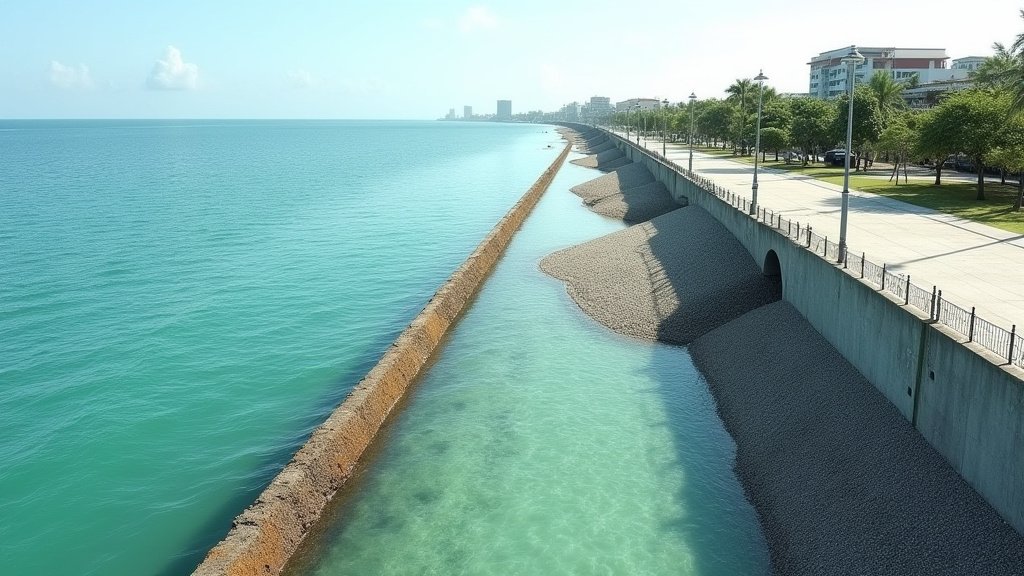
The historic waterfront of Black River, though heavily damaged, will be preserved and enhanced with a multi-layered coastal defense system. This includes submerged offshore breakwaters, a concrete seawall integrated with a public boardwalk, and engineered revetments to dissipate wave energy. The revitalized waterfront is envisioned as a vibrant public amenity, an entertainment and tourism corridor, and a destination featuring boutique hotels, restaurants, and cultural experiences.
National Strategy: Four Pillars of Resilience
Beyond Black River, Prime Minister Holness outlined a national strategy comprising four key pillars:
- Strategic Spatial Planning and Risk-Informed Development: This principle emphasizes that where Jamaica builds is as important as what it builds. Critical national infrastructure, including hospitals, schools, utilities, highways, and logistic facilities, must be progressively relocated away from high-risk coastal zones and positioned with full regard to storm surge, flooding, and sea-level rise.
- Building Redundancy into Distributed Systems: To prevent catastrophic system failures like those experienced in Black River, where the concentration of civic functions in a single exposed corridor led to widespread compromise, future infrastructure will be engineered with back-up capacity. This ensures that if one part of a system is struck, the rest can continue functioning.
- Connectivity and Self-Sustaining Regional Ecosystems: Resilience is not built in isolation but through interconnected networks. Roads, hospitals, schools, housing, energy systems, and government services must be planned collectively to create self-sustaining regional ecosystems.
- Economic Diversification and Production Resilience: A resilient nation must be physically strong and economically adaptable. Diversification away from dependence on a single sector, market, or economic activity is crucial. The redevelopment of the Black River waterfront, for instance, will anchor not only tourism but also wellness, marine recreation, and culinary offerings rooted in the region’s agricultural identity.
The government’s commitment to using the Black River redevelopment as a blueprint for other affected parishes and communities underscores the national scale of this transformation. The lessons learned from Hurricane Melissa are being applied consistently and deliberately to build a stronger, more resilient Jamaica.
FAQ: People Also Ask
Q1: What is the main focus of Jamaica’s post-Hurricane Melissa development plan?
A1: The main focus is on building climate resilience and implementing strategic spatial planning to transition from climate fragility to robust resilience. The redevelopment of Black River serves as a model for this approach, emphasizing climate-smart infrastructure and a planned inland urban center.
Q2: How will the redevelopment of Black River address its vulnerability to hurricanes and sea-level rise?
A2: Black River will feature a new inland urban center situated above projected storm surge and sea-level rise. Buildings will be designed to withstand Category Five winds, and essential public functions will be consolidated in a flood-safe precinct with enhanced utility corridors and drainage systems. A multi-layered coastal defense system will protect the waterfront.
Q3: What are the four foundational principles guiding Jamaica’s national development strategy post-Hurricane Melissa?
A3: The four principles are: strategic spatial planning and risk-informed development, building redundancy into distributed systems, fostering connectivity within self-sustaining regional ecosystems, and promoting economic diversification and production resilience.