
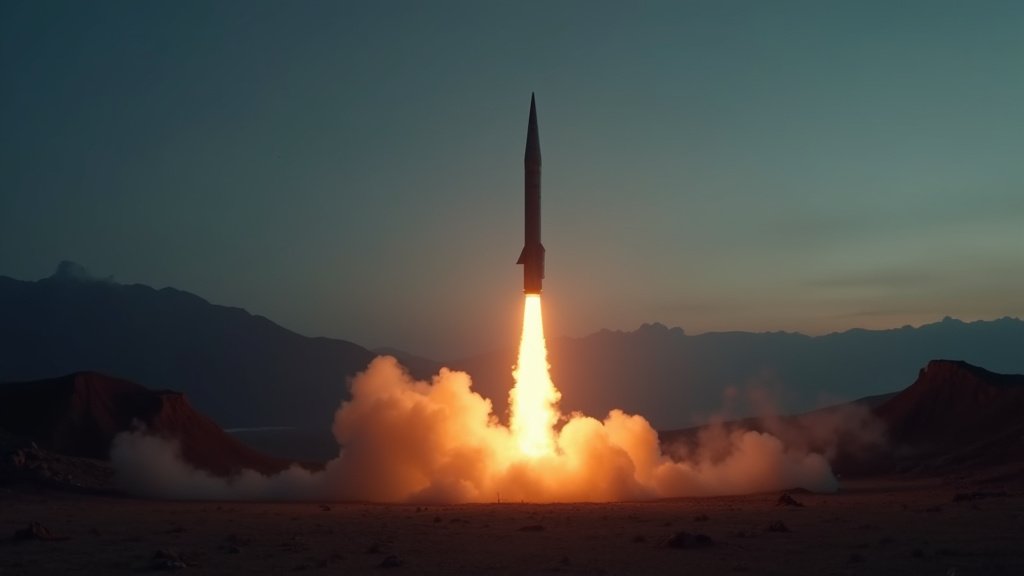
North Korea launched projectiles Tuesday. This occurred toward the East Sea. South Korea’s military confirmed the news. They detected the launch on January 27, 2026. Japan’s Defense Ministry also announced the event. It appears to be a significant development in global news today.
Missile Details and Trajectory
South Korea’s Joint Chiefs of Staff reported the launch. They stated it was at least one unidentified projectile. Later reports suggested two ballistic missiles were fired. These originated from an area north of Pyongyang. They flew for approximately 350 kilometers. The projectiles landed in waters off North Korea’s eastern coast. Specifically, they fell outside Japan’s exclusive economic zone. Japanese officials condemned the launches. They called them a threat to regional peace. The flight duration was reportedly around four minutes.
A Pattern of Provocation
This launch marks North Korea’s second this year. The previous launch occurred on January 4, 2026. This follows a period of 23 days without missile activity. North Korea has increased its weapons testing significantly in recent years. Analysts note a strategic pattern in these tests.
Regional and Global Context
The timing of this launch is notable. It occurred just one day after a visit by a senior U.S. official, Elbridge Colby, to Seoul. Colby hailed South Korea as a “model ally”. Additionally, the January 4th launch preceded South Korean President Lee Jae Myung’s summit in China. These actions occur amid heightened animosities with South Korea.
North Korea’s Military Ambitions
Experts believe North Korea aims to improve its precision strike capabilities. The tests also challenge the United States and South Korea. Furthermore, North Korea may be testing weapons for potential export. Leader Kim Jong Un seeks greater leverage in international negotiations. He believes a larger arsenal provides this advantage. The country is also preparing for a major ruling party congress. This event is the first in five years. Kim Jong Un has ordered an expansion of missile production.
International Scrutiny and Sanctions
North Korea faces significant international sanctions. The UN Security Council imposed these due to its nuclear and missile programs. The U.S. expects full implementation of these UN sanctions. These measures aim to curb revenue for its weapons of mass destruction (WMD) and ballistic missile programs. Despite sanctions, North Korea continues its development. This includes efforts in ballistic missile technology and submarine-launched ballistic missiles (SLBMs).
Reactions and Readiness
South Korea’s military stated it maintains a firm readiness posture. They are prepared to repel any North Korean provocations. Japan’s Prime Minister’s office urged maximum efforts for information gathering. They also stressed keeping the public informed. The global community watches these developments closely. This latest launch adds to the ongoing instability in the Korean Peninsula. The world is monitoring North Korea’s actions with concern today.
Conclusion
North Korea’s launch of ballistic missiles marks a clear escalation. It underscores the persistent security challenges in Northeast Asia. The international community continues to seek denuclearization. However, Pyongyang’s pursuit of advanced weaponry shows no signs of slowing. This event serves as a stark reminder of the volatile geopolitical landscape we face. The world awaits further analysis and diplomatic responses.