
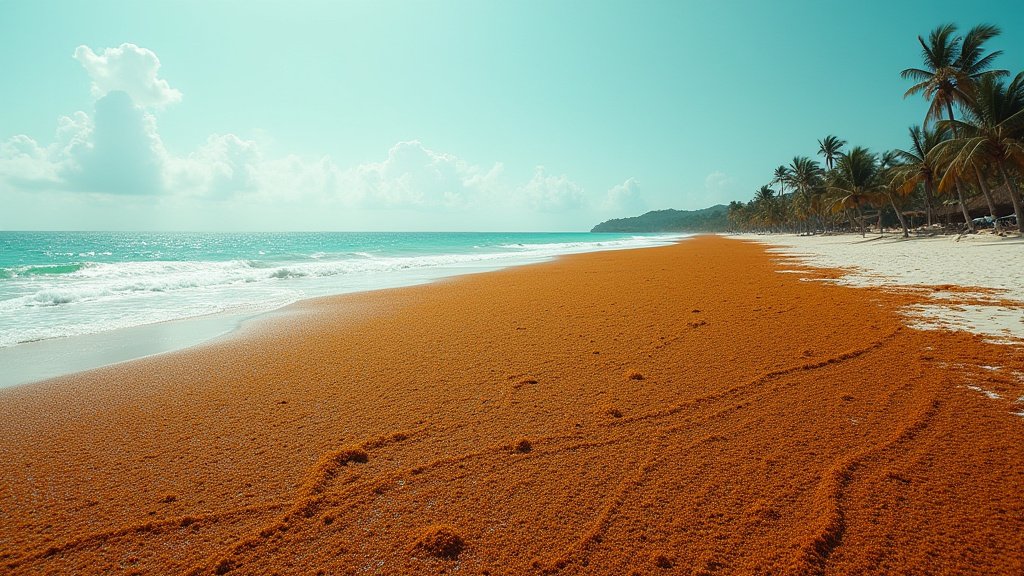
The Great Sargassum Belt: An Unprecedented Marine Phenomenon
The colossal accumulation of sargassum seaweed, often referred to as the “Great Sargassum Belt,” originates in the tropical Atlantic and is propelled westward by ocean currents. This year’s event is particularly alarming due to its sheer scale, with some estimates placing the total amount of sargassum in the Atlantic at 31 million metric tons. Researchers at the University of South Florida (USF) are employing satellite technology to track these massive blooms, providing crucial forecasts for affected regions.
Ecological and Economic Impacts
In the open ocean, sargassum mats serve as vital nurseries for various marine species, offering food and shelter. However, once ashore, this ecological benefit transforms into a significant environmental and economic burden. The decomposing seaweed releases hydrogen sulfide, a gas with a pungent rotten-egg smell, impacting air quality and the aesthetic appeal of beaches. This organic matter can also deplete oxygen levels in the water, harming marine ecosystems, and smothering sea turtle nesting grounds, leading to increased hatchling mortality. For coastal communities, especially in the Caribbean and Florida, the economic repercussions are substantial, with tourism and fishing industries facing severe challenges. Cleanup efforts can be costly and labor-intensive, as demonstrated by Miami-Dade County’s expenditure of millions of dollars in previous years.
Understanding the Surge: Causes and Forecasts
While sargassum has historically been present in the Sargasso Sea, the dramatic increase in bloom size since 2011 is a relatively new phenomenon that scientists are still working to fully understand. Current research points to a complex interplay of factors, including rising ocean temperatures, increased nutrient runoff from land, and shifts in ocean currents, all potentially linked to climate change. The USF Sargassum Watch System provides valuable outlooks and forecasts, helping coastal areas prepare for potential inundations. Despite the challenges, scientists like Dr. Brian Lapointe emphasize that the exact landfall and severity can depend on prevailing winds and currents, making precise short-term predictions difficult.