
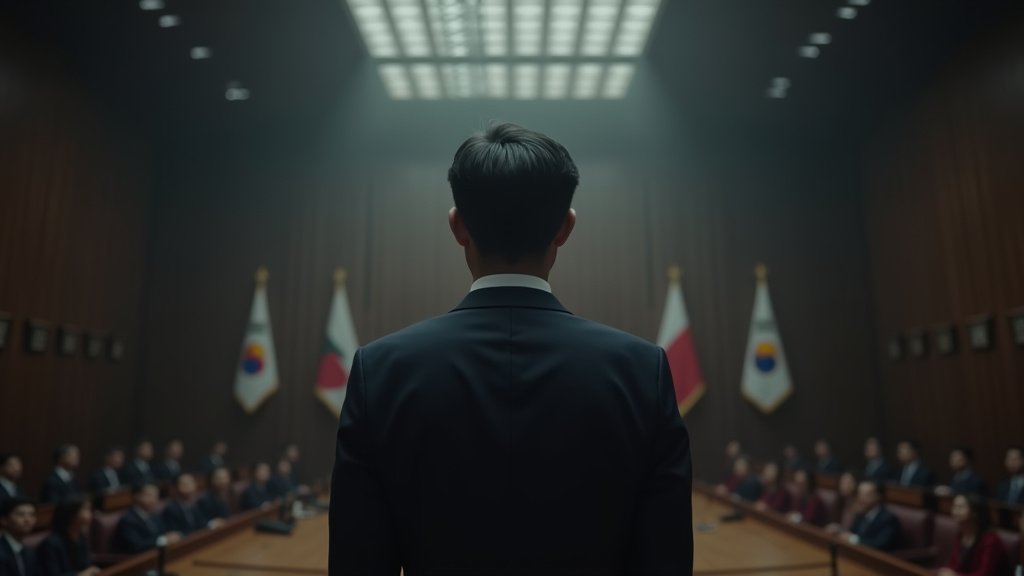
A South Korean court issued a landmark ruling today. Former President Yoon Suk Yeol received five years in prison. This verdict marks a significant moment. It is the first judgment in his numerous criminal trials. The charges stem from his failed attempt to impose martial law in December 2024. The world watches this news closely.
The Martial Law Declaration
President Yoon Suk Yeol made a stunning announcement. He declared martial law on December 3, 2024. This action surprised the nation. He accused opposition parties of being anti-state forces. Yoon claimed they were trying to overthrow democracy. He asked citizens for their trust. The emergency rule was meant to counter legislative obstruction.
Immediate Backlash and Overturn
However, the declaration faced swift opposition. Lawmakers rushed to the National Assembly. They worked to override the decree. Some climbed over fences. The National Assembly voted unanimously to lift martial law. The order lasted only six hours. Yoon rescinded his declaration early on December 4, 2024.
Political Fallout and Impeachment
Public protests erupted nationwide. Many South Koreans demanded Yoon’s resignation. The ruling People Power Party also criticized the move. Opposition parties moved to impeach the president. An initial impeachment motion on December 7, 2024, failed. Many ruling party lawmakers boycotted the vote. However, a second motion passed on December 14, 2024. Yoon’s presidential powers were suspended.
Constitutional Court Ruling
The Constitutional Court reviewed the impeachment. On April 4, 2025, the court made its decision. The court unanimously upheld Yoon’s impeachment. This ruling officially removed him from office. He lost his presidential immunity.
Criminal Charges and Trial
Yoon faced multiple criminal charges. He was arrested on January 15, 2025. This made him the first sitting president to be arrested and indicted. The charges included insurrection. Prosecutors sought the death penalty for this charge. A verdict in that major trial is due next month.
Today’s Verdict: Obstruction and Abuse
Today’s ruling by the Seoul Central District Court focused on other charges. The court found Yoon guilty of special obstruction of official duties. He was also convicted of abuse of power. Additionally, he was found guilty of fabricating documents. The court stated Yoon “disregarded the constitution”. He also showed no remorse.
Blocking Arrests and Legal Procedures
The conviction included obstructing attempts to arrest him. Yoon had ordered the presidential security service. This was to block investigators executing a lawfully issued warrant. He was also found guilty of failing to follow legal procedures for martial law. This included not holding a mandated cabinet meeting.
Sentencing and Reaction
The judge stated Yoon deserved condemnation. He “abused his enormous influence as president”. This effectively privatized state officials for personal gain. The sentence is five years in prison. Yoon showed no visible reaction during the sentencing. His legal team plans to appeal the decision. They called the ruling “politicized”.
Broader Implications
This verdict is historic for South Korea. It reinforces the nation’s commitment to democracy. South Korea has a history of holding powerful figures accountable. The case challenges the rule of law. Internationally, such domestic crises can affect alliances. Yoon’s actions risked destabilizing key relationships. The news is a significant global development.
Ongoing Legal Battles
However, Yoon’s legal battles are not over. This is the first of eight criminal trials. The most significant is the insurrection trial. Prosecutors requested the death penalty in that case. A ruling is expected on February 19, 2026.
Supporters’ Protest
Security was tight outside the Seoul Central District Court. Dozens of Yoon supporters gathered. They held placards claiming he was a victim. They believe he faced a political witch hunt. This sensitive case underscores deep political divisions.
A Nation’s Democratic Vigilance
This sentencing today is a crucial chapter. It highlights South Korea’s democratic resilience. The nation has repeatedly shown it will hold leaders accountable. The events of December 2024 remain a stark reminder. They underscore the fragility of democratic norms. The world is observing these developments.