
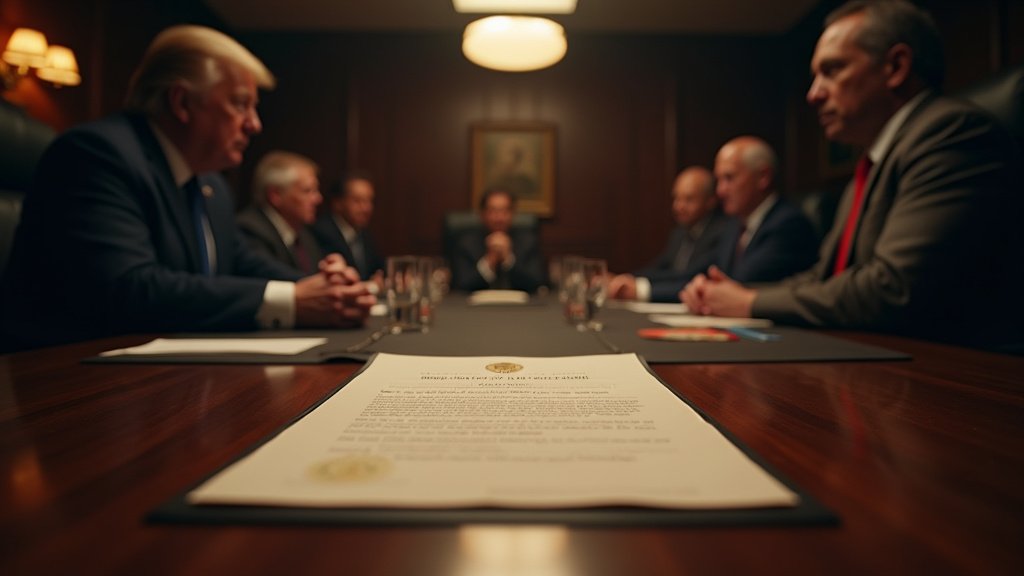
President Trump Signs New 10% Global Tariff Order
President Trump signed a new executive order today. It imposes a 10% global tariff. This action followed a major Supreme Court ruling. The court struck down prior tariffs. The new order seeks to replace that lost revenue. This news impacts world trade significantly. The new duties took effect February 24, 2026. They are temporary for 150 days.
Supreme Court Rejects Emergency Tariffs
The Supreme Court issued a landmark decision Friday. It was February 20, 2026. The justices ruled against President Trump’s tariffs. These were levied under the International Emergency Economic Powers Act (IEEPA). The Court stated IEEPA does not grant tariff powers. It emphasized Congress holds taxing authority. This ruling affirmed constitutional checks. Lower courts had also found the tariffs illegal. The decision was a victory for legal governance. Many business groups welcomed the ruling. They sought relief from trade disruptions.
New Authority for Tariffs
President Trump acted swiftly after the ruling. He signed new executive orders. These orders impose a 10% global tariff. The authority used is Section 122 of the Trade Act of 1974. This law permits temporary import surcharges. It addresses balance-of-payments deficits. The tariffs will last for 150 days. This period ends on July 24, 2026. The administration seeks to maintain tariff revenue levels. This provides a new legal basis. It replaces the IEEPA authority. The previous tariffs were often higher. They ranged up to 50% on some goods. The new levy is a flat 10%.
Broad Exemptions Provide Relief
Many goods are exempt from the new tariff. This list protects key U.S. industries. It includes aerospace products. Passenger cars and light trucks are exempt. Goods from Mexico and Canada are excluded. They must meet USMCA standards. Pharmaceuticals also remain exempt. This is crucial for healthcare access. Critical minerals are also not taxed. Many agricultural products are exempt too. Beef, tomatoes, and oranges are on this list. Energy products and fertilizers are also excluded. This broad set of exemptions offers some business relief. It limits immediate cost increases for these sectors.
Economic Outlook and Revenue Projections
Treasury Secretary Scott Bessent addressed the move today. He stated tariff revenue will remain largely unchanged. Projections for 2026 show little decrease. The collection method will be more indirect. This new approach aims for revenue continuity. The administration also initiated new investigations. These use Section 301 and Section 232 authorities. These can lead to future tariffs. They focus on unfair trade and national security. This indicates a strategy for sustained trade policy. The prior IEEPA tariffs collected billions. Importers may be entitled to refunds. These processes are expected to be complex. They could take years to resolve. An estimated $175 billion might be refunded. This decision creates financial uncertainty.
Business Reactions and Future Uncertainty
Business groups largely supported the Supreme Court’s decision. They viewed it as a positive step. It reaffirmed Congress’s role. However, the new tariff order creates fresh concerns. Businesses face renewed uncertainty. The 150-day limit for the Section 122 tariff is a key factor. Its extension requires Congressional approval. The administration is exploring other legal tools. This suggests a continuation of trade policy actions. International partners are monitoring these developments closely. The global economy is sensitive to such shifts. The long-term effects remain unclear. Some companies adapted to prior tariffs. They absorbed costs or shifted supply chains. Others passed costs to consumers. This has driven up prices for many goods. The immediate relief from the ruling is tempered. New challenges are emerging today. The administration seeks to maintain its trade stance. This news highlights ongoing global economic dynamics.
Japan’s Tariffs Adjusted
The 15% reciprocal tariffs on Japan will end. They are replaced by the new 10% global levy. This change was confirmed by officials. Japan pledged significant investments earlier. These were in exchange for tariff reductions. The Supreme Court’s ruling prompted this adjustment. The future of specific trade deals is under review. This move affects international trade relationships. It signals a shift in tariff strategy. Global trade continues to evolve rapidly.
Legal Basis of Section 122
Section 122 of the Trade Act of 1974 is a rarely used authority. It was enacted in 1974. It allows presidents to impose import surcharges. These can be up to 15%. They are limited to 150 days. The justification is a serious balance-of-payments deficit. This statute does not require lengthy investigations. It allows for rapid executive action. This feature made it an attractive option. It offers a temporary replacement. Congress can extend the period. However, political hurdles exist. The statute was intended for financial crises. Its modern use is for broader trade policy. This marks the first time it has been invoked. This historical context is notable for world news.
Conclusion
President Trump’s new executive order marks a significant development. It demonstrates the administration’s resolve. It navigates a key Supreme Court decision. The 10% global tariff provides a temporary measure. It aims to maintain revenue streams. However, questions remain about its duration. Future tariffs may emerge from new investigations. The world watches these trade policy shifts. Businesses and consumers await clarity. The economic landscape continues to be shaped by these actions. This news impacts the global economy.