
U.S. Forces Conduct 20th Strike Under Operation Southern Spear: Four Killed in Caribbean Narco-Boat Attack Amid Growing Controversy
WASHINGTON D.C. – U.S. military forces carried out their 20th kinetic strike against a suspected narco-trafficking vessel earlier this week, resulting in the deaths of all four individuals aboard in the Caribbean Sea. The incident, which occurred on Monday, November 10, brings the total death toll associated with the Trump administration’s counternarcotics campaign to at least 80, according to reports. Notably, this latest strike was not immediately announced on social media by Defense Secretary Pete Hegseth or other administration officials, a departure from previous practices.
Operation Southern Spear Intensifies
The operation, formally designated “Operation Southern Spear,” was announced by Secretary Hegseth on Thursday, November 13, 2025. This initiative represents a significant expansion of the U.S. military’s anti-narcotics efforts across the Western Hemisphere, targeting what the administration labels “narco-terrorists.” The campaign, which began in early September, aims to remove these individuals from the hemisphere and secure the United States from illicit drugs. The operation is led by Joint Task Force Southern Spear in coordination with U.S. Southern Command (SOUTHCOM), overseeing an area that includes the Caribbean and the Eastern Pacific.
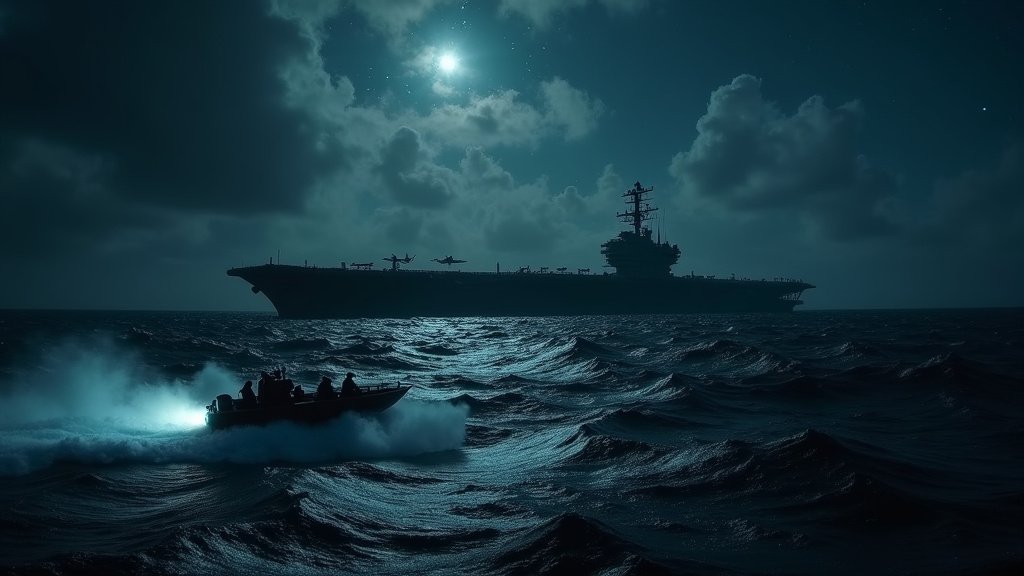
Operation Southern Spear is characterized by a substantial military buildup. The deployment includes the arrival of the USS Gerald R. Ford, the U.S. Navy’s largest and most advanced aircraft carrier, along with nearly a dozen other Navy vessels and approximately 12,000 to 16,000 personnel. This significant naval presence, the largest in the Caribbean in decades, is aimed at detecting, monitoring, and disrupting illicit actors and activities along critical drug trafficking routes.
Latest Strike and Escalating Casualties
The strike on November 10th marks the 20th such operation since the campaign’s inception. The administration claims these actions target vessels involved in illicit narcotics smuggling and are operated by “designated terrorist organizations.” However, official statements often lack specific evidence to support these claims regarding the nature of the cargo or the affiliations of those killed. The cumulative death toll has reached at least 80, with reports indicating 79 deaths directly from strikes and one person presumed lost at sea. Two wounded survivors have been repatriated to their home countries.
Controversy and International Scrutiny
The administration’s strategy of conducting lethal strikes on suspected drug boats has drawn significant criticism and international concern. Critics, including human rights organizations and some lawmakers, argue that these actions constitute “extrajudicial killings” and may violate international law, as they bypass traditional law enforcement procedures for interdiction, arrest, and prosecution. The U.S. has asserted that drug traffickers should be considered “unlawful combatants” in an “armed conflict,” a characterization widely disputed by international legal experts. Some countries, like the United Kingdom, have reportedly paused intelligence sharing with the U.S. over fears of complicity in potential unlawful killings.
Regional Tensions and Geopolitical Context
The military buildup and ongoing strikes have intensified regional tensions, particularly with Venezuela. The Trump administration has accused Venezuelan President Nicolás Maduro’s government of colluding with drug cartels, leading to a significant escalation in rhetoric and military posturing. Venezuela has responded by initiating a nationwide military mobilization, reinforcing its coastal defenses and signaling readiness for potential conflict. While the administration insists the operations are solely focused on counternarcotics, many analysts view the buildup and strikes as a pressure tactic aimed at influencing Venezuela’s internal politics or pursuing regime change.
Alternative Approaches and Future Outlook
Traditional U.S. counternarcotics efforts, primarily led by the Coast Guard, have historically focused on interdiction, seizure of drugs, and apprehension of suspects, allowing for intelligence gathering and prosecution. Experts suggest that these law enforcement-focused methods are more effective, sustainable, and legally sound than outright lethal strikes. The current campaign, while highlighting a determined U.S. stance against drug trafficking, has raised profound questions about the legality, proportionality, and long-term consequences of its chosen approach in the complex geopolitical landscape of the Caribbean and the wider region.