
US Caribbean Strikes Spark Regional Outcry Over Fatalities; Storm Lorenzo Dissipates
October 20, 2025 – The Caribbean region finds itself at a critical juncture today, grappling with escalating tensions following a recent **US Caribbean Strikes** operation off the coast of Venezuela that resulted in multiple fatalities, drawing widespread condemnation and urgent calls for adherence to international law. Simultaneously, the region breathes a sigh of relief as Tropical Storm Lorenzo has dissipated, posing no threat to island nations.
Escalating US Military Operations and Fatal Consequences of US Caribbean Strikes
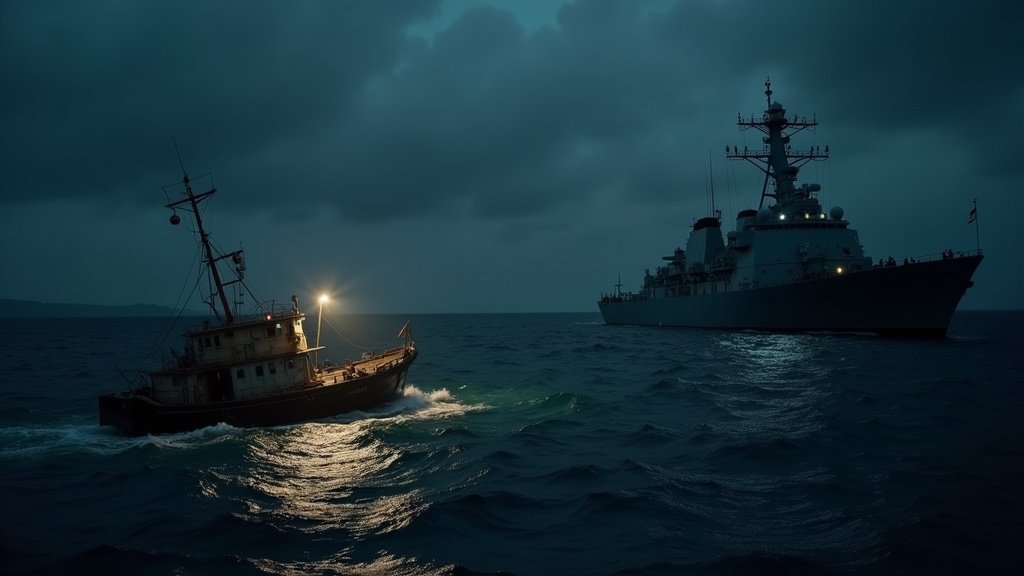
On October 14, 2025, US warships executed a kinetic strike on a vessel near Venezuelan waters, an operation that claimed the lives of six individuals. Among the deceased were two nationals from Trinidad and Tobago, Chad “Charpo” Joseph, 26, and Rishi Samaroo. Their families have vociferously disputed claims made by the Trump administration that the vessel was involved in narcotics trafficking and associated with “narco-terrorist networks.” Relatives and friends assert that Joseph, in particular, was a fisherman who was attempting to return home to Trinidad and Tobago after a three-month stay in Venezuela.
This incident is the latest in a series of at least five, and possibly more, US military strikes targeting vessels in the Caribbean and Eastern Pacific since September 2025. These operations, part of what the US Department of Defense has termed “Operation Southern Spear,” have led to a total death toll exceeding 80 people by mid-November, according to various reports. While the US administration, including President Trump and Secretary of Defense Pete Hegseth, has cited intelligence and a commitment to combating drug trafficking as justification, concrete evidence substantiating these claims has not been publicly released. Critics, including independent UN experts, have pointed out that countering drug trafficking is a law-enforcement matter governed by strict limits on lethal force, and that the **US Caribbean Strikes** may violate international human rights law by failing to demonstrate an imminent threat.
Regional Outcry and Legal Scrutiny of US Caribbean Strikes
The US military’s aggressive posture and the mounting civilian casualties from the **US Caribbean Strikes** have ignited significant regional concern. Leaders across the Caribbean have voiced apprehension, with many characterizing the actions as a threat to regional peace and security. Venezuela, in particular, has vehemently condemned the strikes, labelling them as “murder” and extrajudicial executions, and asserting they violate fundamental principles of international law. President Nicolás Maduro has accused the US of fabricating a pretext for military intervention and pursuing regime change.
Trinidad and Tobago’s Prime Minister Kamla Persad-Bissessar has notably taken a different stance, expressing strong support for the US campaign, stating she had “no sympathy for traffickers” and that the US military should “kill them all violently.” However, other members of the Caribbean Community (CARICOM) have advocated for diplomacy and regional cooperation in addressing transnational crime.
Internationally, the legality of the US operations has also come under fire. France has criticized the strikes for disregarding international law and potentially destabilizing the region. The United Kingdom has reportedly suspended intelligence sharing with the US concerning suspected drug trafficking vessels due to concerns about its own potential legal liability. Canada has similarly stated it does not wish its intelligence to be used for targeting purposes.
A Growing US Military Footprint and the Impact of US Caribbean Strikes
The recent strikes are part of a broader and unprecedented US military buildup in the Caribbean. The deployment of the USS Gerald R. Ford carrier strike group, alongside numerous other warships and an estimated 15,000 personnel, represents the largest US military presence in the region in decades. While officially framed as an anti-drug enforcement campaign under Operation Southern Spear, analysts and regional leaders suggest the buildup may also serve strategic geopolitical aims, including exerting political and economic pressure on Venezuela and other nations in the hemisphere.
A Region Facing Multiple Crises Amidst US Caribbean Strikes
Beyond the immediate security concerns arising from the **US Caribbean Strikes**, the Caribbean today is also contending with severe humanitarian challenges. Haiti is facing a devastating internal displacement crisis, with the number of displaced persons exceeding 1.4 million by September 2025, a grim record attributed to escalating gang violence and insecurity. This represents a significant increase from earlier in the year and highlights the profound humanitarian cost of the ongoing instability.
Meanwhile, other regional news includes Jamaica’s celebration of its national heroes. On October 20, 2025, the nation held its annual Ceremony of Investiture and Presentation of National Honours and Awards, recognizing 141 distinguished citizens for their contributions. In economic news, Jamaica’s inflation rate saw a modest increase of 0.8% in September 2025, primarily driven by rising costs in food and housing sectors.
Tropical Storm Lorenzo Dissipates
On the meteorological front, Tropical Storm Lorenzo, the twelfth named storm of the 2025 Atlantic hurricane season, has weakened and dissipated over the central Atlantic on October 16, 2025. The storm had posed no threat to the Caribbean or the United States, bringing a brief period of calm to the region’s weather concerns as the hurricane season progresses.
A Precarious Regional Landscape Amidst US Military Strikes
As the region navigates these complex events, the US military’s actions in the Caribbean, including the recent **US military strikes**, coupled with ongoing humanitarian crises like that in Haiti, underscore a period of significant geopolitical and social volatility. The lack of transparency surrounding the strikes and the growing chorus of international criticism raise critical questions about regional stability and the future of international law in maritime security operations. Today’s news from the Caribbean paints a picture of a region where Caribbean security, humanitarian needs, and geopolitical maneuvering are deeply intertwined, demanding careful observation and continued dialogue.