
Washington D.C. – US lawmakers viewed disturbing video footage this week. The video showed a military strike on a suspected drug boat in the Caribbean. Admiral Frank “Mitch” Bradley testified before Congress. He stated no “kill them all” order was issued for the September 2nd operation. However, the briefing left many lawmakers deeply concerned. Questions linger about the legality of the strike. This news comes as the US intensifies its campaign against maritime drug trafficking.
The September 2nd Incident
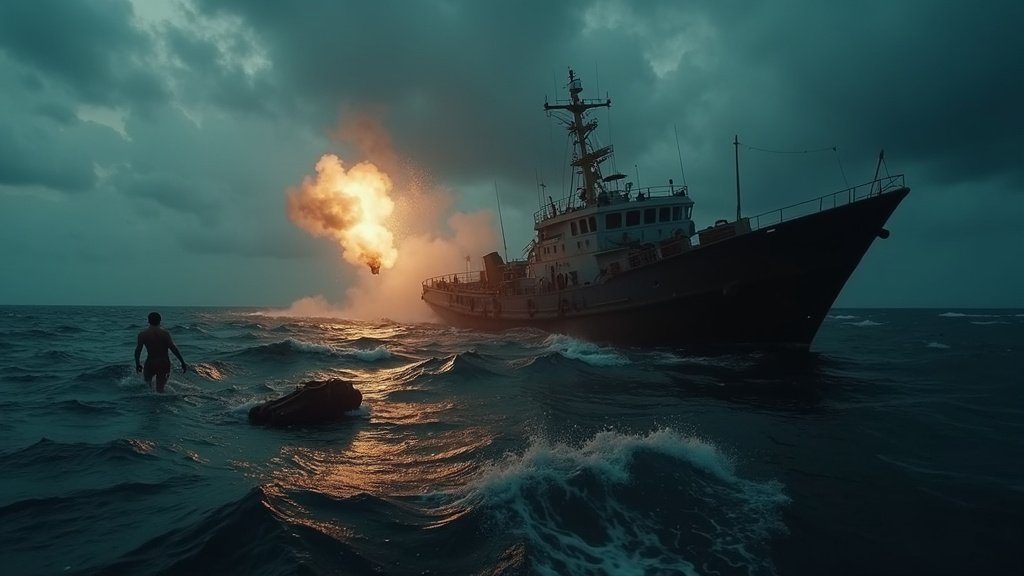
The core of the congressional scrutiny centers on an event from September 2nd. US forces conducted a strike on a suspected drug vessel. This initial strike disabled the boat. Reports indicate two survivors were seen clinging to the wreckage. A second missile strike then killed these survivors. This follow-up action has sparked significant debate. It represents a controversial escalation in US military operations.
Admiral Bradley’s Account
Admiral Bradley, who commanded the operation, briefed key members of Congress. He presented video evidence of the strikes. He asserted that he received no explicit order to eliminate all individuals on board. Senator Tom Cotton, chair of the Senate Intelligence Committee, echoed this. He stated Admiral Bradley was clear about receiving no such directive. The admiral emphasized he was given a written order. This order was detailed and followed military protocol, he claimed.
Conflicting Views on Survivors
Lawmakers offered differing interpretations of the survivors’ actions. Some, like Senator Cotton, described them as attempting to right the boat. He argued this showed they were still a threat. They aimed to “continue on their mission,” he said. This view suggests the second strike was a necessary act of threat elimination. However, other lawmakers saw it differently. Representative Jim Himes described the video. He saw “two individuals in clear distress.” They had “no means of locomotion” and a “destroyed vessel.” He called the footage “one of the most troubling things” he has witnessed. Other Democrats shared similar sentiments. They expressed being “deeply disturbed” and “appalled” by the visual evidence.
Defense Secretary’s Role
The controversy also involves Defense Secretary Pete Hegseth. Reports suggested Hegseth verbally ordered “kill everybody” before the initial strike. This claim has been denied by Hegseth. He stated he was not present for the second strike. He maintained that Admiral Bradley made the ultimate decision. This assertion places responsibility for the second strike on the admiral.
Legality and Broader Operations
The regional operations have seen at least 22 strikes on 23 vessels since September. These strikes occurred in the Caribbean Sea and the Eastern Pacific. At least 87 people have been killed. The administration labels targeted groups as “narco-terrorists.” These include organizations like Venezuela’s Tren de Aragua. Critics argue this designation perverts legal definitions. They claim it reclassifies common criminals as enemy combatants. Some Democrats have raised concerns about potential war crimes. They question the legality of striking survivors. The justification hinges on treating drug cartels as waging war on the US. This parallels actions against groups like ISIS or Al-Qaeda.
Ongoing Scrutiny
Lawmakers are demanding greater transparency. Many call for the release of unedited footage. They also seek written legal justifications for the strikes. The Trump administration has maintained the operations are lawful. They cite a classified legal opinion. Details of this opinion remain secret. The US military continues these maritime strikes today. However, scrutiny over their methods and legality is intensifying. The events of September 2nd remain a flashpoint. They highlight deep divisions in Congress. These divisions concern the rules of engagement. They also question the broader strategy in the fight against drug trafficking.