
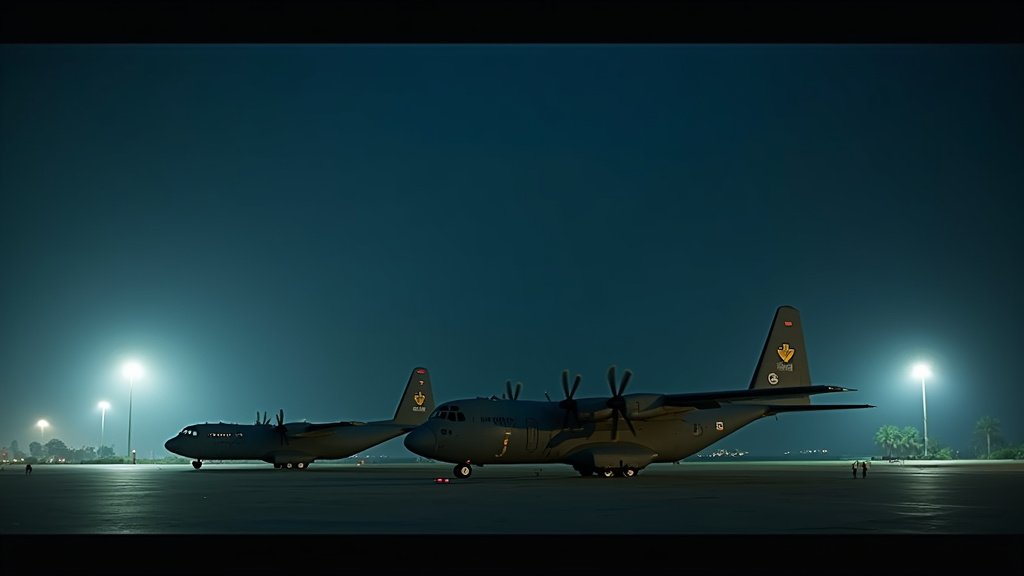
Santo Domingo Welcomes US Military Aircraft Amid Broader Caribbean Deployment
The Dominican Republic has authorized U.S. military aircraft to land. This is part of an operational support mission. It aims to bolster regional security efforts. The aircraft will use restricted zones. These are at San Isidro Air Base and Las Américas International Airport. This deployment is temporary. It falls under existing cooperation agreements.
Key Details of the Agreement
Several U.S. military aircraft will operate from Dominican soil. These planes will support surveillance missions. They will also aid transport and technical tasks. The C-130 Hercules is a notable aircraft. The KC-130 tanker is also expected. These platforms are versatile workhorses. They have a long history of service. The C-130 has served since 1954. It supported missions in Vietnam and Desert Storm. It also assisted in humanitarian efforts. The KC-130 acts as a tanker and logistics aircraft. It enables aerial refueling. This supports fighter jets and drones. These aircraft have a proven record. They have operated in Iraq and Afghanistan. They also supported operations in Libya.
Geopolitical Undercurrents in the Caribbean
This U.S. deployment occurs during heightened geopolitical activity. The U.S. is increasing pressure on Venezuela. This situation affects Caribbean nations. The U.S. military has significantly expanded its presence. This is part of ‘Operation Southern Spear’. The operation began as a counter-narcotics effort. It now shows a broader show of force. Major naval assets are present. This includes the USS Gerald R. Ford carrier strike group. Thousands of U.S. personnel are in the region. Bases in Puerto Rico and U.S. Virgin Islands are expanded. This buildup marks the largest in decades. The Dominican Republic’s location is strategic. It sits along key trafficking routes. It offers access to the Mona Passage. This is a heavily trafficked smuggling corridor. The agreement allows for rapid air operations. It provides forward reach for U.S. missions. This includes intelligence and refueling. It supports operations near Venezuelan airspace.
Combating Drug Trafficking: The Stated Mission
The primary stated goal is to combat drug trafficking. U.S. officials see this as vital news. They aim to disrupt routes. These routes often cross the Caribbean. The Dominican Republic is a key partner. President Luis Abinader announced the agreement. U.S. Defense Secretary Pete Hegseth was present. Mr. Abinader called the scope ‘technical, limited, and temporary’. The aim is to strengthen air and maritime protection. This helps prevent narcotics entry. It also targets transnational organized crime. Joint operations have yielded results. Recent missions seized large drug shipments. The Dominican Republic intercepts significant drug quantities. It has become a key transit point. This access improves U.S. interdiction efforts. It allows planes more time on station. It increases responsiveness to intelligence. This complements a bolstered U.S. naval presence.
Regional Ramifications and CARICOM’s Stance
The intensified U.S. actions have sparked regional reactions. CARICOM nations face complex pressures. They are navigating U.S. pressure on Venezuela. This situation creates divisions within CARICOM. Some nations welcome the U.S. presence. Others express concerns about U.S. influence. Sovereignty is a major discussion point. Small states often feel caught between larger powers. CARICOM has promoted a ‘Zone of Peace’ doctrine. However, national interests sometimes diverge. The U.S. military buildup also targets Venezuela directly. The U.S. has accused Venezuela of harboring drug cartels. Venezuela denies these accusations. It calls the U.S. actions an attack on its sovereignty. Tensions between Washington and Caracas have risen. Some analysts view the ‘drug war’ narrative as a cover. They suggest broader geopolitical aims. These may include asserting U.S. dominance. They could also involve energy interests in Venezuela. The presence of U.S. military assets is a clear signal. It enhances the U.S. negotiating position. It reminds the world of U.S. regional influence. The Caribbean serves as a strategic chessboard. U.S. actions there aim to reshape global power. This military activity also includes other nations. For example, the U.S. has increased military cooperation with Trinidad and Tobago. This alliance is strategic for the region.
Looking Ahead: A Volatile Region
The deployment of U.S. military aircraft is significant. It represents a deepening security partnership. The Dominican Republic maintains control. Dominican authorities must authorize each mission. Their officers are present during U.S. operations. The agreement underscores a commitment to regional stability. However, it also highlights growing geopolitical friction. The situation near Venezuela remains tense. The U.S. military buildup is substantial. It involves advanced aircraft and naval power. The effectiveness of these operations is ongoing news. Their long-term impact on the Caribbean is yet to be fully seen. This regional strategy involves multifaceted threats. It includes drug trafficking and hybrid warfare. The Caribbean continues to be a focal point. Its stability is crucial for global security. This operational deployment is a key development today.