
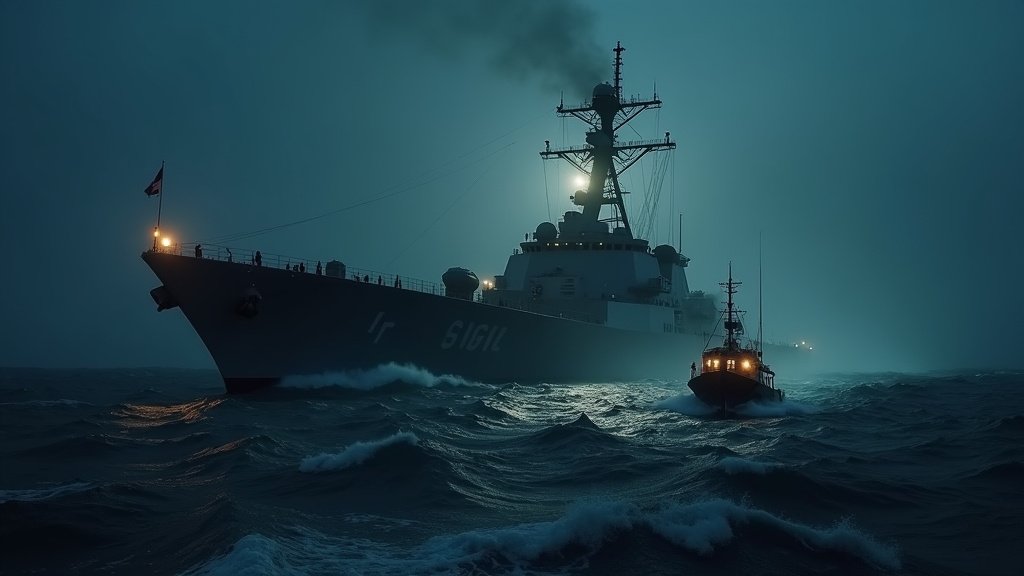
The U.S. military, under the direction of President Donald Trump, has significantly escalated its campaign against maritime drug trafficking in the Caribbean and Eastern Pacific Oceans. This new phase of operations, dubbed Operation Southern Spear, has seen a series of U.S. Navy strikes on vessels allegedly involved in transporting narcotics, a strategy that has intensified regional tensions and drawn international scrutiny. The first major announcement of these actions came on September 2, 2025, when President Trump declared that the U.S. Navy had conducted a strike in the southern Caribbean against a drug-carrying vessel that had departed from Venezuela. This strike reportedly killed all 11 individuals on board. Venezuelan sources indicated the incident occurred on September 1. This operation marks a substantial increase in U.S. efforts to curb the flow of illicit drugs from Latin America to the United States, a mission that has been a cornerstone of Trump’s second presidency. The U.S. military began executing these targeted airstrikes in September 2025, initially focusing on the Caribbean Sea before expanding to the Eastern Pacific Ocean in October. As of November 16, 2025, at least 83 people have been killed across 21 strikes on 22 vessels.
Tren de Aragua: A Target of US Operations
A key group identified by the U.S. as operating these vessels is the Tren de Aragua, a transnational criminal organization originating from Venezuela. This gang has expanded its reach throughout Latin America and into the United States, fueled by the mass migration of Venezuelans fleeing the country’s political and economic crisis. Tren de Aragua is known for a wide range of illicit activities, including murder, drug trafficking, human trafficking, extortion, and money laundering. The organization’s widespread presence has made combating it a priority for many nations. The U.S. government has designated Tren de Aragua as a foreign terrorist organization, a label that carries significant implications for U.S. military and law enforcement actions against it.
Escalation of US Military Action in the Caribbean
The U.S. military’s involvement in drug interdiction in the Caribbean has seen a dramatic shift. Traditionally, such operations relied on law enforcement agencies like the Coast Guard, working through legal agreements with regional partners. However, the Trump administration has authorized more forceful interdiction operations, expanding the authority of U.S. forces to disable or sink vessels suspected of carrying narcotics. This new approach was signaled by the deployment of U.S. Navy warships and personnel to the Caribbean in mid-August 2025, culminating in a significant naval buildup that has become the largest in decades. The arrival of the USS Gerald R. Ford carrier strike group in November 2025 further underscored the scale of this deployment, bringing the total U.S. military personnel in the region to over 15,000.
Key Figures and Official Statements
President Donald Trump has been a vocal proponent of this aggressive stance, characterizing smugglers as “narco-terrorists” and declaring that the U.S. is in an “armed conflict” with drug cartels. He has also expressed support for aggressive action against drug cartels in Mexico and Colombia. U.S. Secretary of Defense Pete Hegseth stated that operations against drug cartels in Venezuela would continue, while U.S. Secretary of State Marco Rubio suggested similar strikes might follow and defended the shift in strategy, noting that “interdictions alone are not effective.” The administration has justified these actions by claiming they are necessary to protect American lives from the influx of deadly drugs like fentanyl.
Regional and International Reactions
The U.S. military’s actions have not been without controversy. Venezuela has responded by declaring maximum preparedness and threatening retaliation if attacked, with President Nicolás Maduro condemning U.S. actions as attempts to deprive him of power and expand military influence. Critics, including some foreign leaders and human rights organizations, have raised concerns about the legality and proportionality of these strikes, with some arguing they violate international law and could constitute extrajudicial killings. France, Mexico, and Colombia have expressed reservations, with Mexico and Colombia indicating potential suspensions of intelligence sharing. Despite these concerns, the U.S. maintains that its operations are focused on disrupting maritime narcotics networks and protecting the U.S. homeland.
Broader Implications and Future Outlook
The intensified U.S. military campaign in the Caribbean is part of a broader geopolitical strategy. While framed as a counternarcotics effort, some analysts suggest the operations also aim to assert U.S. political and economic influence in Latin America, potentially destabilizing the region further. The U.S. has also designated the “Cartel de los Soles,” allegedly linked to President Maduro, as a foreign terrorist organization, signaling a continued focus on pressuring the Venezuelan government.
As Operation Southern Spear continues, the effectiveness and long-term consequences of these aggressive tactics remain a subject of intense debate. The administration insists that these operations are vital for national security, while critics call for greater transparency and adherence to international legal frameworks. The ongoing military buildup and strikes represent a significant escalation in the U.S. approach to combating drug trafficking in the Western Hemisphere, with the Caribbean serving as a focal point for this new era of U.S. regional policy. This evolving news continues to be a major point of regional and international discussion.
The situation underscores the complex challenges of drug interdiction, regional stability, and international law in the contemporary geopolitical landscape. The U.S. commitment to this aggressive strategy, even amidst criticism, indicates a sustained effort to combat perceived threats emanating from Latin America.
New Headline
US Navy Strikes Escalate in Caribbean as Trump Declares ‘Armed Conflict’ Against Drug Cartels