
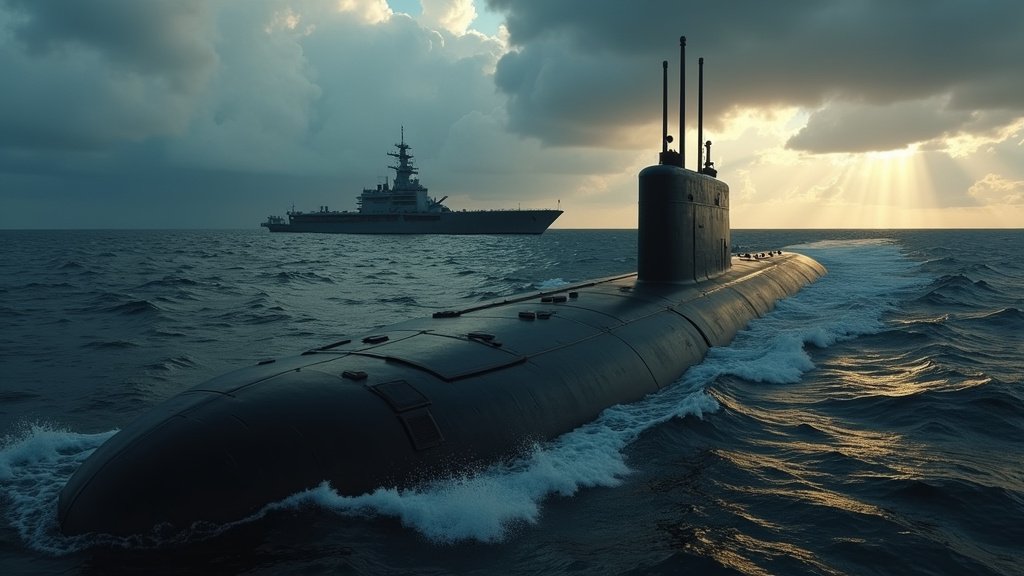
The United States has intensified its controversial “Operation Southern Spear” with a fifth deadly strike in the Caribbean Sea, targeting a suspected narco-submarine and resulting in two fatalities and two survivors who were later detained and repatriated. This latest incident, which occurred on October 16, 2025, underscores the escalating military posture of the U.S. in the region and the deepening geopolitical rift with Venezuela.
Operation Southern Spear: A Broadening Military Campaign
Formally announced on November 13, 2025, by Secretary of War Pete Hegseth and ordered by President Donald Trump, Operation Southern Spear represents a significant escalation in the U.S. effort to combat alleged drug trafficking and dismantle transnational criminal organizations. The operation, led by Joint Task Force Southern Spear under U.S. Southern Command (SOUTHCOM), aims to neutralize what the administration terms “narco-terrorists” operating across the Western Hemisphere, with a stated goal of protecting the U.S. homeland from illicit narcotics. The campaign involves a substantial military buildup, including the deployment of the USS Gerald R. Ford carrier strike group, thousands of U.S. personnel, and an unprecedented integration of robotic and autonomous systems for surveillance and interdiction.
Since its commencement around September 2, 2025, U.S. forces have conducted numerous strikes against vessels in both the Caribbean Sea and the Eastern Pacific Ocean. Reports indicate that as of mid-November, these actions have resulted in at least 83 deaths across approximately 21 incidents. The strike on October 16, specifically targeting a suspected narco-submarine, marked a significant development by yielding survivors for the first time in this series of operations. The two individuals rescued were subsequently detained on a U.S. Navy vessel before being repatriated to their home countries of Colombia and Ecuador.
Escalating Tensions with Venezuela and “Narco-Terrorism” Allegations
The U.S. military campaign unfolds against a backdrop of severely strained relations between the United States and Venezuela. The Trump administration has repeatedly accused President Nicolás Maduro and his government of being complicit in drug trafficking and supporting “narco-terrorist” organizations. These allegations culminated in the U.S. State Department’s announcement on November 17, 2025, of its intention to designate Venezuela’s “Cartel de los Soles” (Cartel of the Suns)—a group alleged to be led by Maduro and high-ranking regime officials—as a Foreign Terrorist Organization (FTO) effective November 24.
Venezuelan officials have vehemently denied these accusations, with President Maduro characterizing the U.S. actions as an attempt to fabricate a war and justify regime change. Venezuela has also responded to the significant U.S. military buildup in the Caribbean by mobilizing its own forces and warning that such actions threaten regional stability and sovereignty. The U.S. government’s characterization of Venezuela as a “narco-state” and Maduro as a “fugitive head of this cartel” serves as a primary justification for the intensified military pressure, bypassing traditional diplomatic channels.
Legal and International Scrutiny Mounts
The legality and ethical implications of Operation Southern Spear have drawn widespread criticism. Numerous international law experts, human rights organizations, and even some U.S. allies, such as the United Kingdom which reportedly suspended intelligence sharing citing legality concerns, have questioned the operations. Critics argue that the U.S. military’s strikes, which have killed dozens without publicly presenting evidence of the targeted individuals’ involvement in drug trafficking or posing an imminent threat, constitute extrajudicial killings and violate international human rights law and the law of the sea.
The U.S. administration maintains that the strikes are lawful, citing authorities under U.S. Title 10 and Article II of the Constitution, and framing the operations as defensive actions in an “armed conflict” against “unlawful combatants.” A classified Justice Department opinion reportedly suggests that personnel involved in these strikes would be immune from future prosecution. However, this stance has not appeased critics who point to a lack of transparency and evidence, fueling concerns that the operation may be driven more by political objectives than genuine counter-narcotics efforts.
Regional Impact and Future Outlook
The current military buildup and ongoing strikes in the Caribbean have heightened anxieties across regional governments, many of whom fear a return to unilateral U.S. military actions and potential destabilization. While the U.S. insists its focus is solely on drug trafficking, the broader geopolitical context and the administration’s rhetoric suggest a more complex agenda, potentially involving regime change in Venezuela.
As this news unfolds today, Operation Southern Spear represents a significant departure from traditional U.S. counternarcotics strategies. The convergence of advanced technology, a robust military deployment, and assertive rhetoric underscores a new, more confrontational approach. However, the mounting international criticism and legal challenges suggest that the long-term effectiveness and legitimacy of these actions remain subjects of intense debate and scrutiny in the global arena.