
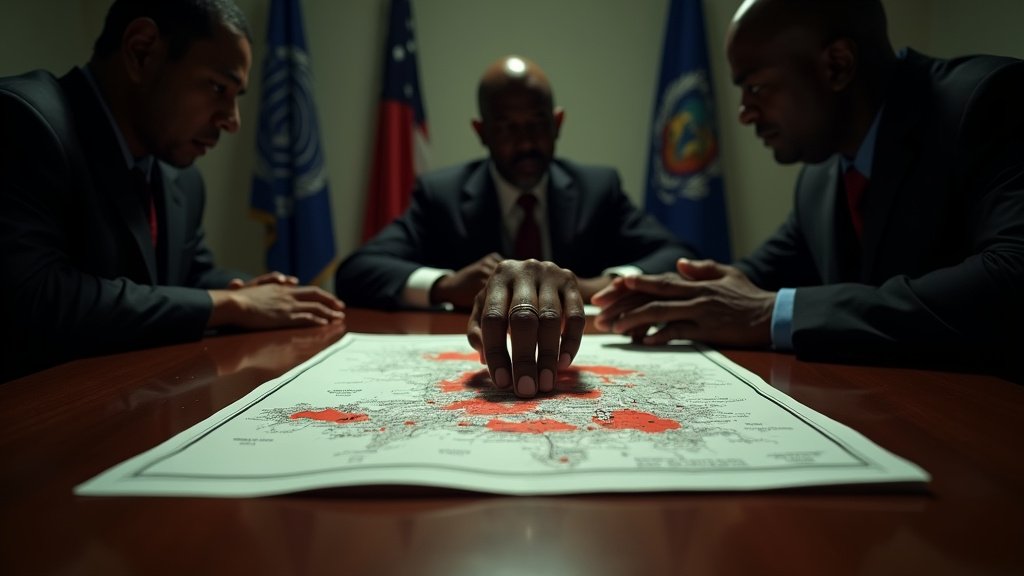
The United States issued a strong warning to Haiti’s transitional council. This alert came on January 21, 2026. It targets any “destabilizing actions” by council members. The US stated it would “take appropriate measures.” This includes sanctions. The warning specifically addresses changes to the government’s structure. It highlights concerns about internal power struggles. These disputes threaten Haiti’s fragile stability. The news comes as the council’s mandate nears its end. February 7, 2026, marks this critical deadline.
Haiti grapples with immense challenges today. Gangs exert significant control across the nation. Violence has escalated dramatically. The UN reported over 5,600 deaths from gang violence in 2024. Nearly 20% more people died in 2025 than in 2024. Gangs control up to 90% of the capital, Port-au-Prince. They also hold key infrastructure. This widespread insecurity emerged after President Jovenel Moïse’s assassination in 2021. Millions of Haitians require humanitarian aid. The crisis impacts daily life severely.
The Transitional Presidential Council (TPC) was established in April 2024. Caribbean leaders helped broker its creation. The council’s primary mission is to guide Haiti towards elections. It must also select a prime minister. However, internal divisions plague the TPC. Some council members reportedly disagree with Prime Minister Alix Didier Fils-Aimé. There are reports of attempts to oust him. Such political maneuvering adds to the nation’s instability. The council’s own mandate expires on February 7, 2026. This date brings added urgency to the political situation.
The US Embassy in Haiti posted its warning on X. It stated that anyone supporting destabilizing initiatives acts against US interests. This includes interests of the region and the Haitian people. The US reiterated its commitment to security and stability. Such actions could undermine efforts to achieve this. The US supports continuity for governance. This stance aligns with calls for stability made by foreign diplomats.
International partners also voice grave concerns. Carlos Ruiz-Massieu, the UN Special Representative for Haiti, spoke recently. He warned that Haiti has “no time to waste on prolonged internecine fighting.” He stressed that “the time for political maneuvering is over.” The Caribbean Community (CARICOM) also emphasized the need for credible elections. Transparent elections are key to long-term stability for Haiti. The UN Security Council has also discussed the worsening situation. Discussions highlight the need for sustained security and political engagement. The upcoming February deadline intensifies pressure on Haitian leaders.
The US warning signals a clear message. It aims to prevent internal power struggles from worsening the crisis. Such conflicts could further empower the gangs. The council faces a critical juncture. It must prioritize national interests over political differences. The path forward requires consensus. This is essential for Haiti’s stability and a move towards democratic governance. The success of the transition hinges on cooperation. Failure risks deeper chaos. This is the latest news from the troubled Caribbean nation.