
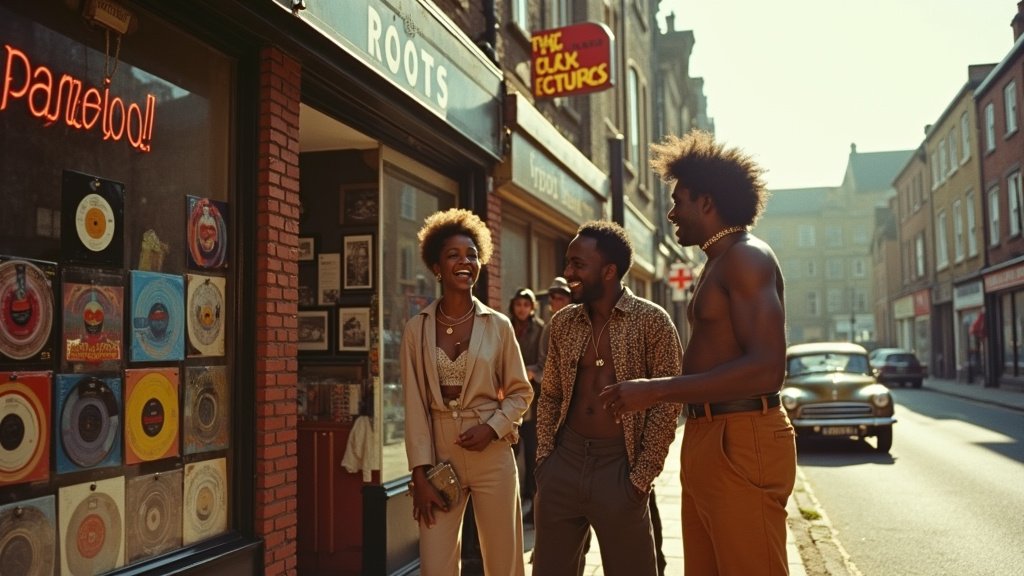
A lost world has resurfaced. Victor Wedderburn’s photographs reveal Bradford’s 1980s Caribbean community. These images were hidden for decades. Now, they tell powerful stories. The community was at its peak then. It was a time of vibrant life. Many of these places are gone now. However, the memories endure. Wedderburn captured everyday moments. His work highlights a vital era. It shows a community built on pride.
The Photographer’s Lens
Victor Wedderburn is the artist. He arrived in the UK from Jamaica. This was in 1971. He was part of the Windrush Generation. He joined his parents in Bradford. Life in the UK was challenging. He faced racism and economic uncertainty. Wedderburn worked in a factory. He later lost his job to redundancy. This happened in the early 1980s. He used his redundancy pay. He bought a second-hand camera. He also got film developing equipment. Then, he began to document life. He focused on his local community. He became a self-taught photographer. He developed his colour photos himself. This process was intricate then. Few people understood it. His images offer a unique view. They capture an unseen side of Britain. This was a distinctly Bradfordian vision.
Documenting ‘The Frontline’
Wedderburn focused on Lumb Lane. This area was in Manningham. It was known as ‘the Frontline’. This name came from racial hostility. Residents faced prejudice. However, it was also a hub. Black people gathered there. They socialized and connected. The photographs show this vibrant life. They feature local landmarks. Roots Record Shop is visible. The Perseverance Hotel appears too. These were important gathering spots. Sound system parties pulsed with music. Anti-apartheid marches showed solidarity. Local shops served the people. Barbershops and cafes dotted the streets. These were more than just places. They were community anchors. The Perseverance Hotel was a hub. It played West Indian music late. Young Lions Café was another spot. It offered games and food. It fostered identity and connection.
A Spirit of Resilience
The 1980s marked a peak. Bradford’s West Indian community thrived then. It was a time of great energy. The community built on resilience. Joy was a central theme. Cultural pride shone brightly. Wedderburn’s photos capture this. They show friends and families. They show people on pavements. They show moments of everyday life. These images are intimate portraits. They reveal a connected community. Adversity was a shared experience. Conviviality was its answer. Entrepreneurial spirit was evident. Families found their place. They created a new home. They built a rich culture. These stories were often overlooked. Wedderburn’s camera preserved them.
The Power of Colour
Wedderburn used colour photography. This was unusual at the time. Black and white was more common. Serious photography often meant monochrome. His colour images stand out. They offer a vivid portrayal. They capture the era’s atmosphere. The colours bring the past alive. They make the scenes more immediate. This technique was innovative. It set his work apart. It adds depth to the narrative. His images are a rare record. They detail a specific time. They show a community in full colour.
Rediscovery and Recognition
These photographs lay dormant for years. They were stored away. The stories they held were forgotten. Then, a rediscovery occurred. The images emerged after 40 years. Bradford 2025 UK City of Culture provided a platform. It hosted Wedderburn’s first exhibition. The show was called “Frontline 1984/1985.” It featured over 100 images. These were never-before-seen colour photos. The exhibition was a success. It highlighted a vital part of history. A selection later moved to a museum. This brought the work to more people. It celebrated forgotten narratives. It honored the people in the photos.
Preserving Untold Stories
Wedderburn’s work is significant. It tells stories written out of history. It offers a glimpse into a fading world. The physical spaces are mostly gone. Barbershops and pubs have vanished. However, the memories remain strong. These images are a testament to that. They show a community’s spirit. They are a record of resilience. They celebrate cultural pride. They connect past and present. These photographs are more than pictures. They are living history. They offer profound insights. They preserve identity and legacy. They ensure the community is not forgotten.
An Enduring Legacy
Victor Wedderburn’s photos offer a powerful window. They show a pivotal era in Bradford. They highlight the African-Caribbean community. This community faced challenges. Yet, it created a vibrant life. Wedderburn’s dedication is clear. He captured authentic moments. His work serves as a vital archive. It allows future generations to see. They can connect with their heritage. The exhibition honours the people. It celebrates their contributions. These rediscovered stories matter. They enrich Bradford’s history. They show a community’s enduring strength.