
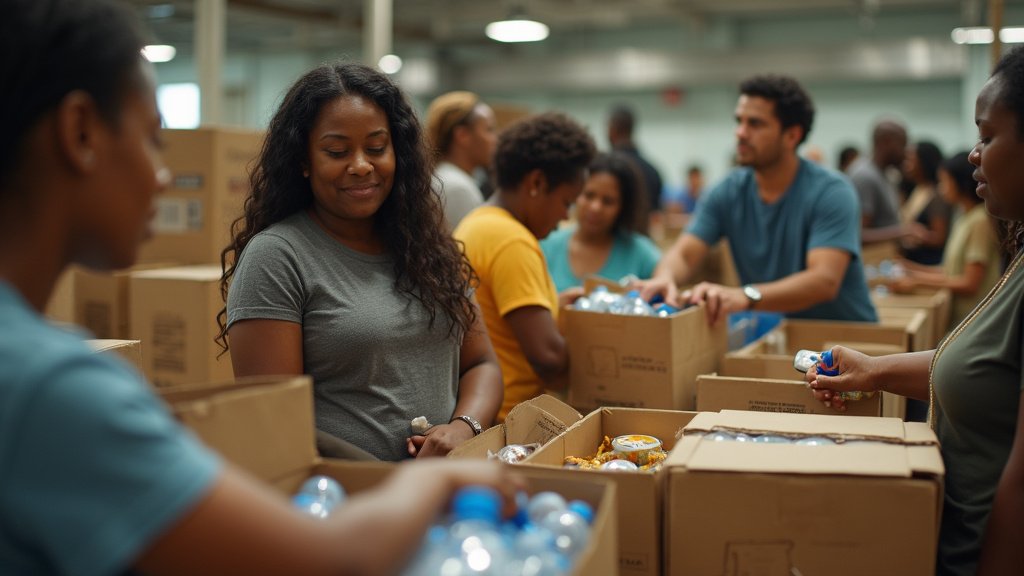
Hurricane Melissa, one of the most powerful Atlantic hurricanes on record, left a devastating path of destruction across the Caribbean. In its wake, a powerful wave of solidarity has emerged from the Caribbean diaspora in Miami and New York City, demonstrating an unwavering commitment to supporting their ancestral homelands. Millions of residents with Caribbean roots in these major U.S. hubs have mobilized, transforming heartbreak into action by filling warehouses with essential supplies for Jamaica, Cuba, Haiti, and the Bahamas.
The Scale of Destruction
Hurricane Melissa made landfall in Jamaica as a catastrophic Category 5 storm, unleashing 185 mph winds and causing immense devastation. It was the strongest hurricane on record to make landfall in Jamaica, surpassing Hurricane Gilbert in 1988. The storm resulted in catastrophic damage, with entire towns decimated and up to 90 percent of buildings in some areas impacted. The economic toll was staggering, with estimated physical damages in Jamaica alone reaching $8.8 billion, representing 41% of the nation’s GDP. Beyond Jamaica, the hurricane caused widespread destruction, with significant impacts reported in Haiti, Cuba, the Dominican Republic, and the Bahamas, leading to tens of thousands of deaths, injuries, and displacements across the region.
Diaspora’s Deep Connection and Swift Response
Miami and New York City, serving as vibrant cultural hubs for Caribbean immigrants, have become epicenters for organizing relief efforts. Despite being spared a direct hit, the emotional impact of the storm resonated deeply within these communities, many of whom have family and close ties to the affected islands. The phrase “It’s home” encapsulates the profound connection driving these relief missions.
Cities like Miramar and Lauderhill in Florida, with a significant Caribbean population, have spearheaded citywide donation drives. Residents have been contributing essential items such as non-perishable food, water, tarps, flashlights, and sleeping bags. In New York, particularly in areas like the Bronx and Brooklyn, which are home to large Jamaican communities, individuals and organizations have been equally proactive. Restaurants, community centers, and places of worship have transformed into collection points for supplies.
Organized Efforts and Key Players
Numerous community organizations, churches, and cultural groups across the United States have launched coordinated donation drives and fundraising events. The American Friends of Jamaica, based in New York City, announced a $1 million matching fund, while organizations like GlobalGiving, Food For The Poor, and Project HOPE have established relief funds.
In South Florida, groups like South Florida Caribbean Strong, in partnership with the Global Empowerment Mission (GEM) and The Miami Foundation, launched the “Caribbean Strong $1M Hurricane Melissa Relief Challenge” aiming to raise $1 million through individual contributions. GEM’s warehouse in Doral has become a bustling hub where volunteers assemble emergency kits. The Jamaican Women of Florida (JWOF) and the Greater Fort Lauderdale Diaper Bank are also actively collecting essential items.
In New York, organizations like the JAHJAH Foundation (Jamaicans Abroad Helping Jamaicans at Home) are working with businesses like The Original Dumpling Shop in the Bronx to collect supplies. Queens Borough President Donovan Richards partnered with the Consulate General of Jamaica in New York and Irie Jam Radio to launch a large-scale donation drive for medical supplies, hygiene items, and household essentials. Aviation pioneer Captain Barrington Irving, a Jamaican-born figure, spearheaded a mission that flew over 100,000 pounds of critical supplies to Jamaica.
Navigating Challenges and Demonstrating Resilience
Despite the outpouring of support, delivering aid to affected areas has presented significant challenges. Gang violence has disrupted transportation networks in Haiti, making it difficult to reach those in desperate need. Furthermore, widespread debris, estimated at over 4.8 million tonnes in Jamaica, has blocked roads, hindering access to schools, hospitals, and markets, and delaying the restoration of essential services.
To address these complexities, many relief organizations emphasize that monetary donations are often the most effective way to help. This allows aid groups to purchase urgently needed supplies locally, supporting local economies, ensuring culturally appropriate goods, and expediting delivery. Platforms like Charity Navigator are recommended for vetting reputable organizations.
The stories emerging from the diaspora underscore a deep-seated commitment to their Caribbean roots. For many, the relief efforts are not just humanitarian gestures but deeply personal missions, driven by the enduring connection to the islands they still call home. The resilience of the diaspora, coupled with their generosity, offers a beacon of hope for the affected communities as they embark on the arduous journey of recovery and rebuilding.