
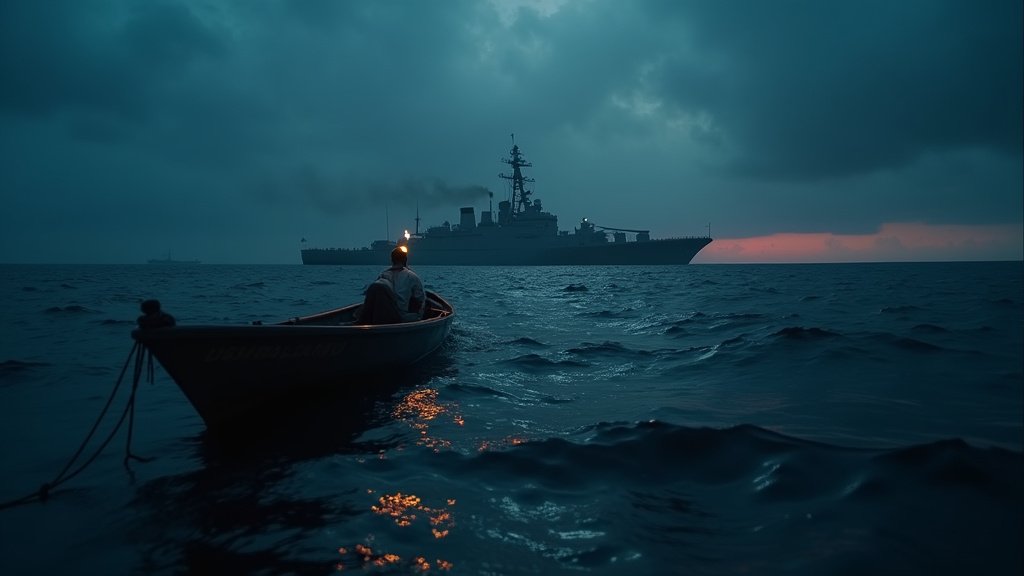
The tranquil waters of the Caribbean, long envisioned as a zone of peace, are now roiling with controversy and grave concern following a series of U.S. military strikes targeting alleged drug-trafficking vessels. The escalating campaign, spearheaded by the Trump administration under the banner of “Operation Southern Spear,” has resulted in a significant loss of life, including Caribbean nationals, and ignited fierce debates about regional sovereignty, due process, and the very definition of security in the Western Hemisphere.
Operation Southern Spear Unleashed
Beginning in early September 2025, the United States launched an unprecedented military operation in the Caribbean Sea, deploying substantial naval and air assets with the stated objective of combating drug trafficking and what it terms “narco-terrorism.” This buildup includes a formidable fleet comprising the aircraft carrier USS Gerald R. Ford, numerous destroyers, thousands of sailors and Marines, and advanced aircraft. The scale of this deployment is described as the largest in the Caribbean in decades, far exceeding routine drug interdiction missions.
The Shadow of Deadly Strikes
The centerpiece of Operation Southern Spear has been a series of kinetic strikes against vessels accused of transporting illicit narcotics. While the U.S. administration, including Secretary of Defense Pete Hegseth and Secretary of State Marco Rubio, asserts that these vessels are operated by narcoterrorist organizations and are linked to major cartels like Venezuela’s Tren de Aragua, concrete evidence has not been publicly disclosed.
These strikes have led to a significant death toll, with reports indicating that over 80 individuals have been killed in approximately 20 strikes as of mid-November 2025. A particularly poignant incident, occurring around mid-October 2025, involved the deaths of at least six people, including two nationals from Trinidad and Tobago: Chad “Charpo” Joseph, a 26-year-old fisherman, and Rishi Samaroo. Families of the deceased have vehemently disputed the U.S. claims, asserting that their loved ones were fishermen or individuals simply attempting to return home and were denied any semblance of due process.
Regional Alarm Over Sovereignty and Peace
The U.S. military’s aggressive posture has sent ripples of alarm across the Caribbean community. Leaders within the Caribbean Community (CARICOM) have reaffirmed their commitment to maintaining the Caribbean as a “Zone of Peace,” emphasizing the paramount importance of national sovereignty and diplomatic resolutions to disputes. Several CARICOM summits in late 2025 saw leaders collectively reject claims of imminent military threats and underscore that regional security relies on cooperation, not increased foreign military presence.
While many nations within the region are committed to fighting narcotrafficking, they stress that such efforts must align with international law and respect sovereign rights. Trinidad and Tobago, the home nation of the deceased fishermen, has been noted for reserving its position on certain CARICOM statements concerning regional security, reflecting the delicate balance its government navigates between national interests and its alliance with the United States. Former Caribbean leaders have also voiced strong opinions, issuing joint statements that advocate for peace, diplomacy, and the preservation of regional integrity against external conflicts.
Legal and Ethical Quagmires
The legality and morality of these U.S. strikes are under intense scrutiny. Critics, including international ministers and legal experts, argue that the operations bypass fundamental principles of international law and due process. The classification of drug traffickers as “narco-terrorists” and subsequent lethal force, often without prior warning or detainment, has been labeled by some as “extrajudicial executions” and “murder”.
Legal scholars point out that the U.S. administration has failed to provide public evidence to support its assertions that the targeted vessels posed an imminent threat or were engaged in acts of war, which would typically justify lethal force under international law. Questions have also been raised about the constitutionality of such actions, particularly regarding the executive branch’s authority to authorize lethal strikes without explicit congressional approval.
Geopolitical Currents and Enduring Stories
The intensified U.S. military operations coincide with heightened geopolitical tensions, particularly between the United States and Venezuela. Some analysts suggest that the large-scale military buildup and strikes may serve as a pressure tactic against President Nicolás Maduro’s government, rather than solely a counter-narcotics effort.
The stories emerging from the Caribbean paint a complex picture: grieving families seeking justice, communities grappling with fear and uncertainty, and leaders striving to protect their nations’ sovereignty amidst superpower dynamics. The Caribbean, a region rich in cultural heritage and interlinked communities, finds itself at a critical juncture, where the pursuit of regional peace and security is being redefined by an escalating global conflict projected onto its shores. The long-term impact of these actions on regional stability, trust, and the very notion of the Caribbean as a peaceful haven remains a pressing concern, prompting ongoing dialogues and a search for sustainable solutions that uphold both security and human rights.