
CARICOM Summit Addresses Cuba Crisis Amidst Guyana’s Economic Boom
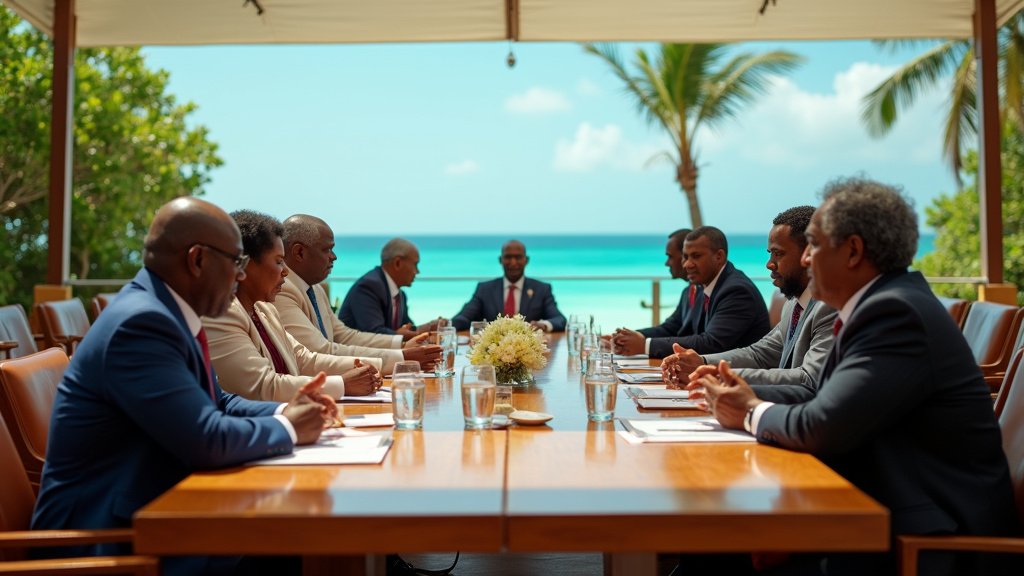
Basseterre, St. Kitts and Nevis – Leaders from the Caribbean Community (CARICOM) convened for their 50th Regular Meeting. The summit began February 24, 2026, in St. Kitts and Nevis. It runs through February 27. The event is chaired by Prime Minister Dr. Terrance Drew of St. Kitts and Nevis. The theme for this milestone meeting is “Beyond Words: Action Today for a Thriving, Sustainable CARICOM.”
A Deepening Humanitarian Crisis in Cuba
A major focus at the summit is Cuba. A severe humanitarian crisis there is escalating. This crisis is largely due to United States oil sanctions. These sanctions were imposed by an executive order on January 29, 2026. This order threatens tariffs on nations supplying oil to Cuba. Several former CARICOM heads of government have strongly condemned this. They call it “economic warfare.” They decry the “inhumane weapon of mass destruction.” The sanctions inflict “unconscionable suffering” on Cuban people. They threaten vital energy, food, and medical supplies. Eight former leaders issued a joint statement. They urged the U.S. to reverse these “crippling sanctions.” They highlighted Cuba’s history of solidarity with the Caribbean. They called for tangible support for Cuba. This issue dominates regional discussions. Many CARICOM members have long ties with Cuba. They support dialogue for dispute resolution. They oppose isolating Cuba. The United Nations has long called for an end to the U.S. embargo.
US Reaffirms Regional Commitment
United States Secretary of State Marco Rubio attended the summit. He aimed to reaffirm U.S. commitment to regional stability. He spoke at the Opening Plenary Session on February 25. Rubio planned to promote shared priorities. These include regional security and economic growth. He also discussed combating illegal immigration and illicit trafficking. The U.S. seeks greater stability and prosperity in the hemisphere. Rubio’s presence signals strategic U.S. engagement. It aims to reassert American interests in the region. This comes after recent U.S. actions in Venezuela. The U.S. maintains observer status in CARICOM. Its role is to enhance stability and prosperity. However, U.S. pressure on Cuba is a key point of discussion. Many CARICOM nations have historically supported Cuba. They view the U.S. actions as detrimental to regional well-being.
Guyana’s Economic Ascent Fuels Regional Hope
Concurrently, Guyana’s rapid economic growth offers a bright spot. Its transformation is seen as a bridge for deeper regional integration. Minister of Natural Resources Vickram Bharrat highlighted this. He spoke at the Guyana Energy Conference. He noted Guyana’s economic success benefits the entire region. President Dr. Irfaan Ali consistently states: “When Guyana is doing well, the region will do well.” This sentiment guides policy. Guyana’s economy is expanding rapidly. This growth is driven by its booming oil and gas sector. Projections show significant GDP expansion. This includes non-oil sectors. Guyana aims to leverage its energy sector for development. It seeks to build resilient food production. Partnerships are forming with international stakeholders. These include Saudi Arabia and the UAE. The country is investing in transformative infrastructure. This includes a deep-water port. This port aims to link Brazil and the Caribbean. It positions Guyana as a transport and logistics hub.
CARICOM Single Market and Economy (CSME)
Minister Bharrat emphasized collaboration beyond oil and gas. He noted opportunities for CARICOM citizens. They can work in Guyana under the CSME. This framework allows skilled personnel to move freely. It promotes trade and economic integration. Prime Minister Mia Mottley acknowledged Guyana’s growth. She stated it strengthens the entire Caribbean. She commended Guyana’s support for regional investments. She also stressed the need for economic policies that ensure regional resilience. Discussions at the summit include strengthening the CSME. It is a key pillar for regional integration. However, the single market is still incomplete. Leaders aim to improve free movement. They want better recognition of skills. They seek to remove trade barriers. The CSME is vital for citizens and businesses. Its full operationalization is a priority. Guyana’s example shows potential for expanded opportunities. Young people can find work across the community. This fosters inter-Caribbean collaboration. Bharrat called for more information sharing. Young people need to know about opportunities. This is crucial for their future. Many CARICOM citizens can now work in Guyana. This supports the goal of a unified Caribbean economy.
Broader Regional Agenda
The summit agenda covers many issues. Climate change and climate finance are critical. Food security is a major concern for many islands. Regional safety and transportation also feature. Reparations for historical injustices remain a topic. The meeting theme, “Beyond Words: Action Today,” signals a focus on implementation. Leaders aim to move from declarations to concrete steps. They seek to enhance international and community relations. The 50th meeting marks a symbolic and strategic event. It addresses economic, climatic, and geopolitical challenges. The region faces an uncertain global trade environment. Leaders are focused on collective action. They want to build a thriving and sustainable CARICOM. Their stories of cooperation are vital for regional progress. This summit sets the stage for future collaboration. It highlights shared challenges and opportunities.
Looking Ahead
The leaders discussed ways to bolster regional integration. They seek to enhance economic resilience. They aim to advance sustainable development goals. Guyana’s economic success offers a model. It shows the benefits of strong regional ties. The CARICOM community can leverage this growth. It can create a more prosperous future for all its members. The discussions are crucial for navigating future challenges.