
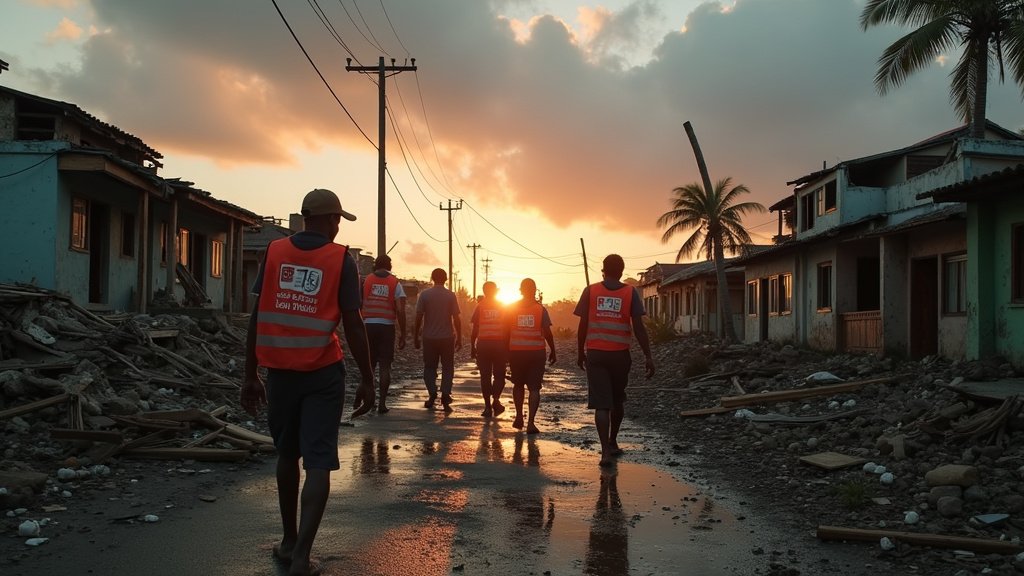
Hurricane Melissa, a catastrophic Category 5 storm, has inflicted widespread devastation across the Northern Caribbean, leaving a trail of destruction, significant loss of life, and an ongoing humanitarian crisis. The powerful hurricane made landfall in Jamaica on October 28, 2025, as one of the most intense Atlantic hurricanes on record, with sustained winds of 185 mph. Its fury subsequently impacted Haiti, Cuba, the Dominican Republic, the Bahamas, and Turks and Caicos Islands, affecting over 5 million people.
A Catastrophic Onslaught
Hurricane Melissa’s intensity was unparalleled, registering a record-breaking wind gust of 252 mph measured by a dropsonde near Jamaica. Upon making landfall in Jamaica, the storm was tied for the strongest Atlantic hurricane ever recorded at landfall, with a minimum central pressure of 892 millibars. The hurricane’s passage caused catastrophic damage, including widespread destruction of homes, infrastructure, and agricultural lands. In Jamaica alone, it is estimated that over 4.8 million tonnes of debris were left behind, blocking roads and hindering access to essential services. The economic impact is staggering, with preliminary estimates placing the damage in Jamaica at approximately US$8.8 billion, equivalent to 41% of the country’s 2024 GDP.
Devastation in Haiti, Jamaica, and the Dominican Republic
The human toll from Hurricane Melissa has been devastating, with reports indicating that at least 96 fatalities were attributed to the storm across the Caribbean. Haiti bore a significant burden, with at least 43 deaths reported and thousands displaced. In Jamaica, authorities confirmed at least 45 deaths, with 15 people missing and thousands left homeless. The storm’s impact was particularly severe in towns like Black River, Jamaica, described as “ground zero,” where up to 90% of structures lost their roofs. In Haiti, the southern coastal town of Petit-Goâve experienced catastrophic flooding, with dozens of homes collapsing and significant casualties reported, including children. The Dominican Republic also suffered casualties, with at least one death reported.
Community Resilience and Recovery Efforts
In the wake of the disaster, community efforts and international aid have mobilized to support the affected populations. In Jamaica, recovery operations are underway, with crews working to clear roads and reach isolated areas. The U.S. State Department has directed the mobilization of support, deploying disaster assistance teams to assess needs and provide search and rescue assistance. Organizations like Team Rubicon, Samaritan’s Purse, and the United Nations Development Programme (UNDP) are on the ground, providing medical aid, delivering critical supplies, clearing debris, and supporting long-term recovery. The UNDP’s analysis highlights the immense challenge of debris removal, which is critical for restoring access to homes and essential services.
Lingering Challenges and Future Outlook
Despite ongoing relief efforts, many community structures and essential services remain severely impacted. Hundreds of healthcare facilities across the Caribbean sustained damage, disrupting access to vital medical services. Power and communication outages are widespread, and many areas remain cut off due to damaged roads and landslides. The long road to recovery is underscored by the stories of survivors, like Christine Campbell, who lost her home but not her spirit. The Caribbean nations are facing the immense task of rebuilding, a challenge compounded by the intensifying impacts of climate change that fuel more frequent and severe disasters. Financial aid, including a US$150 million payout from Jamaica’s catastrophe bond, offers some relief, but the scale of destruction far exceeds these initial funds. The stories emerging from the affected regions are a testament to both the profound loss and the indomitable resilience of the human spirit in the face of overwhelming adversity.
As Hurricane Melissa moves further into the Atlantic, the focus remains on providing immediate relief and supporting the long-term rebuilding efforts across the devastated Caribbean islands. The unprecedented strength of this storm serves as a stark reminder of the growing threat posed by extreme weather events and the urgent need for sustained global support and climate action.