
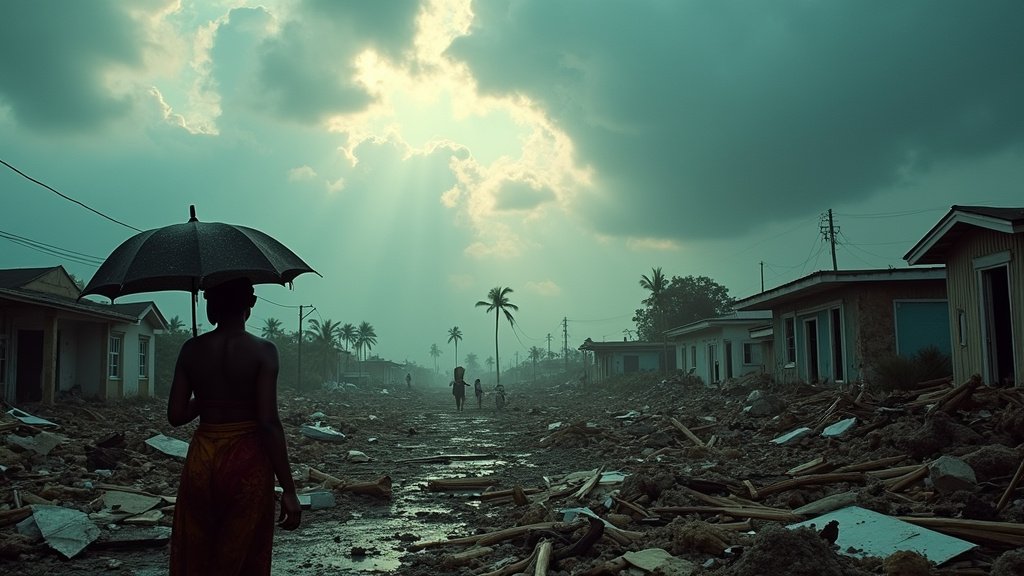
Jamaica was left reeling after Hurricane Melissa, a monstrous Category 5 storm, made historic landfall on October 28, 2025. This catastrophic event has been declared the strongest hurricane in recorded history to strike the island nation, unleashing devastating winds and torrential rains that have left a trail of destruction far beyond its shores, impacting the wider Caribbean.
Jamaica Engulfed by Historic Fury
Hurricane Melissa’s arrival marked a grim milestone for Jamaica, hitting with sustained winds of 185 mph. This colossal storm is tied for the most intense Atlantic hurricane at landfall, with a central pressure of 892 millibars, equaling the record set by the 1935 Labor Day hurricane. The immediate impact was catastrophic, with initial reports indicating that up to 90% of structures in some heavily impacted areas were devastated.
The physical damage in Jamaica is staggering, with preliminary estimates from the World Bank and the Inter-American Development Bank placing the cost at a record US$8.8 billion, equivalent to 41% of the country’s 2024 GDP. Residential buildings bore the brunt, accounting for 41% of the assessed damages, followed by infrastructure (33%), non-residential buildings (21%), and agriculture (5%).
Over 122,000 dwellings were demolished or severely damaged, and approximately 146,000 structures suffered damage, with an estimated 120,000 losing their roofs. Essential infrastructure, including roadways, was washed away, and power and communication lines were knocked down across the island, leaving vast areas in darkness and disconnected. The agricultural sector, a vital part of Jamaica’s economy, sustained significant damage, with 146,000 hectares of farmland affected and over 1.25 million animals lost.
The human toll has been immense. While official figures vary, reports indicate at least 46 fatalities in Jamaica, with thousands more displaced and residing in emergency shelters. The destruction has severely hampered aid delivery and the restoration of critical services, creating an urgent need for humanitarian assistance.
Neighboring Nations Face Melissa’s Wrath
Jamaica was not the only nation to suffer from Hurricane Melissa’s destructive path. The storm’s powerful outer bands and its subsequent track brought widespread devastation to neighboring islands across the Caribbean.
In Cuba, over 735,000 people were evacuated from coastal and low-lying areas ahead of Melissa’s landfall as a Category 3 hurricane. The storm brought intense rainfall, catastrophic flooding, and storm surge, particularly to eastern provinces like Santiago de Cuba. Preliminary assessments indicate that nearly 150,000 homes were affected, with critical services such as electricity and water severely disrupted, leaving around 450,000 people without safe water. More than 642 health facilities and 2,117 educational centers sustained damage, impacting over 670,000 students.
Haiti, already grappling with a severe humanitarian crisis, saw its challenges deepened by Hurricane Melissa. Authorities reported a tragic death toll, with figures ranging from at least 31 to as high as 88 fatalities, including 10 children. The southern coastal town of Petit-Goâve was particularly devastated, with hundreds of homes destroyed or damaged, and thousands displaced. The storm exacerbated existing hardships, making the path to recovery even more arduous.
Other islands like the Dominican Republic, the Bahamas, and Turks and Caicos also experienced significant impacts, including flooding, landslides, and power outages.
Stories of Devastation and Resilience
Amidst the widespread destruction, countless stories of loss and survival are emerging from the affected community members. Families have lost loved ones and their homes, facing the daunting task of rebuilding their lives from scratch. In Petit-Goâve, Haiti, one man recounted losing all four of his children to the storm’s fury. In Jamaica, thousands of Nazarene members lost their homes, and several Nazarene church buildings were completely destroyed, underscoring the deep impact on religious community infrastructure.
Yet, even in the face of such overwhelming adversity, resilience shines through. Local churches and community groups are stepping up to provide immediate relief. In Cuba, Baptist churches are feeding hundreds daily and sheltering those displaced by the disaster. In Jamaica, trained disaster relief volunteers are working alongside local congregations to repair damaged structures and distribute essential supplies, transforming churches into vital hubs for aid and hope. These stories highlight the strength of the human spirit and the critical role of local community networks in times of crisis.
The Long Road to Recovery
Rebuilding in the aftermath of Hurricane Melissa is expected to be a long and challenging process. The sheer scale of destruction has hampered initial relief efforts, with damaged infrastructure slowing the delivery of much-needed supplies. International organizations, including the World Bank, the Inter-American Development Bank, the UN Development Programme, PAHO, UMCOR, and Send Relief, are mobilizing support, providing grants, essential supplies like food, water filters, medicine, and shelter, and coordinating with local authorities and NGOs.
The United States has deployed disaster response teams to assess needs and provide search and recovery assistance across the Caribbean. The focus now shifts to debris removal, restoring essential services, and providing both immediate aid and long-term recovery support to the millions affected.
The 2025 Atlantic hurricane season, of which Melissa was a devastating example, was predicted to be highly active, with warmer ocean temperatures fueling intense storms. This event serves as a stark reminder of the increasing threats posed by climate change and the critical need for robust disaster preparedness and resilience-building efforts across vulnerable Caribbean nations.