
Jamaica is grappling with the aftermath of Hurricane Melissa, a catastrophic Category 5 storm that made landfall on October 28, 2025, leaving a trail of devastation and an estimated $8.8 billion in physical damage. The storm, characterized by 185-mile-per-hour winds, inflicted losses equivalent to 41% of Jamaica’s 2024 GDP, making it the costliest natural disaster in the island’s history. As communities reel from destroyed homes, crippled infrastructure, and a devastating human toll, the Jamaican diaspora across the United States has mobilized in an unprecedented show of solidarity, rallying resources, supplies, and support to aid their homeland’s recovery.
The Fury of Hurricane Melissa
Hurricane Melissa rapidly intensified into one of the strongest Atlantic hurricanes on record, directly striking Jamaica with a ferocity not seen before. The storm unleashed catastrophic winds and torrential rains, particularly across western parishes like St. Elizabeth, Westmoreland, Hanover, Manchester, St. James, and Trelawny. Preliminary findings from the World Bank indicate that residential buildings bore the brunt of the damage (41%), followed by infrastructure (33%), non-residential buildings (21%), and agriculture (5%). Beyond the physical destruction, the storm resulted in at least 46 confirmed deaths in Jamaica and left thousands homeless and in urgent need of food assistance. Power outages affected over 530,000 customers, and communication networks were severely disrupted, isolating entire communities.
A Diaspora’s Unifying Force
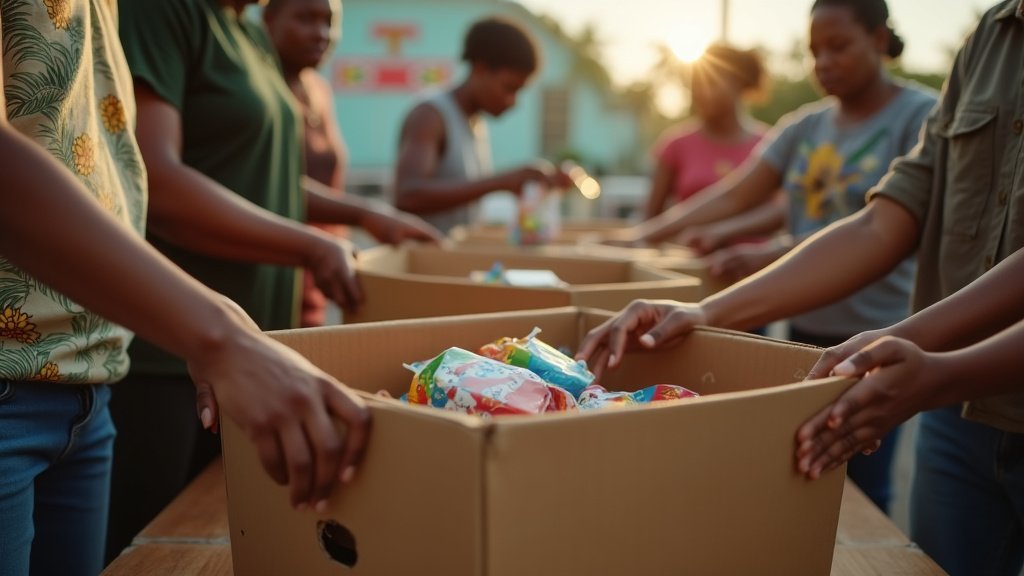
In the face of widespread destruction, the Caribbean diaspora, particularly the vibrant Jamaican community in the United States, has transformed empathy into action. From New York to Miami, Atlanta, Massachusetts, and Philadelphia, community organizations, churches, and individuals have launched extensive relief efforts. This coordinated response underscores the deep ties that connect the diaspora to the islands they call home, proving that distance does not diminish their commitment to rebuilding.
In South Florida, often referred to as the “capital of the Caribbean,” local organizations have been at the forefront. Groups have partnered with churches and small businesses to collect essential supplies like non-perishable food, medical kits, and water filtration systems, establishing donation drop-offs across areas like Little Haiti, Miramar, and Kendall. Events and benefit concerts are being organized to raise additional funds. The Jamaican Women of Florida (JWOF), for instance, has been collecting relief items such as tarps and canned goods, while South Florida Caribbean Strong is mobilizing volunteers and connecting donors with verified initiatives.
Atlanta’s Jamaican community has also rallied significantly. Irie Mon Café and the Jamaican Consulate hosted donation drives and town hall meetings, transforming restaurants into collection centers for generators, water, non-perishable food, and essential supplies for families in need. In New York, a large Jamaican community, particularly in the Bronx and Brooklyn, is actively collecting hygiene products, baby items, and sanitary supplies, with organizations like the American Friends of Jamaica (AFJ) announcing a $1 million matching fund for relief efforts.
Corporate Lifelines and NGO Support
Beyond grassroots efforts, major corporations and non-governmental organizations (NGOs) have pledged substantial support. Royal Caribbean Group committed over $1 million in partnership with Global Empowerment Mission (GEM) to aid long-term recovery, with their cruise ships actively transporting vital supplies to Jamaica. GEM’s experienced Caribbean team, based in Kingston, is leading extensive humanitarian operations on the ground, supported by pre-positioned warehouses and mobilized aid shipments.
Carnival Corporation, in collaboration with the Arison Family Foundation and the Miami Heat, donated $1 million to Direct Relief, an organization providing medical aid. The Disney Company pledged another $1 million to support relief and recovery efforts, directing funds to nonprofits like UNICEF USA and World Central Kitchen, as well as to affected employees. Norwegian Cruise Line Holdings Ltd. has contributed up to $100,000 to the American Red Cross, matching employee and public donations.
Other significant contributions include those from the Sandals Foundation and the establishment of numerous relief funds by organizations like GlobalGiving and United Way. Samaritan’s Purse has set up an emergency field hospital in Black River and is deploying mobile medical teams, while Direct Relief is supplying medical items to affected health facilities.
Regional Compassion and the Road Ahead
Solidarity extends beyond the United States. The government of St. Christopher and Nevis, demonstrating regional cooperation, coordinated the safe return of 27 of its students studying in Jamaica and pledged US$100,000 to assist with recovery efforts. The World Bank and the Inter-American Development Bank are working with the Jamaican government on a detailed evaluation of damages and economic losses, emphasizing the need for resilient and inclusive recovery.
The Jamaican government has launched an official disaster relief and recovery portal, “Support Jamaica,” to channel aid and coordinate rebuilding efforts. While immediate relief operations focus on providing food, water, and shelter, the long-term recovery will be a complex and extensive process. Stories of resilience, such as those from Dwayne in Westmoreland and Jerselyn Rowe in St. Elizabeth, highlight the determination of Jamaicans to rebuild despite immense loss. The diaspora’s ongoing support, from financial contributions to the provision of essential goods, will be crucial in helping to restore hope and rebuild lives across the island.
In the face of such profound devastation, the collective spirit of the Caribbean diaspora and the global community offers a beacon of hope, demonstrating that even the strongest storms cannot diminish the power of human connection and shared commitment to recovery. These stories of solidarity are vital as Jamaica navigates the arduous journey from response to a resilient rebuilding.