
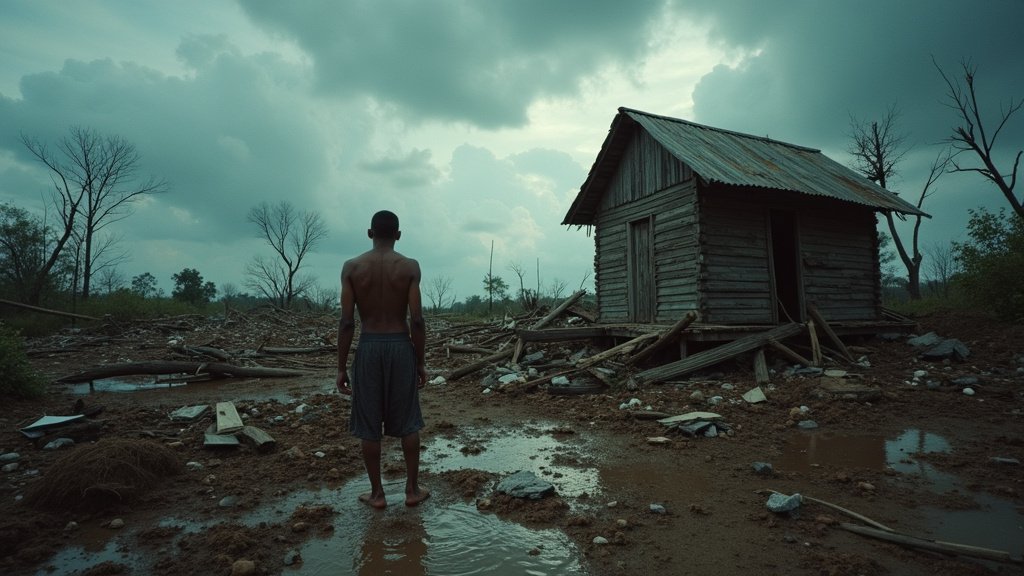
Hurricane Melissa, a monstrous Category 5 storm, has inflicted catastrophic damage across Jamaica and the wider Caribbean, leaving a trail of destruction that has been described as the worst in the region’s recorded history. Making landfall on Jamaica’s southwest coast on October 28, Melissa’s unparalleled intensity, with sustained winds reaching 185 miles per hour and gusts recorded at an astonishing 252 mph, has resulted in billions of dollars in damage and a devastating loss of life.
The Fury of a Category 5 Monster
Hurricane Melissa rapidly intensified from a tropical storm to a Category 5 behemoth, a terrifying phenomenon increasingly linked by climate scientists to abnormally warm ocean waters fueled by human activity. This rapid intensification, where a storm’s wind speed increases dramatically in a short period, offers little time for preparation and amplifies its destructive potential. At its peak, Melissa’s sustained winds of 185 mph tied it with the 1935 Labor Day hurricane and 2019’s Hurricane Dorian as the strongest Atlantic hurricane to make landfall on record. Forecasters warned of catastrophic winds, life-threatening storm surge of up to 13 feet, and torrential rainfall, with some areas expected to receive up to 40 inches of rain, signaling widespread flooding and landslides. This intensity marks Melissa as the most powerful tropical cyclone worldwide in 2025 and the strongest to ever strike Jamaica, surpassing Hurricane Gilbert in 1988.
Jamaica Engulfed: A Nation Under Siege
The impact on Jamaica has been nothing short of devastating. The storm made landfall near New Hope in Westmoreland Parish, with its catastrophic core tearing across western Jamaica. Parishes such as St. Elizabeth, Westmoreland, St. James, Hanover, and Trelawny bore the brunt of the hurricane’s fury. Reports from Saint Elizabeth described the parish as being “underwater,” with entire buildings collapsing and communities reportedly obliterated. Extensive damage to residential and non-residential buildings, infrastructure, and agricultural lands occurred due to storm surge, flooding, and ferocious winds. Power outages were widespread, affecting approximately 530,000 people, and communication systems were severely disrupted, particularly in the western parts of the island.
The Unfolding Human Toll
The human cost of Hurricane Melissa has been immense. In Jamaica, authorities have confirmed at least 45 deaths, with initial reports suggesting a higher toll and 15 individuals still missing. Hundreds of thousands of people have been affected, with over 30,000 households displaced, many seeking refuge in emergency shelters. The storm’s impact has created a complex humanitarian situation, straining resources and demanding immediate aid for survival and recovery. The stories emerging from affected communities paint a grim picture of loss, fear, and the sheer power of the storm. Residents recount experiences of homes being ripped apart, possessions lost, and the overwhelming feeling of vulnerability in the face of such extreme weather.
Economic and Agricultural Ruin
The economic repercussions for Jamaica are staggering. Preliminary estimates from the World Bank and the Inter-American Development Bank place the physical damage at approximately $8.8 billion USD, a figure equivalent to 41 percent of Jamaica’s 2024 GDP, making Melissa the costliest hurricane in the nation’s recorded history. Residential buildings accounted for the largest share of losses, followed by infrastructure, non-residential buildings, and agriculture. Infrastructure losses alone are estimated at $2.9 billion. The agricultural sector, a vital pillar of the Jamaican economy, suffered immense damage, with preliminary assessments indicating losses of $389 million USD, impacting over 70,000 farmers and disrupting operations across tens of thousands of hectares of farmland. Approximately 1.25 million animals, including poultry, cattle, and small ruminants, were lost, threatening food security and rural livelihoods.
A Wider Caribbean Nightmare
Hurricane Melissa’s impact extended far beyond Jamaica’s shores. In Haiti, already grappling with a severe humanitarian crisis, the storm’s torrential rains and flooding exacerbated existing vulnerabilities, leading to at least 43 confirmed deaths and displacing over 14,000 people. Cuba, the Dominican Republic, the Bahamas, Bermuda, and the Turks and Caicos Islands also experienced the storm’s wrath, with widespread flooding, damage to homes and infrastructure, and power outages affecting millions across the Caribbean. The storm’s passage underscored the interconnectedness of the Caribbean community and its shared vulnerability to extreme weather events.
The Climate Connection: A Warning from the Ocean
Climate scientists are unequivocal: hurricanes like Melissa are becoming more intense and prone to rapid intensification due to human-caused climate change. The warming of ocean waters provides the fuel for these superstorms, leading to stronger winds, heavier rainfall, and more destructive storm surges. Melissa serves as a stark, “real-time case study” of these changing climate patterns, highlighting the urgent need for global action to mitigate greenhouse gas emissions and bolster adaptation strategies across vulnerable regions.
The Long Road to Recovery
In the wake of the devastation, Jamaica and its neighbours are embarking on a long and challenging recovery and reconstruction phase. The Government of Jamaica declared the entire island a disaster area, mobilizing national response systems and appealing for international humanitarian assistance. Aid agencies, including the UN, World Bank, and various NGOs, are working tirelessly to provide essential relief, including food, water, shelter, and medical supplies. However, access to isolated communities remains a significant challenge due to debris-filled roads and damaged infrastructure. The sheer scale of the damage means that rebuilding will be an extensive, multi-year effort, requiring significant financial investment and community resilience. The stories of survival and the spirit of community solidarity are emerging, but the path ahead remains arduous as these nations strive to rebuild lives and restore hope in the face of unprecedented adversity.